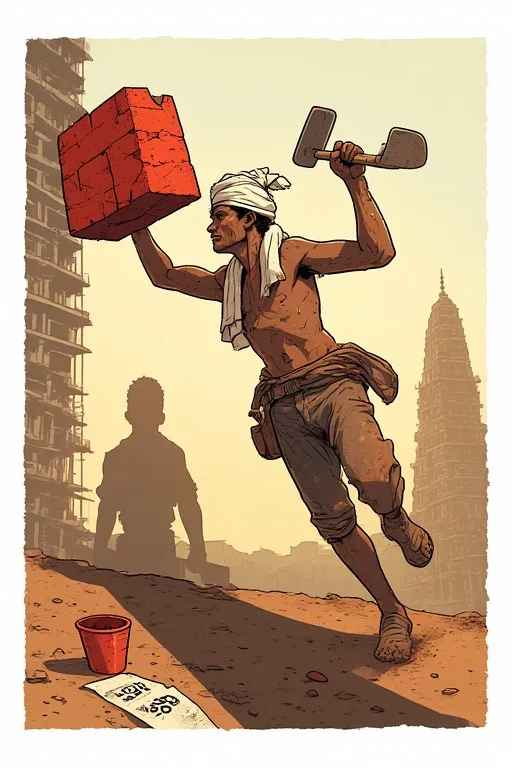
The Bricklayer

The Bricklayer

Across India, millions of Dalit-Bahujan workers—bricklayers, manual scavengers, construction labourers, road layers, sanitation workers—build every brick of the Indian republic. They raise the high-rises of Gurugram, dig the tunnels of the Mumbai metro, sweep the floors of parliament, and maintain the sewers that keep Savarna cities livable. Yet, the republic they build does not belong to them. They are paid less, housed in labour colonies without water, denied education for their children, and beaten if they assert dignity. The brick they lay is not for their own home; it is for someone else's wall.

The Grammar of Sacrifice: How Brahminical Ritual Logic Naturalizes Hierarchy

Let us begin with a smell. Close your eyes and imagine a yajna — a Vedic fire sacrifice. The smoke rises from the havan kund, thick with ghee and sandalwood. The Brahmin priest chants in Sanskrit, a language whose syllables are said to be the very fabric of the universe. The fire crackles. The offerings — rice, sesame, barley — dissolve into flames. The assembled savarna sit in prescribed order, the Brahmins closest to the fire, the Kshatriyas behind them, the Vaishyas further back. The Shudra is not there. The Shudra is outside the tent, perhaps, or at the edge of the courtyard, waiting to clean the ashes when the ceremony ends.
Cover image for The Grammar of Sacrifice: How Brahminical Ritual Logic Naturalizes Hierarchy