Kicking the Hornet's Nest - part 22 - the end

# Kicking the Hornet's Nest - third edition - part 22
All links, digital (pdf, txt, docx, md) and book in print, can be found at https://hive.blog/@crrdlx/satoshi
Edited by [crrdlx](@crrdlx), npub:
```
npub1qpdufhjpel94srm3ett2azgf49m9dp3n5nm2j0rt0l2mlmc3ux3qza082j
```
### Kicking the Hornet's Nest pages 506 - 527 (the end)
Satoshi Nakamoto <satoshin@gmx.com>
Fri, Jan 7, 2011 at 1:00 PM
To: Mike Hearn <mike@plan99.net>
_I reached the same conclusions about client only nodes and this is
what I've been implementing. I'm nearly there ..... I have block chain
download, parsing and verification of the blocks/transactions done,
with creation of spend transactions almost done._
That's great! The first client-only implementation will really start to move things to the next step. Is it going to be open source, or Google proprietary?
Mike Hearn <mike@plan99.net>
Fri, Jan 7, 2011 at 1:24 PM
To: Satoshi Nakamoto <satoshin@gmx.com>
> That's great! The first client-only implementation will really start to
> move things to the next step. Is it going to be open source, or Google
> proprietary?
_Open source. It has to be - I am developing it as a personal project
in my spare time and Googles policy is that this is only allowed if
you open source the results. But I would have done that anyway.
I managed to spend my first coins on the testnet with my app a few
days ago, hopefully will get another chance to make progress this
weekend. Probably will have something to show publically sometime in
Feb, touch wood._
Satoshi Nakamoto <satoshin@gmx.com>
Mon, Jan 10, 2011 at 4:34 PM
To: Mike Hearn <mike@plan99.net>
Open source.
Perfect. Once your code shows how to simplify it down, other authors can follow your lead. Client is a less daunting challenge than full implementation. If it's within reach of more developers, they'll come up with more polished UI and other things I didn't think of. I expect the original software will become the industrial old thing used by GPU farms and pool servers.
BTW, later a good feature for a client version is to keep your private keys encrypted and you give your password each time you send.
_I managed to spend my first coins on the testnet with my app a few
days ago, hopefully will get another chance to make progress this
weekend. Probably will have something to show publically sometime in
Feb, touch wood._
Great, keep me updated.
_I wanted something
that would be not too low if it was very popular and not too high if it
wasn't._
_It'd be interesting to see the working for this. In some sense the
number of coins is arbitrary as the nanocoin representation means the
issuance is so huge it's practically infinite._
It works out to an even 10 minutes per block:
21000000 / (50 BTC * 24hrs * 365days * 4years * 2) = 5.99 blocks/hour
I fudged it to 364.58333 days/year. The halving of 50 BTC to 25 BTC is after 210000 blocks or around 3.9954 years, which is approximate anyway based on the retargeting mechanism's best effort.
I thought about 100 BTC and 42 million, but 42 million seemed high.
I wanted typical amounts to be in a familiar range. If you're tossing around 100000 units, it doesn't feel scarce. The brain is better able to work with numbers from 0.01 to 1000.
If it gets really big, the decimal can move two places and cents become the new coins.
Mike Hearn <mike@plan99.net>
Mon, Jan 10, 2011 at 4:48 PM
To: Satoshi Nakamoto <satoshin@gmx.com>
Ah, of course, that makes sense.
By the way, if you didn't see it already, there's a discussion on the security of secp256k1 on the forum:
[http://www.bitcoin.org/smf/index.php?topic=2699.0](http://www.bitcoin.org/smf/index.php?topic=2699.0)
Hal (i presume this is Hal Finney) seems to think the curve is at higher risk of attack than random curves. I guess you chose secp256k1 for the mentioned performance improvement?
[Quoted text hidden]
Satoshi Nakamoto <satoshin@gmx.com>
Mon, Jan 10, 2011 at 8:47 PM
To: Mike Hearn <mike@plan99.net>
_By the way, if you didn't see it already, there's a discussion on the security of secp256k1 on the forum:
[http://www.bitcoin.org/smf/index.php?topic=2699.0](http://www.bitcoin.org/smf/index.php?topic=2699.0)
Hal (i presume this is Hal Finney)_
Yes, it's him. He was supportive on the Cryptography list and ran one of the first nodes.
seems to think the curve is at higher risk of attack than random curves. I guess you chose secp256k1 for the mentioned performance improvement?
I must admit, this project was 2 years of development before release, and I could only spend so much time on each of the many issues. I found guidance on the recommended size for SHA and RSA, but nothing on ECDSA which was relatively new. I took the recommended key size for RSA and converted to equivalent key size for ECDSA, but then increased it so the whole app could be said to be 256-bit security. I didn't find anything to recommend a curve type so I just... picked one. Hopefully there is enough key size to make up for any deficiency.
At the time, I was concerned whether the bandwidth and storage sizes would be practical even with ECDSA. RSA's huge keys were out of the question. Storage and bandwidth seemed tighter back then. I felt the size was either only just becoming practical, or would be soon. When I presented it, I was surprised nobody else was concerned about size, though I was also surprised how many issues they argued, and more surprised that every single one was something I had thought of and solved.
As it turns out, ECDSA verification time may be the greater bottleneck. (In my tests, OpenSSL was taking 3.5ms per ECDSA verify, or about 285 verifies per second) Client versions bypass the problem.
As things have evolved, the number of people who need to run full nodes is less than I originally imagined. The network would be fine with a small number of nodes if processing load becomes heavy.
Martii Malmi (AKA Sirius) “COPA trial” email #256
Date: Tue, 25 Jan 2011 18:34:03 +0000
From: Satoshi Nakamoto <satoshin@gmx.com>
Subject: Re: Fwd: Bitcoin question
To: mmalmi@cc.hut.fi
The paper was published in 2008.
Someone needs to correct Wikipedia; it incorrectly says the paper was
published in 2009. The paper was released earlier than the software.
mmalmi@cc.hut.fi wrote:
> Can you comment on this?
>
> ----- Forwarded message from cjwells1@yahoo.com -----_
> Date: Mon, 24 Jan 2011 00:32:48 -0800 (PST)
> From: "Constance J. Wells" <cjwells1@yahoo.com>_
> Reply-To: "Constance J. Wells" <cjwells1@yahoo.com>_
> Subject: Re:
> To: mmalmi@cc.hut.fi
>
> Martti,
> Thank you for the pdf. It looks great. I do not see a date on it. When
> was it written?
>
> Mr. Mark Herpel of Digital Gold Currency Magazine brought Bitcoin to my
> attention for inclusion in my thesis. The thesis working title is:
> Digital Currency Systems: Emerging B2B e-Commerce Alternative During
> Monetary Crisis in the United States. I discuss the five types of
> systems per Mr. Herpels suggestion.
>
> Appreciate it and hope to talk soon.
>
> C.
>
> Constance J. Wells, CeM, PMP: PMI certified
> Denver, CO U.S.A.
> 303-730-6609
>
> --- On Mon, 1/24/11, mmalmi@cc.hut.fi <mmalmi@cc.hut.fi> wrote:
>
> From: mmalmi@cc.hut.fi <mmalmi@cc.hut.fi>
> Subject: Re:
> To: "Constance J. Wells" <cjwells1@yahoo.com>_
> Date: Monday, January 24, 2011, 1:22 AM
>
> Hi Constance,
>
> Thanks for your interest in Bitcoin, feel free to cite. There's also
> Satoshi Nakamoto's paper available at http://www.bitcoin.org/bitcoin.pdf
> if you want something with a more formal touch. Please let us know when
> your thesis is finished!
>
>
> -Martti
>
>> Martti Malmi
>> Currently I am a full time student at-
>> Aspen University, in Denver, CO, 303-333-4224.
>> Masters of Science in Technology and Innovation.
>>
>> I am writing my Thesis under the subject heading, digital currency
>> systems. May I cite your site in my Thesis?
>>
>> Thank you.
>> Constance
>> Constance J. Wells, CeM, PMP: PMI certified
>> Denver, CO U.S.A.
>> 303-730-6609
>>
Martii Malmi (AKA Sirius) “COPA trial” email #260
Date: Tue, 22 Feb 2011 19:49:19 +0000
From: Satoshi Nakamoto <satoshin@gmx.com>
Subject: Re: 0.3.20 release : shipped
To: Gavin Andresen <gavinandresen@gmail.com>, Martti Malmi <mmalmi@cc.hut.fi>
> I have not sent a message to the sourceforge bitcoin-list mailing list
> because I don't think I have permission; Satoshi, can you give me
> permission, encrypt the mailman password with my public key and send
> it to me, or just post the announcement?
Martti should give you the Drupal admin password.
Any subscriber can post to bitcoin-list. Here's the admin password in
case you need it later.
Gavin:
-----BEGIN PGP MESSAGE-----
Version: GnuPG v1.4.7 (MingW32) - WinPT 1.2.0
hQIOAxfAPINgyySWEAf9GHyuMqxkhoBe96hbHoFPIR4ORpMS/v2mpCT70UmgTt46
GVO5MeEOFE4JUqltYUaAE2u7e7+BbyNFeNk4o0kwJIWUXbRoBHj59vx+yzmeRLd9
YxTWxZA2zOVcYcYoDkiYAatwlQWQefzwYFcCnBSSsY1F9XLHMtLqNadhftOregoE
5Prhjk4ScAEOAmJ2CfYvWLD6FPAe4s6nXzP656oQghMgUivYoowHAjGUSvd8f1Qb
fkV0isGIYCpHCOSZDZpysPCm63ibEeiuylvkT7Ayj2HoonqypFdv05mtyS7Jtq6a
s06UqjLSyICoGJVk4x5HZhusgmbqViLvb6gM+iadbQf/U9KEKA5KyF0JvjYlx97k
Bm7WpBIxKnP6Migl/Otol85EYt9rWN0lozLGw5Ko1JTZzXv3RrTsJafUYnDyAvtR
20JExoG84LatTeFiTqVWHiWZbYG2ECJHTO6jOmITvNvq/OgCID4hQvjvNQiXghae
qzolzmZVEwDGAybWJoSvAsXjDWbAyHt9WJztHPgVRxgTBrnhoLAX0FwKGTCr7L/t
emVEUqgEf3WqmljD+cCXSNVloQxGmPvaSsbITIZvX/emwq4MAC+SuRmJLJp6kSmu
UhkxZMipvYHfyBPXoonAM7oYXNIaFQryS66UlEziSUevvU8TXiZMeUyyiMirOBXC
itKhAedpc7NQYG+/KohTS0U9QfdygBfE2o6M96tRKFdMmbQz3Gyq0BaBpp98+ve+
VOVp90mYv9zq43G7tHnZektEjGzplHj0HzWhfbiy2dBrDGhkByYN4G6kX0JvU4ZX
/ixmbOf5qZPqcgmz7fYDxKnkUQVumoEIfNXrUlAPcI2Ql9TnY0NIg9ZIVOGeT4lE
80kYloQVdCdnrJ7yLWexO0W1kSs=
=S7eV
-----END PGP MESSAGE-----
Martti:
-----BEGIN PGP MESSAGE-----
Version: GnuPG v1.4.7 (MingW32) - WinPT 1.2.0
hQEMA+kEt/4bukJEAQgAlt5/Ks5pZPeusK0yefyMn7BqIVcOVHDaXbnf4dLKqq5J
6bKyMlkyYjhm1itZabi+IaV9k+1r7Wo50qOqfZNCSmG63hX3asXWd7QxThj4KDxr
fvuUfiduf2AyZcB4r/baw1hsdC3VGxQutU0ookuJqfvCIse77clS2WimKJ5hrh5G
KVdGApk3TxbILknalIs3mUw81sL0nvbO/aNrHiiNj44YU3Ehf5CieEJInHeYGTsJ
AABLZcH6B7nymA8D4nrAAnDcjcSE8+iWMOtzI2duCHKtA+LVJOsg8n/zHqK9SZNF
w+Xud7mBi/ZvnFGwCZh7cqJ/jZhNLLTQHiLr8M+i7dKhAekFho8aarOV9V4Cp2hT
a8bQdbgwsednyjCzaq+C8xU+aYJcAV95qK6QG2hlT8xpDU2KHBHWIjDmPKlzgvKb
8/dQo5VDvtQkdyvrd9pMJeOUxFKEVW5ph+4LzKjKEWE1kJhzAwbxQMNKkXLzZJIa
hJMNAVHDjnYcuI8EgJT+TjH2Kx+KwHX/OEOFaDXGP7XwMOuVZTVtbXnsJ24SFa1i
m4U=
=0TBL
-----END PGP MESSAGE-----
Open sourced my Java SPV impl
10 messages
Mike Hearn <mike@plan99.net>
Mon, Mar 7, 2011 at 2:13 PM
To: Satoshi Nakamoto <satoshin@gmx.com>
_Hi Satoshi,
I hope you are doing well. I finally got all the lawyers happy enough
to release BitCoinJ under the Google name using the Apache 2 license:
[http://www.bitcoin.org/smf/index.php?topic=4236.0](http://www.bitcoin.org/smf/index.php?topic=4236.0)
It's incomplete - notably it doesn't properly handle block chain
splits yet - but the rest is coming. I put a lot of work into
documentation and comments so hopefully it'll open up BitCoin to a new
audience who weren't able to understand/build the current code. Over
the next month or two I'll be finishing off some of the bigger missing
pieces for a full client-mode implementation.
I know you are busy right now but I'm hoping you can find time to
answer a few questions I had.
As part of doing full SPV I'm thinking of adding a getmerklebranch
message to the protocol. This would return a set of {blockhash,
branch} pairs given tx hashes, so allowing verification of a broadcast
transaction before it was incorporated into a block without storing
the full chain. Does that approach sound good to you?
Also, I've been thinking of exploring different transaction types
lately, eg by removing the IsStandard() checks for the testnet. It's
clear you put a lot of thought into transactions beyond simply moving
coins around up front, but unfortunately none of it was in the paper
or documented in the code. Escrow, multi-pay and so on are all
interesting but I was wondering if you could compile a list of ideas
for things we can do with the scripting language at some point.
Finally, the code that allows for transaction replacement has been
disabled but the comment doesn't say why. Is this just to reduce the
attack surface/complexity or is there a deeper reason? I haven't fully
understood why sequence numbers are a property of the tx inputs rather
than the tx itself.
Hope you can find the time/energy to rejoin us soon! I don't know if
you've seen this:
[http://bitcoin.sipa.be/speed-lin.png](http://bitcoin.sipa.be/speed-lin.png)
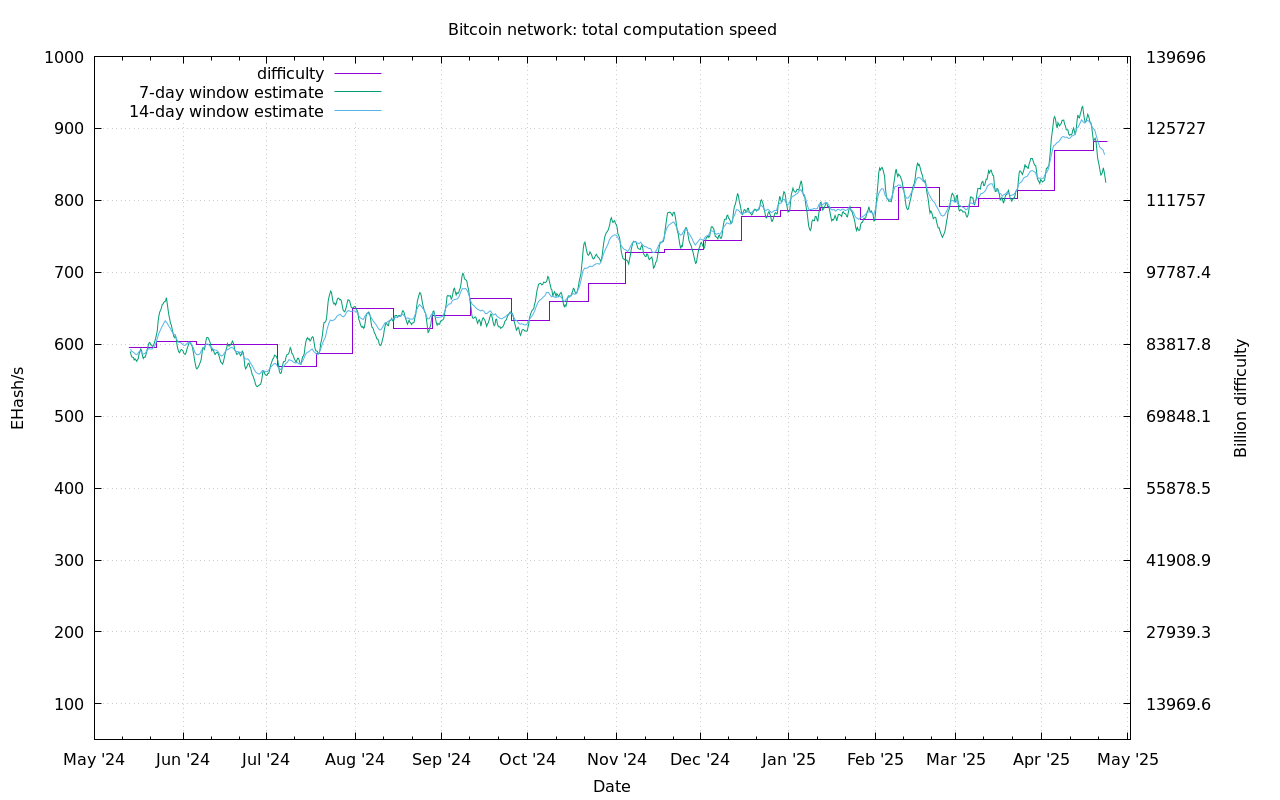
)
but it's exciting times for the network!
thanks!
__/mike_
Satoshi Nakamoto <satoshin@gmx.com>
Wed, Mar 9, 2011 at 5:15 PM
To: Mike Hearn <mike@plan99.net>
_I hope you are doing well. I finally got all the lawyers happy enough
to release BitCoinJ under the Google name using the Apache 2 license:
It's incomplete - notably it doesn't properly handle block chain
splits yet - but the rest is coming. I put a lot of work into
documentation and comments so hopefully it'll open up BitCoin to a new
audience who weren't able to understand/build the current code. Over
the next month or two I'll be finishing off some of the bigger missing
pieces for a full client-mode implementation._
That's great news! Much complexity can be left behind in a clean rewrite with only client requirements, and it opens it to Java developers too.
_I know you are busy right now but I'm hoping you can find time to
answer a few questions I had._
I'm happy to answer any questions.
_As part of doing full SPV I'm thinking of adding a getmerklebranch
message to the protocol. This would return a set of {blockhash,
branch} pairs_
That's a CMerkleTx
_given tx hashes, so allowing verification of a broadcast
transaction before it was incorporated into a block without storing
the full chain. Does that approach sound good to you?_
I don't understand. A merkle branch links a tx back to a block, which only has significance if the block exhibits proof-of-work. Linking back to an as-yet unsolved block proves nothing.
Network nodes are able to verify 0-conf txes because they have the complete tx index, so they can:
1) verify signatures against dependencies.
2) say that they haven't seen another spend yet, because they know about every tx in existence.
Are you talking about CMerkleTxes for the tx's dependencies? That would get part 1), but not part 2).
If you don't know about all txes in existence, I don't know how to do 2). You could only rely on trusting other nodes for that. That trust can be distributed over multiple nodes. Nodes only relay transactions they accept as valid. If you receive inv messages for a tx from all the nodes you're connected to, they're attesting that it's valid and the first spend they saw.
_Also, I've been thinking of exploring different transaction types
lately, eg by removing the IsStandard() checks for the testnet._
Very good idea. That should definitely be allowed on -testnet.
_It's
clear you put a lot of thought into transactions beyond simply moving
coins around up front, but unfortunately none of it was in the paper
or documented in the code. Escrow, multi-pay and so on are all
interesting but I was wondering if you could compile a list of ideas
for things we can do with the scripting language at some point.
Finally, the code that allows for transaction replacement has been
disabled but the comment doesn't say why. Is this just to reduce the
attack surface/complexity or is there a deeper reason?_
Just to reduce surface area. It wouldn't help with increasing tx fee. A tx starts being valid at nLockTime. It wouldn't work to have a tx that stops being valid at a certain time; once a tx ever becomes valid, it must stay valid permanently.
See these threads:
[http://www.bitcoin.org/smf/index.php?topic=1786.msg22119#msg22119](/home/crrdlx/Dropbox/My%20Docs/books/kicking%20hornets%20nest%20-%20complete%20writings%20of%20satoshi%20nakamoto/edition3files/blank)
[http://www.bitcoin.org/smf/index.php?topic=2181.msg28729#msg28729](/home/crrdlx/Dropbox/My%20Docs/books/kicking%20hornets%20nest%20-%20complete%20writings%20of%20satoshi%20nakamoto/edition3files/blank)
_I haven't fully
understood why sequence numbers are a property of the tx inputs rather
than the tx itself._
It's for contracts. An unrecorded open transaction can keep being replaced until nLockTime. It may contain payments by multiple parties. Each input owner signs their input. For a new version to be written, each must sign a higher sequence number (see IsNewerThan). By signing, an input owner says "I agree to put my money in, if everyone puts their money in and the outputs are this." There are other options in SignatureHash such as SIGHASHSINGLE which means "I agree, as long as this one output (i.e. mine) is what I want, I don't care what you do with the other outputs.". If that's written with a high nSequenceNumber, the party can bow out of the negotiation except for that one stipulation, or sign SIGHASHNONE and bow out completely.
The parties could create a pre-agreed default option by creating a higher nSequenceNumber tx using OP_CHECKMULTISIG that requires a subset of parties to sign to complete the signature. The parties hold this tx in reserve and if need be, pass it around until it has enough signatures.
One use of nLockTime is high frequency trades between a set of parties. They can keep updating a tx by unanimous agreement. The party giving money would be the first to sign the next version. If one party stops agreeing to changes, then the last state will be recorded at nLockTime. If desired, a default transaction can be prepared after each version so n-1 parties can push an unresponsive party out. Intermediate transactions do not need to be broadcast. Only the final outcome gets recorded by the network. Just before nLockTime, the parties and a few witness nodes broadcast the highest sequence tx they saw.
Mike Hearn <mike@plan99.net>
Wed, Mar 9, 2011 at 5:39 PM
To: Satoshi Nakamoto <satoshin@gmx.com>
If you don't know about all txes in existence, I don't know how to do 2). You could only rely on trusting other nodes for that. That trust can be distributed over multiple nodes. Nodes only relay transactions they accept as valid. If you receive inv messages for a tx from all the nodes you're connected to, they're attesting that it's valid and the first spend they saw.
Good point. I was talking about verifying the inputs yes, but it is indeed pointless unless you hear about all open transactions as well. So being able to fetch a CMerkleTx is not important.
Just to reduce surface area. It wouldn't help with increasing tx fee. A tx starts being valid at nLockTime. It wouldn't work to have a tx that stops being valid at a certain time; once a tx ever becomes valid, it must stay valid permanently.
See these threads:
[http://www.bitcoin.org/smf/index.php?topic=1786.msg22119#msg22119](/home/crrdlx/Dropbox/My%20Docs/books/kicking%20hornets%20nest%20-%20complete%20writings%20of%20satoshi%20nakamoto/edition3files/blank)
[http://www.bitcoin.org/smf/index.php?topic=2181.msg28729#msg28729](/home/crrdlx/Dropbox/My%20Docs/books/kicking%20hornets%20nest%20-%20complete%20writings%20of%20satoshi%20nakamoto/edition3files/blank)
I see. So right now fees are tricky because you have to decide up front what the fee should be, and if you guess too low, there's no way to correct the transaction and though the network will eventually forget it, your wallet still records that you spent the coins. This has already started happening.
It's for contracts.
Ah ha. A whole unexplored area of the system opens up before my eyes :-) The concept of forming distributed contracts and escrow transactions without needing to trust an intermediary is a concept nearly as novel as BitCoin itself, I think.
I have more questions!
There's an unfinished part of the protocol that deals with setting up publisher/subscriber channels for distributed routing via the network. What was the purpose of this? Was the idea to have a p2p market or did it have some kind of lower level function, like perhaps broadcasting expected tx fees?
There was an interesting discussion of generalizing BitCoin some months ago, but we struggled to fully understand how you planned to achieve it. I think I understood the concept of placing another merkle tree on top of multiple separate chains:
[http://www.bitcoin.org/smf/index.php?topic=3414.msg48171#msg48171](/home/crrdlx/Dropbox/My%20Docs/books/kicking%20hornets%20nest%20-%20complete%20writings%20of%20satoshi%20nakamoto/edition3files/blank)
But I didn't understand your comment about having 200 bytes for backwards compatibility. Also, I guess this is obvious, but to be super clear - in your idea the alternative chains would share exactly the same format and sets of verification rules as BitCoin (the same script language etc), so all miners can verify all blocks even if they are non-financial in nature? And then the point of having separate block chains is simply to manage storage costs and bandwidth for client-mode implementations?
Thanks!
Satoshi Nakamoto <satoshin@gmx.com>
Wed, Mar 9, 2011 at 7:39 PM
To: Mike Hearn <mike@plan99.net>
_See these threads:
[http://www.bitcoin.org/smf/index.php?topic=2181.msg28729#msg28729(/home/crrdlx/Dropbox/My%20Docs/books/kicking%20hornets%20nest%20-%20complete%20writings%20of%20satoshi%20nakamoto/edition3files/blank)
I see. So right now fees are tricky because you have to decide up front what the fee should be, and if you guess too low, there's no way to correct the transaction and though the network will eventually forget it, your wallet still records that you spent the coins. This has already started happening._
The network won't forget, and the owner's client will keep rebroadcasting it. The overflow transaction was remembered by the network for several months even as the remaining 0.3.8 nodes diminished.
Priority includes age, so as a transaction waits it ages and will eventually have enough priority.
See one of the links above where I contemplate sending an honest double-spend to increase the fee. It's a lot of work but could be done. I don't think it's worth it right now.
The current system, where nodes make sure to include enough fee for current conditions and the network makes sure all transactions get processed eventually, works well enough. Gavin is fixing the oversight where nodes didn't check the priority of their own transactions when writing them.
Users still worried about processing speed uncertainty should think of it as encouragement to include a fee.
There's an unfinished part of the protocol that deals with setting up publisher/subscriber channels for distributed routing via the network. What was the purpose of this? Was the idea to have a p2p market or did it have some kind of lower level function, like perhaps broadcasting expected tx fees?
I was trying to implement an eBay style marketplace built in to the client. Publish/subscribe would be used for broadcasting product offers and ratings/reviews. Your reviews would be weighted by the blocks you've generated. I rightly abandoned it in favour of JSON-RPC, so other authors could implement it externally. The publish/subscribe "meet in the middle" mechanism was an interesting concept, but nothing remains that uses it.
It was part of writing code to explore the most technically demanding use cases and make sure Bitcoin could support everything that might be needed in the future, given the locked-in nature of the rules once the block chain started.
_There was an interesting discussion of generalizing BitCoin some months ago, but we struggled to fully understand how you planned to achieve it. I think I understood the concept of placing another merkle tree on top of multiple separate chains:
[http://www.bitcoin.org/smf/index.php?topic=3414.msg48171#msg48171](/home/crrdlx/Dropbox/My%20Docs/books/kicking%20hornets%20nest%20-%20complete%20writings%20of%20satoshi%20nakamoto/edition3files/blank)
But I didn't understand your comment about having 200 bytes for backwards compatibility. Also, I guess this is obvious, but to be super clear - in your idea the alternative chains would share exactly the same format and sets of verification rules as BitCoin (the same script language etc), so all miners can verify all blocks even if they are non-financial in nature? And then the point of having separate block chains is simply to manage storage costs and bandwidth for client-mode implementations?_
No, other chains do not follow Bitcoin's rules. They are completely independent chains. They share nothing except the miners. The other network's definition of proof-of-work is to make a solved (according to their own chain's difficulty) Bitcoin-format block that has a hash of their own block in it. They don't care if the Bitcoin block is valid or used by Bitcoin, but it allows miners to work both chains at once.
Procedure to hash a BitDNS block:
- hash the BitDNS block
- construct a Bitcoin block
- insert the BitDNS hash into the scriptSig of tx 0 in the Bitcoin block
- hash the Bitcoin block
The BitDNS block is valid if that hash is below BitDNS's target.
The BitDNS block needs to have with it about 200 bytes of data needed to reconstruct the Bitcoin block used in the hash:
- the Bitcoin block header
- the merkle branch to tx 0
- tx 0 (btw, tx 0's prev hash is always 0 so leaving that out saves 32 bytes)
Note that it doesn't matter if the fodder "Bitcoin block" was actually valid in the Bitcoin chain, though it could have been. To BitDNS, it's just a bunch of salt necessary to do its convoluted hash calculation. If a miner is only mining for BitDNS and doesn't care about Bitcoin, it would use a blank Bitcoin block of all zeroes (except the nonce).
To further expand the idea for extensibility, consider instead of putting the BitDNS block hash in tx 0, you put the root of a merkle tree that includes BitDNS. This is the merkle tree that is conceptually at the top.
Mike Hearn <mike@plan99.net>
Wed, Mar 9, 2011 at 7:52 PM
To: Satoshi Nakamoto <satoshin@gmx.com>
Thanks again.
Hal speculated that you intended to stash the new merkle root in the tx0 scriptSig. Good to know at least he had the right idea :-)
Holding coins in an unspendable state for a rolling time window
6 messages
Mike Hearn <mike@plan99.net>
Mon, Apr 18, 2011 at 11:14 PM
To: Satoshi Nakamoto <satoshin@gmx.com>
_Hello Satoshi,
I hope this mail finds you well. Recently I've been thinking about how
BitCoin can help handle internet abuse and would appreciate your
thoughts.
My "day job" is on the Google abuse team. We make extensive use of
phone verification to control outbound spam from our network. Facebook
and Craigslist do the same. Phone verification works well because
phone numbers are something most people have access to at least one or
two of, but rarely more. Yet it has significant downsides - it's
expensive (for us), flaky, some people don't like the privacy
implications, and some spam is profitable enough that buying lots of
SIM cards is worth it.
It would be ideal if BitCoins could be put up as collateral against an
account. The amount put up would help determine the limits the system
placed on your behavior (eg how much mail you can send), in an
anonymous and private way. But how to implement this?
Burning coins forever is easy, just set the only output to be <pubkey>
OP_FALSE. Now you can sign some server-provided challenge with that
key and prove you did indeed burn those coins. A key would only be
usable with one account so spammers cannot simply put up a huge
collateral and then resell signatures generated with that key. If the
account was found to be abused it'd be terminated like today, and the
coins would be "gone".
But people do come and go from these big networks and the thought of
losing the coins if you quit Google to run your own mail is
unappealing. It would be ideal if coins could be locked up for a
period of time such that they cannot be spent until time X, where X
can be constantly pushed into the future if the owner desires it but
otherwise the coins eventually become spendable again. To verify your
Google account, you would take some amount of coins (say 10) and set
it up so you cannot spend them for 6 months.
The script language has no concept of time. OP_BLOCKNUMBER was ruled
out because re-orgs could potentially invalidate entire chains of
transactions. But is an OP_DAY feasible? I'm thinking of an opcode
that returns the timestamp from the block header, but rounded to the
nearest day to handle the natural clock drift seen in the block chain.
If it could work then a TX that ties up coins until past a certain day
is easy to construct. Updating it so the deadline is constantly moving
is harder. A simple brute force solution is to require the user to put
up 2x the coins such that at the point the first tx is about to expire
and become spendable again, the second tx is created. In this way you
always have at least one tx of sufficiently distant deadline to act as
collateral. But this is inelegant. A better way would be to introduce
a new rule allowing a tx to connect to such an output before the
deadline has passed, as long as the output of that tx is once again a
deadlined output of the same form. However this is less general than
the scripting language so is also somewhat inelegant.
What do you think?_
Satoshi Nakamoto <satoshin@gmx.com>
Wed, Apr 20, 2011 at 11:39 AM
To: Mike Hearn <mike@plan99.net>
If the script language is not stateless, if it has access to any outside information that changes or varies between nodes, attackers can use it to fork the chain. The only exception is if it is always false before a certain time and permanently true after, which is implemented with nLockTime.
Since Google is trusted, couldn't users pay a token deposit to Google and Google pays them back when they close the account?
To answer your question though, yes it can be done without using trust:
Tx 1 from User pays to a script that requires the signature of both Google and User to spend.
Tx 2 (the contract) spends Tx 1 and pays it to User. nLockTime is the time to release the money.
Steps:
1) Google gives User a pubkey to use in creating Tx 1.
2) User privately creates Tx 1, does not broadcast it yet.
3) User gives the hash of Tx 1 to Google.
4) Google signs its part of Tx 2, with nLockTime set, and gives it to User.
5) User broadcasts Tx 1.
6) User signs his half of Tx 2 and broadcasts it.
With these steps, the user already has Google's signed half of Tx 2 in hand before he broadcasts Tx 1, so he is assured of what bargain he is signing the money to.
This is the general pattern for safely signing contracts. Tx 2 is prepared first so the parties know what they're paying into. Tx 1 is broadcast to lock up the money and assign it to Tx 2. In other words, all parties assign their money to a pool that is controlled by the unanimous agreement of the group, but first the group has already signed agreement for the default action to take with the money, or partially signed multiple available options that a party can complete by adding the last signature.
By mutual agreement, the parties can always write another version of Tx 2 that releases the money immediately.
[Quoted text hidden]
Mike Hearn <mike@plan99.net>
Wed, Apr 20, 2011 at 1:55 PM
To: Satoshi Nakamoto <satoshin@gmx.com>
Thanks, that's helpful. I'm understanding contracts better now.
So the issue with having an OPTIME/OPBLOCKNUMBER opcode is not only that the results can change after a re-org (you said that previously), but also that people could use it to produce transactions that cease to be valid entirely after a certain time and cause a fork. Kind of obvious in hindsight.
Since Google is trusted, couldn't users pay a token deposit to Google and Google pays them back when they close the account?
Google and trust is a complicated issue. Lots of people use our services despite having little trust in us. Some people start out trusting us but then read (often sensationalist or wrong) stories in the media that change their minds, and so on. This is one of the problems we have with phone verification ... a few people don't want to give us their phone number.
For this case it'd probably be OK because trust around data privacy is different to trust around obeying contracts. I'm sure nobody would doubt that Google will pay them back - I bet we'd have an even better credit rating than the US Government in that sense :-) But we have quite a high rate of false positives with our verifications and some people would suspect we were accidentally verifying users in order to accumulate big piles of coins with which to earn interest. I've seen much sillier conspiracy theories gain traction.
Besides, avoiding the need to trust big, complex institutions is much more BitCoin-ish. And I correctly suspected there was a way to do it I didn't understand yet so it's a good chance to learn more about BitCoin.
To answer your question though, yes it can be done without using trust
If I wrote a wiki page on how to build contracts with BitCoin, would you mind reviewing it?
I'm thinking it might be a good idea to re-enable transaction replacement soon because as the network grows, it will become harder and harder to upgrade. In one sense this is good as it makes it hard to change the fundamental rules of the system. On the other hand, we risk having a protocol which has many unused features because they aren't widely supported enough. HTTP suffered this fate with many of its verbs as well as features like pipelining.
Did you have any list of tasks for re-activation, some kind of audit or finishing off some code?
I had a few other things on my mind (as always). One is, are you planning on rejoining the community at some point (eg for code reviews), or is your plan to permanently step back from the limelight? One reason I'm peppering you with questions is I worry that much of BitCoins potential lies in careful use of currently inactive features, but there's little guidance on how to do it. And frankly, I don't think I'm smart enough to figure it all out on my own. Maybe theymos is, he seems to understand it well. But if one day you leave entirely, parts of the protocol might fall into disuse, which would be a shame.
Another is the economics of mining after the transition to a fully fee based system. Right now difficulty is roughly a function of the USD/BTC exchange rate and per-block inflation. When mining reward is set by the market, it might be possible for a "Tragedy of the commons" to occur in which everyone benefits from a high difficulty, but nobody specifically wants to pay fees to get it. Besides, valuing difficulty is quite hard as you never know what the capabilities of attackers are until it's too late. Would it be possible for fees to trend towards zero over time as some miner is always willing to accept cheaper transactions and as miners drop out, the difficulty adjusts so the delays never get too bad to tolerate?
As always thanks for your insights.
Satoshi Nakamoto <satoshin@gmx.com>
Sat, Apr 23, 2011 at 3:40 PM
To: Mike Hearn <mike@plan99.net>
I had a few other things on my mind (as always). One is, are you planning on rejoining the community at some point (eg for code reviews), or is your plan to permanently step back from the limelight?
I've moved on to other things. It's in good hands with Gavin and everyone.
I do hope your BitcoinJ continues to be developed into an alternative client. It gives Java devs something to work on, and it's easier with a simpler foundation that doesn't have to do everything. It'll get critical mass when impatient new users can get started using it while the other one is still downloading the block chain.
##### P2P Foundation
#### Bitcoin open source implementation of P2P currency
##### 2014-03-07 01:17:00 UTC - [-](http://p2pfoundation.ning.com/xn/detail/2003008:Comment:52186)
I am not Dorian Nakamoto.
Editor’s note: this comment was apparently made in response to a March 6, 2014 Newsweek article that Dorian Nakamoto was the real Satoshi Nakamoto of Bitcoin fame. The post is debated as to its authenticity. Some say that Satoshi’s account was hacked and that this was not actually written by Satoshi Nakamoto.
Kicking the Hornet’s Nest: The Complete Writings, Emails, and Forum Posts of Satoshi Nakamoto, the Founder of Bitcoin and Cryptocurrency

All formats and links are available at [https://hive.blog/@crrdlx/satoshi](https://hive.blog/@crrdlx/satoshi)