Ingots We Trust - 금괴를 믿나이다 (원문: 2025년 10월 8일)
There are two sentences I never thought I would use in my life:
-
Ken Griffin may be right.
-
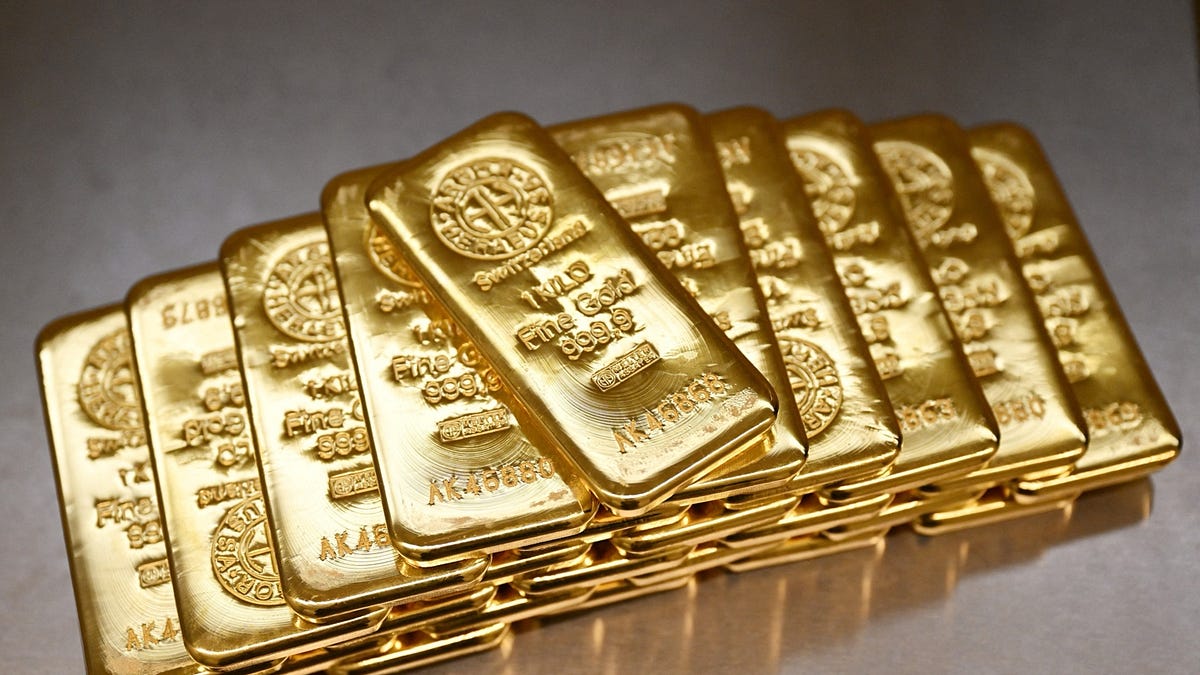
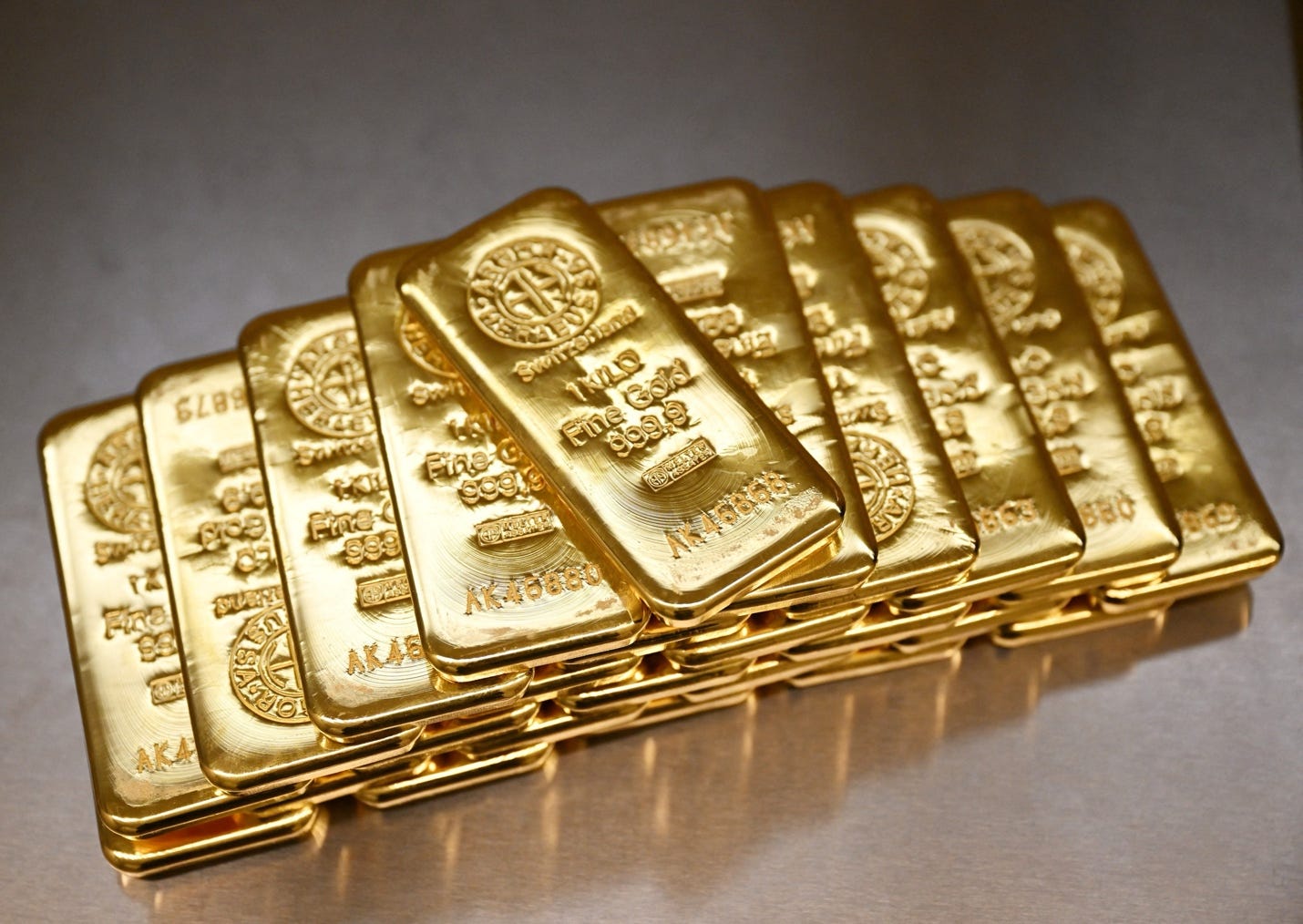
The price of gold may be telling us something important.
For those unfamiliar, Ken Griffin is a hedge fund billionaire who vehemently supported Donald Trump in the last presidential election. In other words, he was one of those ultra-wealthy supporters who didn’t care that Trump was an insurrectionist, a convicted criminal, a friend of Epstein, a conman, a serial bankrupt, and with obvious authoritarian tendencies. What mattered to him were “Tax cuts!” and “Deregulation!” However, such self-serving myopia is common among men of wealth and power, living in a glittering bubble that blinds them to the realities before them.
But a few weeks ago, Ken Griffin revealed that he was devastated to learn that Trump is not, after all, a champion of free enterprise, but rather a system of crony capitalism where business success or failure hinges on political connections . Well, I could have told Griffin that this was coming. In fact, I did .
Anyway, better late than never. Griffin deserves some credit for having the courage to publicly voice his current doubts about Trump, rather than joining the nauseating chorus of praise for the “Dear Leader.” So, I found it interesting that he sees the surge in gold prices as an economic warning sign —a sign that the world is losing faith in America because of Trump.
Here’s the price of gold over the past year. The current price is \(4,037 per troy ounce, a record high that has surged over the past two months. It's up over 54% since mid-November 2024: s_!4XIS!,w_1456,c_limit,f_auto,q_auto:good,fl_progressive:steep/https%3A%2F%2Fsubstack-post-media.s3.amazonaws.com%2Fpublic%2Fimages%2Fc217c547-01a7-4cf8-9f9a-de4f52f8b088_1374x876.png)
Normally I don’t pay much attention to the price of gold, but in this case I think Griffin is right.
Speaking of gold: I generally agree with John Maynard Keynes. He called the obsession with gold a “ barbarous relic .“ Gold can’t really be used as a means of payment (except for the occasional bribe ). Would you buy a house with gold bullion? Some people believe gold will provide a refuge in times of social chaos, but let’s be honest: do you really think gold bullion would help you survive in a post-apocalyptic world like Fallout ?
Despite this, people still hold massive amounts of gold, worth approximately [\(27 trillion . This is more than six times](https://companiesmarketcap.com/gold/marketcap/) [the total value of all cryptocurrencies](https://www.coingecko.com/en/charts) , even with recent surges like Bitcoin . So, as Fallout's [Lucy MacLean](https://fallout.fandom.com/wiki/Lucy_MacLean) said, "Okey, dokey."[](https://www.coingecko.com/en/charts)[](https://fallout.fandom.com/wiki/Lucy_MacLean) So what drives the price of gold, and what do those price fluctuations tell us? Some believe that gold prices reflect expectations of future inflation. This claim was common during the early days of the Obama administration. Conservatives who argued that Obama's policies would cause inflation cited rising gold prices as evidence. In fact, the real price of gold—that is, the price of gold divided by the overall consumer price index—rose significantly during the first few years of Obama's presidency: s_!QR6D!,w_1456,c_limit,f_auto,q_auto:good,fl_progressive:steep/https%3A%2F%2Fsubstack-post-media.s3.amazonaws.com%2Fpublic%2Fimages%2F1ff78d80-6077-47a6-84b6-48daa9e6d4b9_1428x805.png)
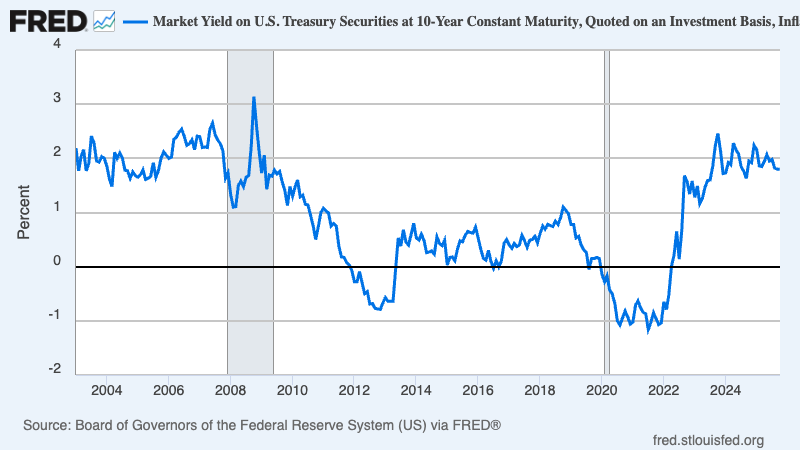
These arguments prompted me to write a somewhat academic blog post —essentially a short paper, but one I tried to make as readable as possible. In it, I argued that holding gold is essentially an alternative to holding bonds, not currency. In other words, the primary factor driving the gold price increase was the sharp decline in real interest rates following the financial crisis. Real interest rates are defined as nominal interest rates minus expected inflation. The collapse of the housing bubble and the subsequent severe recession caused real interest rates to fall sharply.
Real interest rates are directly observable because the U.S. government issues Treasury Inflation-Protected Securities (TIPS). The future payments on TIPS are linked to the Consumer Price Index (CPI), and the TIPS interest rate essentially represents the real interest rate. Meanwhile, the difference (the spread) between the TIPS rate and regular Treasury yields reflects the market’s expectations of future inflation. The sharp decline in TIPS rates following the global financial crisis explains why gold prices rose despite low inflation:

There’s a side issue I’m concerned about these days: TIPS is linked to the CPI. However, the government shutdown has prevented the Bureau of Labor Statistics (BLS) from publishing new reports. This means there’s a very high chance that the next CPI report, scheduled for October 15th, won’t be released on time. It might not even be released at all, and there’s no telling when the new data will be released. So how will the Treasury handle this?
From a broader perspective, if the Trump administration succeeds in politicizing the BLS, TIPS will no longer be protected against inflation. They will only be protected against inflation that the administration recognizes . Have investors ever seriously considered what that means?
Now, back to the main point. As Griffin mentioned, gold prices have recently surged. However, as you can see in my second graph, real interest rates have risen, not fallen. So what’s driving the rise? It’s likely a combination of massive fiscal deficits, the massive spending expansion known as the “One Big Beautiful Bill,” and the AI boom . Concerns that Trump might politicize the Federal Reserve and fuel persistent inflation are also likely contributing factors. However, these high real interest rates should be pushing gold prices down, not up.
So what’s happening now? The most plausible explanation, consistent with Griffin’s observation, is that more and more investors—especially foreign central banks —are no longer viewing U.S. Treasuries as a safe haven and are moving their funds into gold.
Of course, it’s difficult to say exactly what investors fear. They might not even be sure themselves. But given the Trump administration’s aggressive actions, things that were once unthinkable are now quite possible. Runaway inflation concealed by manipulated official statistics? The confiscation of foreign reserves from governments Trump dislikes? The forced conversion of foreign assets into 100-year Treasury bonds? Given the administration’s track record to date, how confident can we be that these things will never happen?
As I mentioned at the beginning of this article, I don’t usually pay much attention to gold, as it doesn’t play a significant role in the modern economy. However, I believe the recent surge in gold prices is sending us a message: the world is losing confidence in the United States.
And perhaps Ken Griffin’s warning shows that even the ultra-wealthy hedge fund moguls are starting to worry about the monster they’ve created.
MUSICAL CODA
Write a comment