OpenAI’s First Hardware Is a $230 Codex Keyboard — Power Tool or Overpriced Toy?
- Early signals: hardware rumors and Codex’s rise
- July 15: Codex Micro officially launches
- How the device works
- Competing interpretations
OpenAI’s First Hardware Is a $230 Codex Keyboard — Power Tool or Overpriced Toy?
OpenAI’s long‑anticipated move into hardware has arrived not as a sleek AI speaker, but as a $230 mini‑keyboard aimed at hard‑core Codex users. The debut raises a central question: is this a glimpse of how humans will manage swarms of AI agents, or just an expensive niche gadget?
Early signals: hardware rumors and Codex’s rise
In the months leading up to the launch, reporting focused on OpenAI’s broader hardware ambitions, including a planned smart home speaker “like an Alexa, Google Home or Apple HomePod, but with ChatGPT built in.” At the same time, OpenAI was doubling down on its Codex coding product, which, together with ChatGPT Work, had reached 8 million active users, according to Codex engineering lead Thibault Sottiaux.
July 15: Codex Micro officially launches
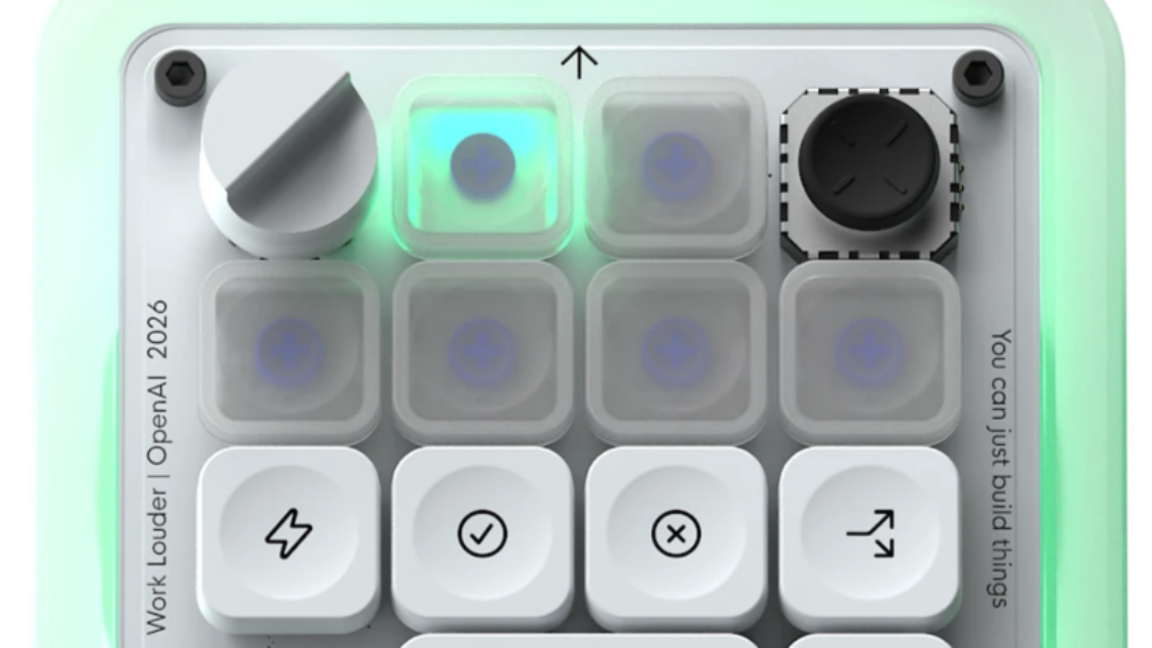
On July 15, OpenAI opened orders for Codex Micro, describing it as “a limited-edition desktop keypad that lets … monitor and control their AI minions.” Built in collaboration with boutique keyboard maker Work Louder, the square macro pad sits beside a regular keyboard as “a physical shortcut box for common Codex actions and shows the status of your agents.”
Multiple outlets framed it as the company’s first branded hardware. Ars Technica called it “a specialized, RGB-lit mini-keyboard designed to let users monitor and quickly interact with multiple Codex agents with a glance and a few clicks,” while Business Insider emphasized that “OpenAI’s new $230 device is for Codex power users.”
How the device works
The Codex Micro closely resembles Work Louder’s existing Creator Micro line, but adds six frosted keys that give a “live view of your Codex threads,” changing color to show whether a task is running, complete, needs feedback, or has hit an error. A joystick, dial, and 13 mechanical switches can be mapped to actions like push‑to‑talk, accepting or rejecting code changes, and jumping between multiple agents.
Competing interpretations
Axios characterizes Codex Micro as “a physical keypad for AI” that hints at “the future of work” involving “managing fleets of agents, not just chatting with one assistant.” The Verge stresses that the pad is “separate from OpenAI’s primary hardware project in development with Ive,” suggesting the main consumer play is still to come. Ars Technica, meanwhile, notes that the device is “at heart simply a slightly modified version of existing third-party hardware,” even as it showcases prominent OpenAI branding.
Together, the reactions frame Codex Micro as both a practical console for today’s AI coders and a test balloon for how tightly OpenAI can integrate its software into dedicated hardware.
Continue reading https://foxvector.com/stories/019f8231-fda8-2d1e-7386-011a62f8247c
Write a comment