South Korea Announces Massive Investment in Chip Production and AI
- Early planning and the AI boom
- June 29: Seoul unveils a national megaproject
- Corporate commitments and regional shift
- Competing visions: growth, risk, and labor
South Korea Announces Massive Investment in Chip Production and AI South Korea is betting more than a trillion dollars that chips, AI, and robots will secure its economic future, even as the scale and speed of the push raise worries over feasibility and social fallout.
Early planning and the AI boom
As global demand for AI infrastructure sent memory prices soaring and helped trigger what some analysts dubbed “RAMageddon,” South Korea’s leading chipmakers, Samsung and SK Hynix, began mapping a massive capacity expansion to ease worldwide memory shortages and capitalize on record profits. Amid this AI-driven boom, public debate grew over how much of the windfall should be shared and how to prepare workers for increasingly automated factories.
June 29: Seoul unveils a national megaproject
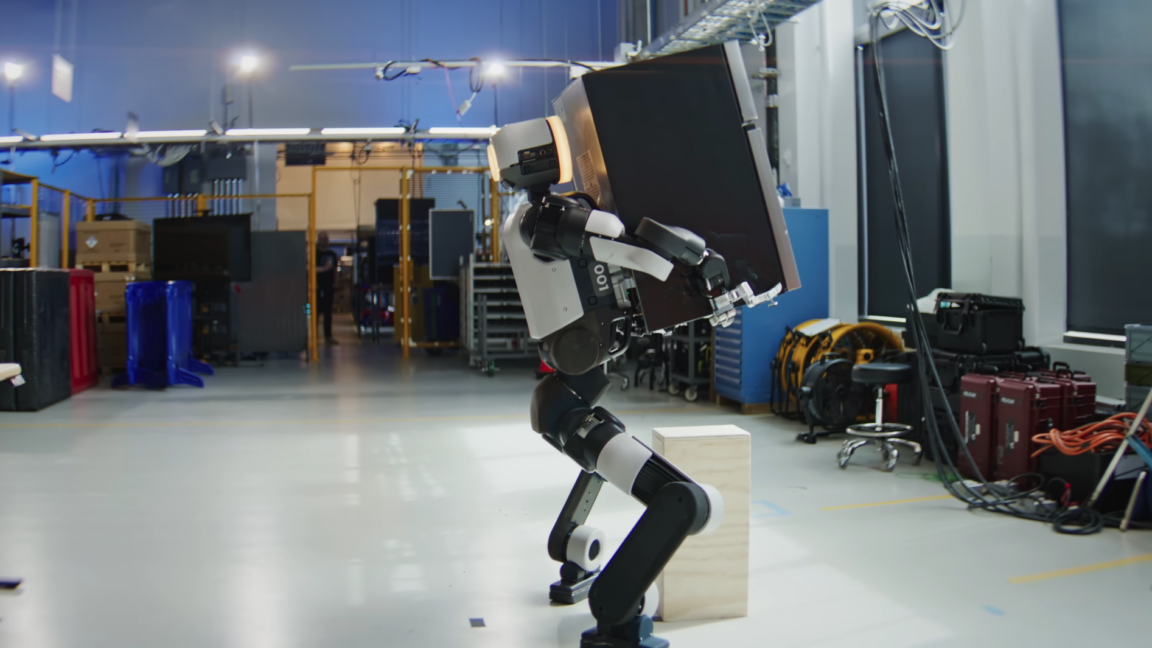
On June 29, President Lee Jae Myung formally unveiled a sweeping national investment strategy centered on semiconductors, AI data centers, and “physical AI,” including humanoid robots. The government framed physical AI and robotics as a new strategic industry and set a goal of commercial humanoid deployment in factories by 2028.
At a televised briefing attended by the chairmen of Samsung and SK Hynix, Lee called semiconductors, physical AI, and AI data centers the “triple axis” of South Korea’s next industrial era and said the country must become an “irreplaceable” industrial power by 2026.
Corporate commitments and regional shift
Samsung and SK Hynix pledged roughly $585–$600 billion for new memory fabrication plants and related facilities, a centerpiece of a broader chipmaking expansion backed by the state. A key move is the plan to spend about $518 billion on four new memory fabs in the historically underinvested southwest, plus $52 billion for a high-bandwidth memory packaging hub in central South Korea.
Including an additional $356 billion earmarked for AI data centers through 2035, the total private commitments by Korean tech and energy groups exceed $900 billion, with overall public–private investment projected around $1 trillion.
Competing visions: growth, risk, and labor
The government argues that existing chip clusters near Seoul have “reached their limits” and that spreading investment southward will share AI-driven wealth more broadly. Officials also insist companies were not coerced into the megaprojects, portraying the state’s role as enabling firms to “invest without losses.”
Industry leaders, while optimistic, caution that large fabs can take close to a decade to fully come online, raising questions over how quickly global memory markets will see relief. Labor unions, meanwhile, are pressing for protections and a fairer distribution of AI-era gains as Hyundai and its Boston Dynamics unit race to deploy humanoid robots to take over repetitive, physically demanding tasks.
As the buildout begins, South Korea’s gamble pits a vision of AI-fueled industrial dominance against concerns over inequality, regional balance, and the human cost of automation.
Continue reading https://foxvector.com/stories/019f16fd-7835-16f5-7199-17e44ff4d8dc
Write a comment