Article Not Found

The article could not be found.

Try searching or paste a Nostr address (naddr)

If you have the article's Nostr address (naddr), paste it in the search box below. We'll attempt to fetch it from the relays and add it to our index.

Cover image for Morgan Stanley Will Use Coinbase and BNY to Power Its New Bitcoin ETF

Morgan Stanley Will Use Coinbase and BNY to Power Its New Bitcoin ETF

Bitcoin Magazine Morgan Stanley Will Use Coinbase and BNY to Power Its New Bitcoin ETF Morgan Stanley has tapped Coinbase and BNY Mellon to serve key custody and administrative roles for its proposed spot Bitcoin exchange-traded fund, according to an amended registration statement filed with the U.S. Securities and Exchange Commission. The filing for the Morgan Stanley Bitcoin Trust outlines a structure in which Coinbase Custody Trust Company and BNY will act as bitcoin custodians, responsible for safeguarding the fund’s digital assets and facilitating transfers tied to share creations and redemptions. BNY will also serve as administrator, transfer agent and cash custodian, overseeing accounting, shareholder records and cash management for the trust. The ETF is designed as a passive vehicle that will hold bitcoin directly rather than using derivatives or leverage. Shares of the trust would reflect the performance of the underlying bitcoin held in custody, giving investors exposure through brokerage accounts without requiring direct ownership of the cryptocurrency. JUST IN: Morgan Stanley issues new SEC filing for a spot Bitcoin ETF, announcing Coinbase and BNY Mellon as the custodians pic.twitter.com/52UCwS7geu — Bitcoin Magazine (@BitcoinMagazine) March 4, 2026 Under the proposed custody framework, most of the trust’s bitcoin would be stored in offline cold-storage vaults, where private keys remain disconnected from the internet. The structure is a popular one and is intended to reduce exposure to cyber threats that have long concerned institutional allocators. A portion of the holdings may move to trading wallets during periods of share creation or redemption, when authorized participants exchange cash for bitcoin or redeem shares for the underlying asset. The filing notes that custody insurance is maintained but shared across multiple clients and may not cover all potential losses. The disclosure mirrors language used across other spot Bitcoin ETF filings, reflecting industry practice as traditional asset managers move into direct digital asset exposure. Morgan Stanley first filed for the trust in January, marking one of the most significant entries by a major U.S. bank into the spot Bitcoin ETF race. Morgan Stanley: Bullish on bitcoin The latest filing comes as Morgan Stanley expands its crypto strategy across its wealth management and brokerage platforms. Executives have said the firm plans to allow clients on its E*Trade platform to buy and sell spot cryptocurrencies through a partnership before rolling out a more integrated custody and exchange solution. Last week at Strategy World, Amy Oldenburg, head of digital asset strategy at Morgan Stanley, said the bank views custody as a core component of its long-term roadmap. The firm manages about $8 trillion in client assets, and leadership has indicated that a significant share of clients already hold crypto off-platform. Bringing those holdings in-house would allow Morgan Stanley to provide custody, trading and related services under its own oversight. The bank has also applied for a national trust bank charter that would permit it to hold cryptocurrencies directly for institutional clients. Approval would position Morgan Stanley to compete with crypto-native custodians and deepen its role in the digital asset market. This post Morgan Stanley Will Use Coinbase and BNY to Power Its New Bitcoin ETF first appeared on Bitcoin Magazine and is written by Micah Zimmerman.

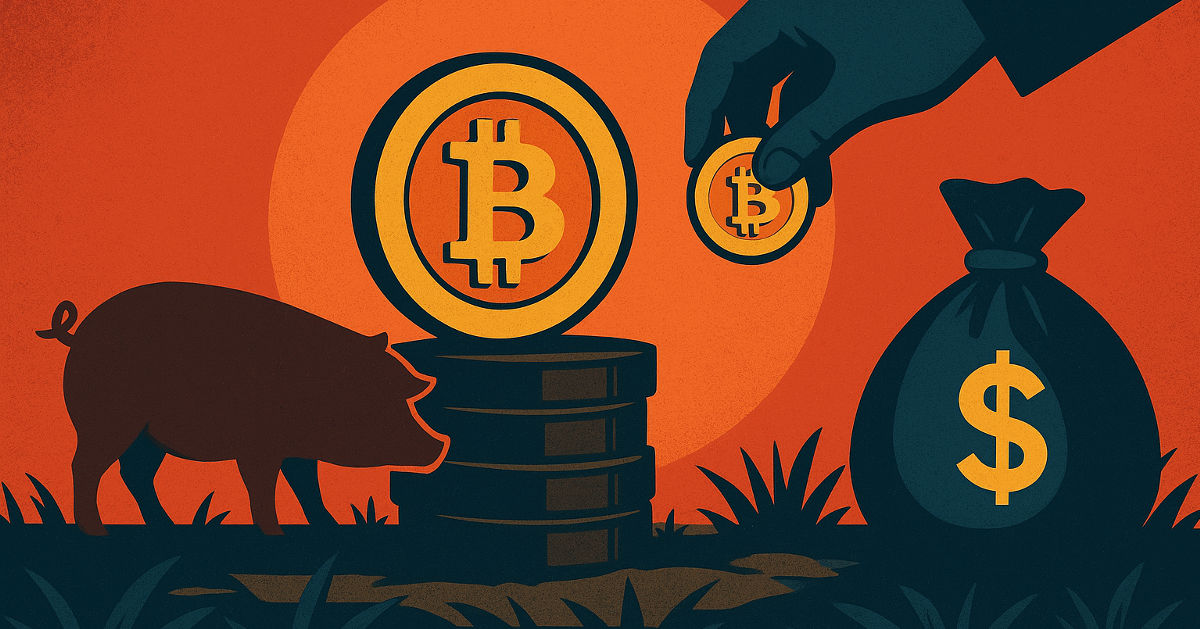
Cover image for U.S. To Seize 127,271 Bitcoin Worth $14 Billion Linked to Massive Southeast Asia Scam

U.S. To Seize 127,271 Bitcoin Worth $14 Billion Linked to Massive Southeast Asia Scam

Bitcoin Magazine U.S. To Seize 127,271 Bitcoin Worth $14 Billion Linked to Massive Southeast Asia Scam The U.S. government is moving to seize 127,271 BTC, valued at roughly $14 billion, tied to a sprawling online investment scam run by Chinese émigré Chen Zhi, 38, and his Cambodia-based Prince Group Transnational Criminal Organization. The action, announced Monday by the U.S. Treasury’s Office of Foreign Assets Control (OFAC) and Financial Crimes Enforcement Network (FinCEN), comes as part of a sweeping crackdown on transnational cybercriminal networks and scams targeting U.S. and allied citizens. Chen Zhi, also known as “Vincent Chen,” had built a multi-billion-dollar empire in Cambodia through online scams that lure victims into fraudulent investment schemes known as “pig butchering” scams. Victims are cultivated over months and persuaded to deposit funds into fake investment platforms. Pig-butchering scam details According to the indictment, filed in the Eastern District of New York, Chen and his co-conspirators lured victims worldwide into fake crypto platforms, using social media and messaging apps to build trust before stealing their funds. The network allegedly operated out of heavily guarded “scam compounds” in Cambodia, where workers were forced and coerced into running the schemes. Prosecutors claim the operation laundered billions in illicit proceeds through shell companies, real estate, gambling ventures, sextortion, and large-scale Bitcoin mining facilities in Asia and the United States. The U.S. government formally alleged that Chen’s network moved and concealed at least 127,000 bitcoin, valued at billions of dollars, across numerous digital wallets. Some speculate that the 127,271 BTC were reportedly stolen in 2020 and tied to the LuBian mining operation. The BTC have sat idle ever since, with the U.S. seeking forfeiture from the defendant. But the U.S. Justice Department confirmed the funds are reportedly in U.S. possession and didn’t explain how they were recovered or transferred. If this is true, the US government would now hold 325,283 BTC, worth over $37 billion. JUST IN: US government will seek forfeiture of 127,271 #Bitcoin worth $14.1 billion tied to pig butchering scam pic.twitter.com/wtA85aacjN — Bitcoin Magazine (@BitcoinMagazine) October 14, 2025 In March, President Trump signed an Executive Order creating a Strategic Bitcoin Reserve and a U.S. Digital Asset Stockpile to centralize government-held crypto. The Reserve, including the $14 billion in seized bitcoin at the time, would be held as a store of value and not sold. Theoretically, if the 127,271 bitcoins from this scam were added to the Reserve, they would remain unsold. Large-scale corruption and abuse The indictment also describes a web of corruption and violence underpinning the enterprise, including bribes to foreign officials, threats, and physical abuse to maintain control over workers and protect the organization. Chen faces charges of conspiracy to commit wire fraud and conspiracy to launder money, both carrying potential decades-long prison sentences. Prosecutors are seeking forfeiture of the bitcoin and crypto holdings and other assets tied to the alleged crimes. The United Kingdom’s Foreign, Commonwealth, and Development Office (FCDO) coordinated parallel sanctions on Chen Zhi, Prince Holding Group, and key associates. Additional laundering sanctions and details In addition to the Bitcoin seizure, Treasury finalized a rule severing Huione Group, a Cambodia-based financial services conglomerate, from the U.S. banking system, according to the U.S. Treasury press release. The company reportedly laundered billions in virtual currency stolen by DPRK-linked hackers and Southeast Asia-based scam networks, including at least $300 million in other cybercrime proceeds. OFAC’s sanctions target 146 entities and individuals tied to Prince Group TCO, including shell companies, real estate firms, banks, and operators of luxury resorts in Cambodia and Palau. The sanctions also extend to facilitators like Palau-based Rose Wang, who helped Chen establish commercial operations abroad, including a 99-year lease for a luxury resort on Ngerbelas Island. Monday’s coordinated U.S.–U.K. action follows earlier Treasury and FinCEN efforts targeting cybercriminals in Southeast Asia, including sanctions against Burmese and Cambodian operators and DPRK-linked money laundering networks. This post U.S. To Seize 127,271 Bitcoin Worth $14 Billion Linked to Massive Southeast Asia Scam first appeared on Bitcoin Magazine and is written by Micah Zimmerman.
Cover image for Bitcoin Price Sinks to $118,000 Amid U.S.-China Trade Tensions

Bitcoin Price Sinks to $118,000 Amid U.S.-China Trade Tensions

Bitcoin Magazine Bitcoin Price Sinks to $118,000 Amid U.S.-China Trade Tensions The bitcoin price dropped to the $118,000s range today after President Trump announced plans to raise tariffs on Chinese goods in response to China’s export controls on rare earth metals. Bitcoin price is down roughly 2.3% in the past 24 hours and about 6% since reaching a record high above $126,000 just four days ago. President Trump threatened a “massive” increase in tariffs on Chinese goods, signaling a sharp escalation in the U.S.-China trade tensions and casting doubt on a planned APEC meeting with President Xi. This came after China imposed new limits on rare earth and related technology trade. “I was to meet President Xi in two weeks, at APEC, in South Korea, but now there seems to be no reason to do so,” Trump said on Truth Social. JUST IN: #Bitcoin falls below $119,000 HODL! pic.twitter.com/e7jXSuswDU — Bitcoin Magazine (@BitcoinMagazine) October 10, 2025 China requires foreign companies to obtain special approval to export products containing even trace amounts of Chinese rare earth elements, which are essential for items ranging from jet engines and electric vehicles to laptops and phones. Trade talks between China and the U.S. this year have addressed rare earths, TikTok, and tariffs, with over three rounds held so far. Following May talks in Geneva, the U.S. said China had agreed to ease some of its rare earth export restrictions. All markets reacted negatively, echoing the sentiment from April when President Trump’s ‘Liberation Day’ tariffs rattled markets. The tariffs in April, via Executive Order 14257, declared a trade deficit emergency, imposing sweeping U.S. import duties. Bitcoin price reaction Bitcoin kicked off October with a surge, reaching all-time highs above $126,000 in the first week. In the past few days, the price had pulled back to the $121,000 range. Some analysts point to signs that the bitcoin market has entered what many describe as the “euphoria phase” of the current bull cycle. If the historical pattern holds, bitcoin’s current euphoria phase may carry it toward the $180,000–$200,000 zone before sentiment shifts. Bitcoin has surged more than 30% since the start of the year, buoyed by sustained inflows into U.S.-listed Bitcoin exchange-traded funds, renewed investor confidence in digital assets, and expectations that the Federal Reserve will move toward cutting interest rates. Crypto-related stocks, like Circle (CRCL), Robinhood (HOOD), Coinbase (COIN), and MicroStrategy (MSTR), declined 3%-6% at times throughout the day. This post Bitcoin Price Sinks to $118,000 Amid U.S.-China Trade Tensions first appeared on Bitcoin Magazine and is written by Micah Zimmerman.
Cover image for Bitcoin Price Crashes to $107,000 As Fear Index Flirts With “Extreme Fear”

Bitcoin Price Crashes to $107,000 As Fear Index Flirts With “Extreme Fear”

Bitcoin Magazine Bitcoin Price Crashes to $107,000 As Fear Index Flirts With “Extreme Fear” Bitcoin price has tumbled to the $107,000 range as all markets enter a phase of pronounced caution. According to the Bitcoin Fear & Greed Index, sentiment currently sits at 28/100, firmly in the ‘Fear’ category. The market would enter the ‘Extreme Fear’ category if the sentiment fell below 25/100. The index, which gauges market emotion on a scale from 0 (extreme fear) to 100 (extreme greed), is a barometer for investor sentiment, highlighting periods when Bitcoin may be undervalued or overextended. The current “fear” in the market and ensuing sell-off may be linked to a rising trade tension between the U.S. and China. President Donald Trump is set to address the nation from the Oval Office on Thursday at 3 p.m. EST, though details about the announcement remain unknown. The Fear & Greed Index has become a popular tool for investors and traders seeking to separate their own emotions from broader market movements. When fear dominates, it’s often a signal for buying opportunities, as investors may be overreacting to price dips. Conversely, periods of extreme greed can indicate overheating and heightened risk. For context, when bitcoin was priced above $124,000 almost two weeks ago, the index was priced above 70, which would be in the ‘greed’ category, according to Bitcoin Magazine Pro data. JUST IN: #Bitcoin dips to $108,765 HODL pic.twitter.com/l0lYtnihrr — Bitcoin Magazine (@BitcoinMagazine) October 16, 2025 Bitcoin price recently Bitcoin’s recent pullback follows a volatile stretch in which the asset surged to all-time highs before retreating. Over the past several days, Bitcoin has hovered between $110,000 and $112,000, bouncing from oversold levels on the Advanced NVT Signal for the first time since the $75,000 mark. According to Bitcoin Magazine Pro, these readings suggest Bitcoin may be temporarily undervalued relative to its network activity. As fear dominates the market, traders may be reluctant to commit capital, keeping Bitcoin in a range-bound pattern. In stark contrast, gold continues its meteoric rise, hitting new all-time highs near $4,270 per ounce. The metal’s year-to-date gain of nearly 60% has outpaced Bitcoin’s roughly 20% growth, reinforcing its status as a safe-haven asset. Right now, the diverging trajectories of Bitcoin and gold illustrate the split between risk-on and risk-off assets. Bitcoin’s Fear & Greed Index reading of 28 really shows heightened market anxiety, while gold continues to attract investors seeking stability. This post Bitcoin Price Crashes to $107,000 As Fear Index Flirts With “Extreme Fear” first appeared on Bitcoin Magazine and is written by Micah Zimmerman.
Cover image for Coinbase Says ‘No’ to CLARITY Act, Citing Crypto Restrictions

Coinbase Says ‘No’ to CLARITY Act, Citing Crypto Restrictions

Bitcoin Magazine Coinbase Says ‘No’ to CLARITY Act, Citing Crypto Restrictions Coinbase CEO Brian Armstrong said the exchange cannot support the Senate Banking Committee’s latest draft of the CLARITY Act, warning that the bill, as written, would leave the U.S. crypto industry worse off than the current regulatory status quo. In a post on X, Armstrong cited several concerns, including what he described as a de facto ban on tokenized equities, new restrictions on decentralized finance that could grant the government broad access to users’ financial data, and provisions that weaken the Commodity Futures Trading Commission while expanding the Securities and Exchange Commission’s authority. “After reviewing the Senate Banking draft text over the last 48hrs, Coinbase unfortunately can’t support the bill as written,” Armstrong posted. He also criticized draft amendments that would eliminate rewards on stablecoins, arguing they would allow banks to suppress emerging competitors. “We’d rather have no bill than a bad bill,” Armstrong said on X, adding that Coinbase would continue pushing for a framework that treats crypto on a level playing field with traditional financial services. BREAKING: Coinbase CEO Brian Armstrong says Coinbase "can't support" the crypto market structure legislation as currently written "We'd rather have no bill than a bad bill." pic.twitter.com/3BCgWw0kM9 — Bitcoin Magazine (@BitcoinMagazine) January 14, 2026 The comments come a day before the Senate Banking Committee is expected to mark up the CLARITY Act on Thursday, January 15. The legislation is trying to clarify U.S. digital asset market structure by defining categories such as digital commodities, investment contracts, and payment stablecoins, while dividing oversight between the SEC and CFTC. Coinbase’ issues with stablecoin rewards Stablecoin rewards have emerged as a flashpoint in negotiations. Coinbase had reportedly warned lawmakers it may withdraw support for the bill if it restricts yield programs tied to stablecoins like USD Coin. Coinbase shares in interest income generated from USDC reserves and uses part of that revenue to offer incentives to users, including rewards of roughly 3.5% for Coinbase One customers. Stablecoin-related revenue may have reached $1.3 billion in 2025, making the issue central to Coinbase’s business model. Banking groups argue that yield-bearing stablecoins could draw deposits away from traditional banks, while crypto firms counter that banning rewards would stifle innovation and push users toward offshore platforms. “I’m actually quite optimistic that we will get to the right outcome with continued effort,” Armstrong later posted on X. “We will keep showing up and working with everyone to get there.” Michael Saylor, executive chairman of Strategy, retweeted Armstrong’s post, showing his own support with the decision. This post Coinbase Says ‘No’ to CLARITY Act, Citing Crypto Restrictions first appeared on Bitcoin Magazine and is written by Micah Zimmerman.
Showing limited results (5 articles)

Sign in to see more results and unlock full search capabilities!

Sign In
Return to Homepage