Woman Struck and Killed by Train Near Petrovaradin
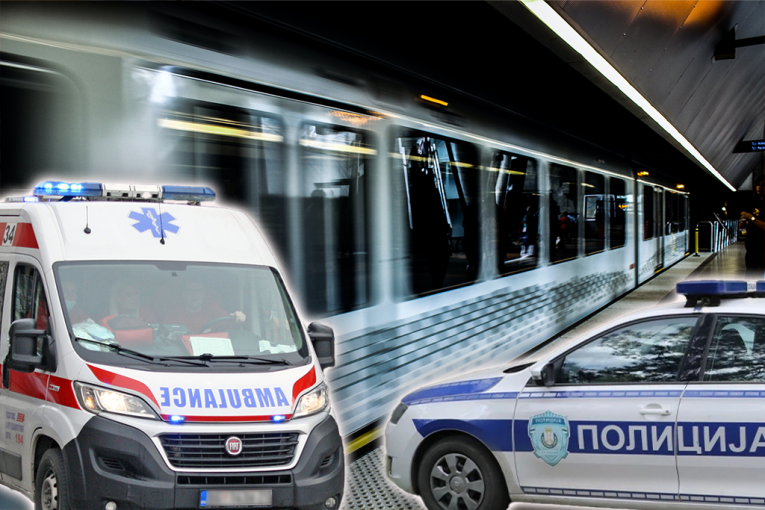
Woman Struck and Killed by Train Near Petrovaradin pro-government Pro-government coverage presents the Petrovaradin train death as a singular, tragic accident on the Subotica–Belgrade line, focusing on the precise timeline, suspension of traffic, and the actions of police and rail authorities. It highlights official statements and offers practical safety instructions to citizens, while avoiding structural criticism of the government or railway system. @Republika Media from both sides report that a woman was struck and killed by a passenger train on the railway section between Petrovaradin and Sremski Karlovci in the early evening, around 18:50, on 20 February 2026. The train was traveling on the Subotica–Belgrade Center route when it hit the victim, leading to an immediate halt of the service on that stretch and leaving passengers temporarily stranded on board while police and emergency services conducted an on-site investigation and evidence collection.
Across the spectrum, coverage notes that rail traffic on this line was suspended or significantly disrupted following the collision and that the formal information about the interruption came from the national rail operator, cited as the main institutional source. Reports agree that the victim was initially unidentified and that the case is being handled through standard procedures involving police, forensic teams, and railway authorities, framed as part of broader concerns over rail safety and adherence to protocols in accident situations.
Points of Contention
Framing of the incident. Opposition-aligned outlets tend to frame the death near Petrovaradin as symptomatic of wider systemic safety failures on Serbia’s railways, using the basic facts to segue into criticism of infrastructure neglect and government oversight. Pro-government media, by contrast, present the incident as a tragic but isolated event, stressing the chronological sequence and operational details without expanding into structural critique. Where opposition coverage might link this case to a pattern of accidents, pro-government coverage keeps the focus tightly on this single occurrence and the immediate response.
Institutional responsibility. Opposition sources are likely to emphasize the role of the state, railway regulators, and public companies, questioning whether sufficient safety measures, signaling, and protection of track-adjacent areas were in place. Pro-government outlets foreground the statement of the rail operator and the actions of police and emergency services, portraying institutions as responsive and orderly. While opposition reporting tends to ask whether more could have been done to prevent the fatality, pro-government coverage reinforces the idea that procedures functioned as intended once the accident occurred.
Public messaging and practical advice. Opposition-aligned media usually allocate more space to commentary, eyewitness perspectives, or critical expert views, with less emphasis on didactic how-to guidance. Pro-government outlets in this case prominently insert practical instructions for citizens on what to do if they find a lifeless body or if they are involved in a traffic accident, presenting checklists about calling emergency numbers, not touching the body, and securing the scene. This shifts part of the focus from institutional accountability toward individual responsibility and proper citizen behavior in emergencies.
Tone toward authorities and reforms. Opposition coverage often adopts a sharper tone toward the government, using incidents like this to question the sincerity or effectiveness of promised transport and safety reforms. Pro-government outlets maintain a neutral-to-supportive tone, avoiding direct criticism and instead reinforcing the narrative that ongoing reforms and procedures are in place and functioning. While opposition reports are more likely to call for investigations, resignations, or policy changes, pro-government reports primarily highlight official information and avoid politicizing the accident.
In summary, opposition coverage tends to situate the woman’s death within a broader critique of rail safety, institutional neglect, and government responsibility, while pro-government coverage tends to treat it as a discrete tragedy, emphasizing official statements, procedural response, and citizen guidance without challenging the authorities.
Story coverage nevent1qqszwhyf93d4smp0c0ez9l5q7eeuukutgf3zat347txhnf94m8jw8pgnu2sdg nevent1qqsdjylv08r82p2thqyt7lxf979mj0tq8mk9yyuj5umj2m7dganxapg7jlj3f