Ukraine Dismantles Alleged Russian Assassination Group
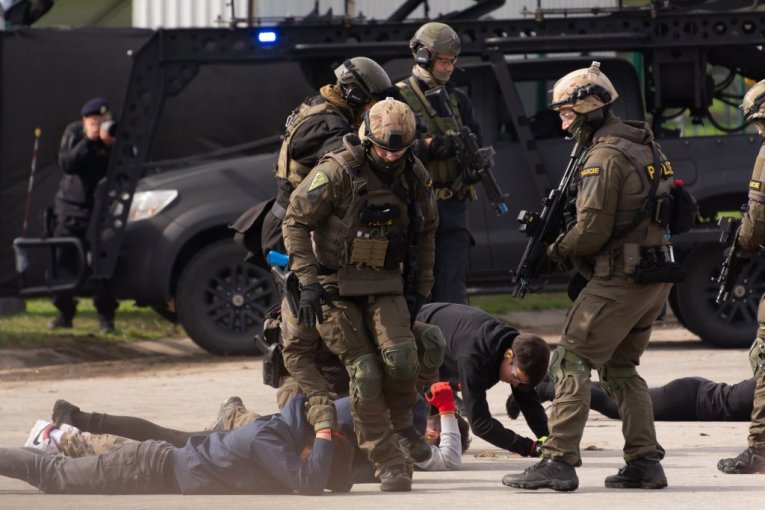
Ukraine Dismantles Alleged Russian Assassination Group pro-government Pro-government coverage portrays the dismantling of the alleged Russian assassination group as a major victory for Ukrainian security services, emphasizing the dramatic nature of the plot, the high bounties, and the successful Enigma-style operation that led to multiple arrests. These outlets use the case to underscore the state’s competence and determination in protecting officials and journalists from Russian terror tactics. @Telegraf @Republika Ukrainian security services are reported by both opposition and pro-government outlets to have dismantled an alleged Russian-directed assassination network operating in Ukraine and Moldova, targeting high-profile public figures such as military intelligence officers and journalists. Coverage agrees that around ten suspects were detained, that the group was allegedly supervised by Russian handlers, and that promised payments per killing ranged roughly from tens of thousands of euros to about 100,000 dollars, with methods said to include close-range shootings, car bombings, and other explosive attacks meant to eliminate specific individuals.
Across outlets, the shared context is that this alleged network is seen as part of Russia’s broader covert campaign to undermine Ukraine’s political and military leadership and intimidate civil society figures during the ongoing war. Both sides situate the arrests within the work of Ukrainian security and intelligence institutions, which are portrayed as actively countering sabotage and assassination plots, and they note that the case reflects the continuing use of clandestine operations alongside open military aggression, highlighting the dangerous environment in which Ukrainian officials, soldiers, and journalists currently operate.
Points of Contention
Framing of the threat. Opposition-aligned sources tend to describe the uncovered group as one of several Russian or Russia-linked assassination structures, stressing systemic infiltration risks and possible failures of Ukrainian counterintelligence, while pro-government outlets emphasize the dramatic neutralization of a “death squad” to showcase security services’ vigilance and competence. Opposition reporting is more likely to treat the case as evidence that the threat remains pervasive and partially uncontrolled, whereas pro-government reports present it as proof that the worst plots are being detected in time. The resulting tone differs between warning about ongoing vulnerabilities and celebrating an operational success.
Portrayal of Ukrainian authorities. Opposition sources generally acknowledge the success of the Enigma-type operation but pair it with criticism of broader governance, questioning whether earlier intelligence lapses enabled such a network to form and operate in the first place, while pro-government outlets largely highlight the professionalism and efficiency of the security services. In opposition coverage, the arrests may be framed as reactive—stopping plots only after they are already advanced—whereas pro-government media tend to cast them as proactive and well-coordinated. This leads opposition pieces to call for deeper reforms and accountability, while pro-government stories underscore continuity and institutional strength.
Use of detail and sensationalism. Opposition outlets are more likely to scrutinize and sometimes downplay sensational elements like exact bounty amounts or cinematic “courier” covers, treating them as claims that require verification and situating them within patterns of wartime propaganda, while pro-government reporting often foregrounds such vivid details to dramatize the cruelty and reach of Russian operations. Opposition narratives tend to focus on legal procedures, chain-of-command questions, and the need for transparent investigations, whereas pro-government pieces focus on the graphic nature of planned killings and the dramatic arrests, sometimes accompanied by videos and strong language. The different level of sensational framing contributes to either a more sober, investigative tone or a more mobilizing, emotional one.
Political implications inside Ukraine. Opposition-aligned media often link the case to domestic political debates, suggesting that repeated assassination plots raise questions about internal security policy, protection of journalists, and the government’s handling of dissent, while pro-government outlets usually avoid connecting the story to internal criticism and instead frame it as a unifying national security issue. Where opposition coverage might ask whether certain critics or independent voices are sufficiently protected or selectively prioritized, pro-government coverage tends to emphasize that all patriotic figures are targets of Russian terror and that the state is acting as their shield. This divergence shapes whether the story is primarily used to pressure authorities for change or to rally support around them.
In summary, opposition coverage tends to treat the dismantling of the alleged assassination group as both a serious Russian threat and a lens for questioning internal security gaps and demanding greater transparency, while pro-government coverage tends to highlight the same incident as a dramatic validation of Ukrainian security services’ effectiveness and a rallying example of state protection against Russian terror.
Story coverage nevent1qqsxn6er7nnjzr8ey4sznlu3cxy58trctjayzenf2mpn8gv3nag7pncxwzqdd nevent1qqsv3ga8fcn0k5geyg0rlf9ajk6p86fyf9q4enkr9t939qd4g8xf7ggkyxyc2