Serbian Army Conducts Specialist Training for Logistics Soldiers
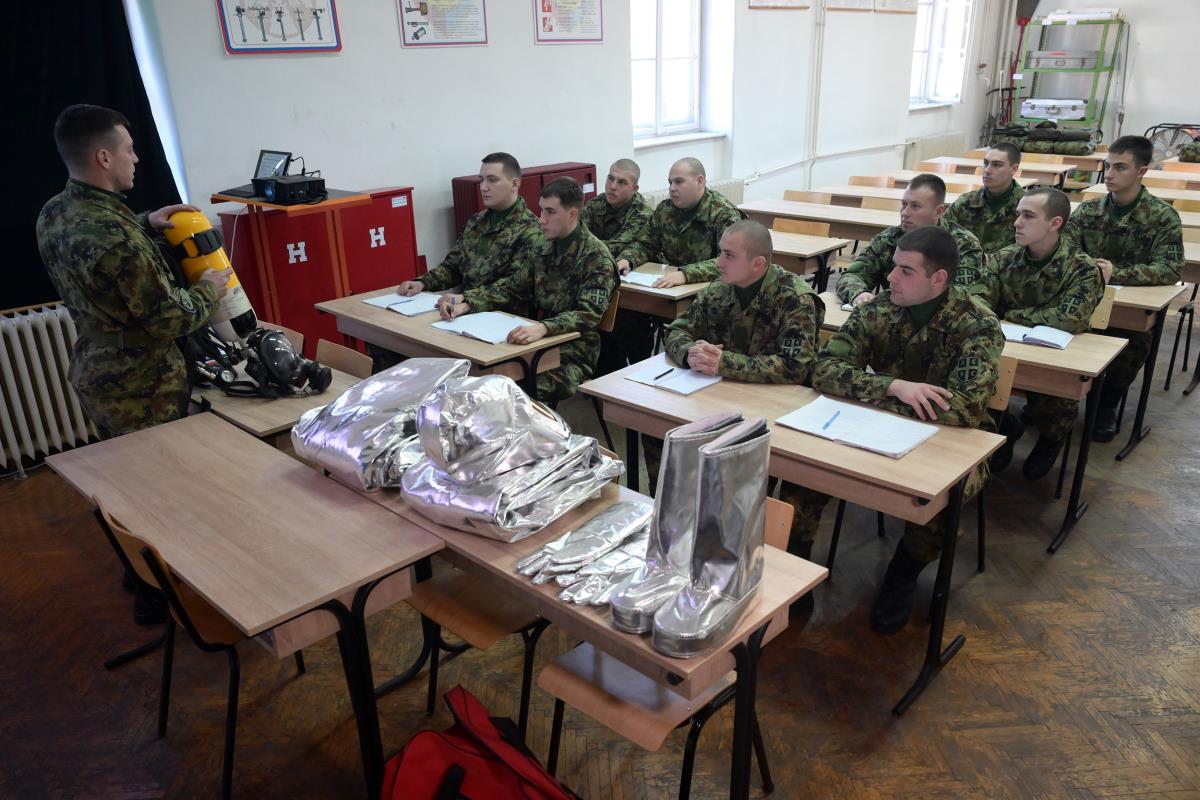
Serbian Army Conducts Specialist Training for Logistics Soldiers pro-government Pro-government coverage portrays the logistics specialist training as a key component of Serbia’s defense modernization, combining theory and practice to prepare volunteers for over 20 crucial support roles. It stresses institutional professionalism, emphasizes the program’s role in improving readiness and disaster-response capacity, and highlights the prospect of stable employment through transition into professional military service. @Kurir @Telegraf Soldiers on voluntary military service in the Serbian Army are currently undergoing specialist training in logistics at the Logistics Training Center, where they are prepared for more than 20 different duties. Coverage agrees that the program combines theoretical instruction with intensive practical exercises and that recruits are evaluated at the end of the course before being assigned to specific units, with the possibility of continuing as professional soldiers. The specialties publicly highlighted include medics, firefighters, drivers, mechanics, and cooks, and reports concur that the aim is to staff a broad range of support positions essential to the functioning of the Serbian Army.
Across the spectrum, it is acknowledged that this initiative is part of the broader system of voluntary military service in Serbia and that logistics capabilities are considered a crucial support pillar for the armed forces. Media descriptions converge on the idea that the Logistics Training Center functions as a central institution for shaping these future logistics specialists, integrating classroom learning with field practice. Both sides generally accept that the training is framed by ongoing efforts to modernize the army’s structure and improve readiness, and that the program is presented as offering employment prospects and a defined career pathway in professional military service.
Points of Contention
Motives and framing of the program. Opposition-leaning outlets tend to cast such logistics training cycles as part of a broader political campaign to showcase military strength and distract from domestic socioeconomic issues, even when they relay the basic facts of the training. Pro-government media, by contrast, frame the same training as routine professional development aimed at raising operational standards and creating youth employment opportunities. While opposition narratives stress the potential propaganda value and timing of the announcements, pro-government reports highlight institutional continuity, technical skills, and career stability for volunteers.
Employment prospects and social impact. Opposition sources often question how many trainees actually secure long-term professional posts, portraying the promised employment opportunities as overstated and insufficient to offset broader youth unemployment and brain drain. Pro-government outlets emphasize the training as a concrete pathway into professional military service, underscoring job security, regular income, and social benefits as tangible gains. Where opposition voices see a narrow, state-centered job channel with limited reach, pro-government coverage presents the program as a meaningful instrument of social policy and support for young people.
Militarization and security policy. Opposition-aligned commentary frequently situates logistics training within a larger concern about creeping militarization of society, arguing that the government over-prioritizes defense spending and military visibility relative to health, education, and civilian infrastructure. Pro-government media stress that logistics training is non-combat in focus and framed as necessary for disaster response, medical support, and technical maintenance, thus presenting it as aligned with peacekeeping and civil protection roles. The former warn about symbolic and budgetary signals sent by expanding or heavily publicizing such programs, while the latter emphasize responsible defense policy and Serbia’s need for a well-prepared support corps.
Transparency and institutional credibility. Opposition sources typically push for more detailed data on costs, selection criteria, training quality, and placement rates, suggesting that the absence of granular information undermines trust in official narratives about success. Pro-government outlets largely rely on Ministry of Defense communications, official statements, and curated on-site reporting, portraying institutions as competent and trustworthy stewards of the program. Thus, opposition coverage leans on skepticism toward official numbers and motives, whereas pro-government coverage reinforces confidence in the army’s professionalism and the state’s management of training processes.
In summary, opposition coverage tends to treat the logistics specialist training as a politically instrumentalized, only partially transparent program whose social and employment benefits are overstated, while pro-government coverage tends to present it as a standard, well-run pillar of defense modernization that offers real professional opportunities and strengthens both the army and broader society. Story coverage nevent1qqsv0wd5u52m07e2wyrr68mhxsd4jcu4cmya0keg4x4cda5v8rq747c3edctm nevent1qqsd33uh2c5h0nrvjwxafje0fwfm54cndsyyc2dffld9323arjdq96q7cadcx