Police in North Macedonia Foil Terrorist Plot After FBI Tip
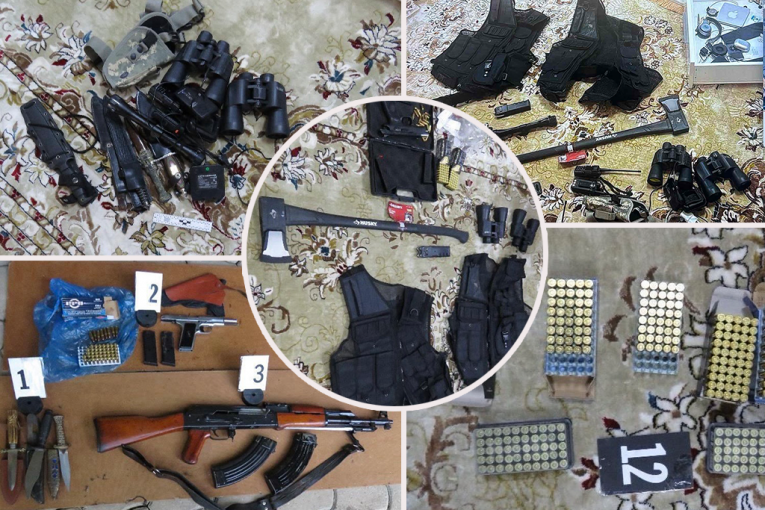
Police in North Macedonia Foil Terrorist Plot After FBI Tip pro-government Pro-government outlets present the foiling of the terrorist plot as a success of the current government’s security apparatus, stressing rapid action after the FBI tip, close international cooperation, and a firm legal response including weapons seizures and pretrial detention. They focus on reassuring the public that institutions function effectively and that strong law-and-order policies are keeping potential threats under control. @Alo! @Telegraf @Republika Police in North Macedonia, acting on an FBI tip, arrested a 20-year-old man from the Tetovo region on suspicion of planning a terrorist attack, after he allegedly threatened a mass shooting via the online platform Discord. Both opposition and pro-government outlets report that the suspect cited a US school shooting, specifically Adam Lanza’s 2012 Sandy Hook massacre, as inspiration, and that a substantial cache of weapons and ammunition was seized from his home, with his grandfather also facing charges for illegal firearm possession. They agree that prosecutors have filed terrorism-related charges along with illegal weapons charges, that a request for 30 days of pretrial detention was submitted to the Basic Court in Skopje, and that the case is formally being handled through the public prosecutor’s office following standard criminal procedure.
Across the spectrum, coverage situates the case within broader concerns about online radicalization, gun access, and the influence of high-profile US mass shootings on vulnerable young men abroad. Both opposition and pro-government media emphasize the role of international cooperation, highlighting that the FBI’s cyber monitoring and intelligence-sharing triggered the Macedonian investigation, and they frame the operation as an example of joint security work between North Macedonia and US institutions. There is shared acknowledgment that the incident raises questions about mental health, youth exposure to violent content, and the capacity of domestic institutions—police, prosecutors, and the courts—to detect and disrupt potential attacks before they occur, as well as about the need to tighten control over privately held weapons.
Points of Contention
Framing of state competence. Opposition-aligned outlets tend to portray the episode as evidence that local security services depend heavily on foreign partners and may have systemic blind spots, stressing that without the FBI warning, domestic authorities might have missed the threat. Pro-government media instead highlight the rapid reaction of police and prosecutors once the tip arrived, presenting the case as proof that Macedonian institutions are capable, responsive, and well-integrated into international security networks. Opposition pieces more often question whether similar threats without foreign input would be caught in time, while pro-government coverage uses the incident to bolster the image of a functional security apparatus under current leadership.
Political responsibility and credit. Opposition reporting generally downplays or omits any praise of the ruling authorities, occasionally hinting that politicians are too quick to take credit for work done by rank-and-file officers and international partners. Pro-government outlets more explicitly link the successful operation to the policies and stewardship of the current government, suggesting that reforms, cooperation agreements, and resource allocations made this response possible. Where opposition voices imply that the government is exploiting the case for public relations and distraction from other issues, pro-government narratives cast the outcome as a tangible success delivered by those in power.
Narrative focus: security vs. civil liberties and social causes. Opposition sources are more inclined to raise concerns about over-securitization, potential overreach in surveillance, and the risk that dramatic terrorism labels might be applied too broadly, while also probing deeper into root causes like mental health services, socio-economic conditions, and online platform governance. Pro-government media, by contrast, concentrate on the operational aspects of the raid, the seized arsenal, and the legal steps taken, foregrounding deterrence and strong punitive measures over discussion of structural or social reforms. This leads opposition coverage to question whether authorities are doing enough beyond law enforcement, whereas pro-government coverage reinforces a law-and-order narrative with limited emphasis on underlying prevention.
Use of fear and public reassurance. Opposition-aligned outlets are more prone to caution against sensationalism, criticizing the use of dramatic language or imagery that could inflame public fear or be used to justify broader security crackdowns, and they sometimes call for clearer, more measured communication from officials. Pro-government reports, often featuring photos of seized weapons and strong statements from authorities, lean into the gravity of the threat to underscore the necessity of firm state action and to reassure citizens that the situation is under control. As a result, opposition narratives warn about politicized fear and the need for transparency, while pro-government narratives use the seriousness of the incident to validate existing security policies and calm public anxiety.
In summary, opposition coverage tends to question institutional preparedness, political self-congratulation, and the balance between security and deeper social remedies, while pro-government coverage tends to emphasize swift cooperation with the FBI, effective law-enforcement action, and the operation’s value as proof that current security and governance structures are working.
Story coverage nevent1qqswaazdhr5j8tlwzwccclc62lcf5s7e4kdcvtj4x8zj6xgje3yayhqyqh03g nevent1qqs2t43wdzf4ddz3n4v42zyz59npg2fpc5hnfdnq5v5676nn3enuf8c04wfy7 nevent1qqsqhp269wcg0sgs4xkh0tm0xfyfpurcepvm9jv28szcd88u9m2nfmcygnaxq nevent1qqsq22dh5h5rry5x0285z9scyxdwyy6grzemuj9cnk388n658ghmqnq4g33yd