Two Men Missing Near Barje Lake in Serbia; Search Underway
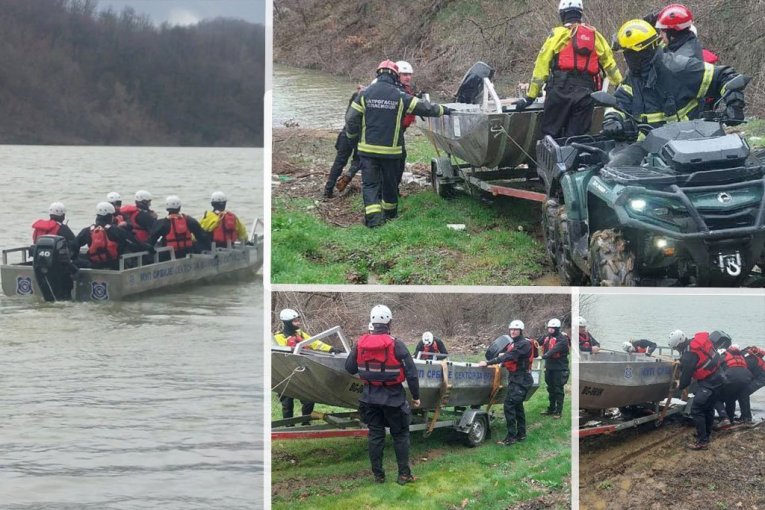
Two Men Missing Near Barje Lake in Serbia; Search Underway pro-government Pro-government coverage presents the Barje Lake disappearance as an unfolding human drama in which police, firefighters-rescuers, and locals are working tirelessly and in close coordination, using boats and sonar in difficult terrain. These outlets stress rapid official response, ongoing hope for a positive outcome, and avoid framing the incident as evidence of systemic institutional failure. @Republika @Telegraf @Alo! Two men, aged around 38 and 47 from the Leskovac area, have been reported missing in the vicinity of Barje Lake in southern Serbia, after relatives could not reach them by phone since the previous evening. Both opposition and pro-government outlets agree that police, firefighters-rescuers, gendarmerie units, and local volunteers have been searching continuously for more than 24 hours, starting Thursday around 4 p.m., in and around the lake, nearby rivers, and rugged terrain near the village of Crcavac, using boats, sonar, and other equipment. The men were last associated with a cottage near the lake, and there are circulating reports about a capsized boat, although officials have not confirmed a definitive cause or scenario, and no conclusive physical trace—such as bodies, personal belongings, or clear debris—has yet been found.
Across the spectrum, coverage situates the incident within the broader context of winter conditions, difficult and partially inaccessible terrain, and the institutional framework for search and rescue operations in Serbia, involving coordination among police, fire-rescue services, emergency teams, and local communities. Media on both sides underscore the emotional strain on families and friends, who are portrayed as anxiously waiting for news and stressing that the missing men were familiar with the lake area and regular visitors there. Outlets concur that the search remains active and open-ended, that investigators are considering multiple possibilities—ranging from an accident on the water to other unexplained circumstances—and that the outcome is still uncertain, with public authorities urging patience while procedure-driven, methodical searches continue.
Points of Contention
Framing of the state’s response. Opposition-aligned outlets tend to frame the search as either potentially delayed, inadequately equipped, or symptomatic of under-resourced emergency services, sometimes highlighting any gaps in specialized gear, manpower, or coordination. Pro-government outlets, by contrast, emphasize quick police reaction, continuous day-and-night operations, and the presence of multiple agencies as proof that the state apparatus is functioning responsibly. While opposition narratives may question whether institutional negligence contributed to the disappearance or the difficulty of the search, pro-government reporting often spotlights official statements and images of rescuers at work to convey diligence and competence.
Possible causes and speculation. Opposition coverage is more likely to entertain a wider range of scenarios—beyond a simple boating accident—including foul play, security lapses around the lake, or prior complaints about safety that allegedly went unaddressed. Pro-government outlets generally stress that nothing has been confirmed and tend to lean toward an accidental explanation, treating rumors of a capsized boat cautiously and largely echoing official lines that investigation is ongoing. Where opposition media may amplify eyewitness doubts, contradictions, or earlier incidents at Barje Lake to suggest a systemic safety problem, pro-government sources highlight the mystery mainly as human drama rather than as evidence of deeper structural failings.
Use of emotional narratives. Opposition-aligned reports often use the anguish of relatives and friends to question whether the authorities did everything possible from the very first hours, sometimes pairing emotional testimonies with implicit criticism of institutional readiness. Pro-government outlets also foreground the fear and hope of families and locals, but largely to underline national solidarity and the perseverance of rescuers, rather than to channel anger toward officials. Both sides quote friends describing the men as experienced and familiar with the lake, yet opposition pieces may treat this as grounds to doubt the official working hypotheses, while pro-government reports present it mainly to heighten the sense of mystery and tragedy.
Broader political context. In opposition media, the disappearance near Barje Lake can be woven into a broader narrative about governance problems, citing previous cases where search-and-rescue, rural infrastructure, or water safety allegedly fell short, thus treating this event as another symptom of systemic mismanagement. Pro-government outlets, however, tend to de-politicize the incident, portraying it as an unfortunate but isolated emergency and focusing on operational updates rather than tying it to debates about reforms, budgets, or accountability. Where opposition sources may invite activists or independent experts to comment on institutional shortcomings, pro-government reports more often feature official spokespeople and avoid turning the search into a critique of national or local authorities.
In summary, opposition coverage tends to foreground doubts about institutional capacity, timelines, and broader systemic safety issues surrounding Barje Lake and similar incidents, while pro-government coverage tends to highlight swift official action, humanize the tragedy without politicizing it, and stress that the authorities are diligently pursuing all leads in a difficult search.
Story coverage nevent1qqsg96se2dewuxc3v344a848a52ex4s3uag9ytu7n3zn3xmunxy357cqmmwkl nevent1qqst7l6dlvqrxmdrrjzsr9c9fakjmzqrvn48r09n5ycrc2nt0y0j5ugsfafc4 nevent1qqsp0rvxpalzpa7t968wqqhlu77qu5wm6n2kk7gq3d5atkrhzq2zesqslnr9u nevent1qqsvgsn9j2ywlm8v23cmjvaw29j6jawj4mwxgqsknwxyz4fu9996fsqgacn8s nevent1qqs0yxzl76eycwjxqaeqwwcxqthy5y4elsr6xjvc6x7z3cgf7letr8cwk9ukw