Astrophysicist Karl Grillmeyer Murdered Outside California Home
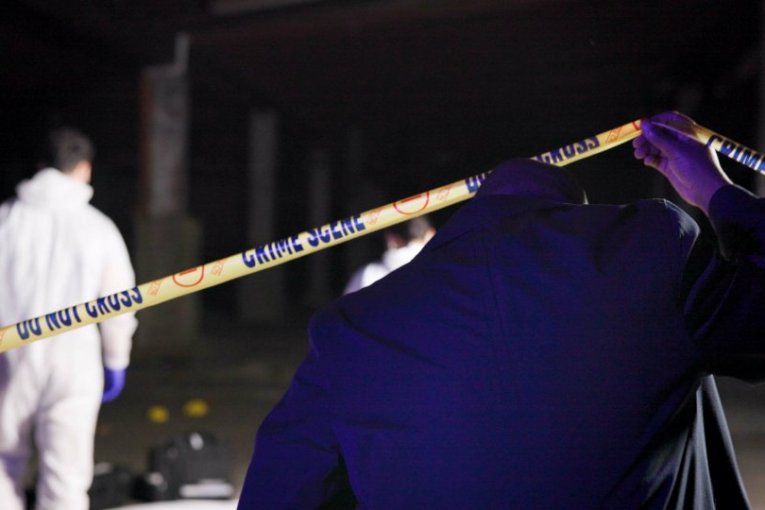
Astrophysicist Karl Grillmeyer Murdered Outside California Home pro-government Pro-government coverage portrays Grillmeyer as a brilliant astrophysicist whose discovery of water and potential life-supporting conditions on another planet may be central to understanding his murder, casting the killing as a possibly targeted ‘liquidation.’ These outlets emphasize the swift arrest of a suspect while heightening the sense of mystery and suggesting that his scientific work, rather than ordinary criminality alone, could be at the heart of the case. @Republika @Telegraf Astrophysicist Karl Grillmeyer, a prominent researcher known for his work on the Milky Way and on detecting water and potentially life-supporting conditions on a distant planet, was shot and killed outside his home in California. Both sides report that police quickly identified and arrested 29-year-old Freddie Snyder, who is being held on suspicion of murder and car theft, though authorities have not yet publicly established a clear motive or detailed any prior relationship between Snyder and Grillmeyer.
Coverage across outlets agrees that Grillmeyer was a respected figure in the scientific community, with significant contributions to astrophysics and exoplanet research, particularly the discovery of water or conditions favorable to life beyond Earth. Reports also concur that the investigation is ongoing, that U.S. law enforcement has released only limited information so far, and that questions remain about why Grillmeyer was targeted and whether the crime is linked to his professional work or to more ordinary criminal circumstances.
Points of Contention
Motive and significance of the murder. Opposition-aligned outlets tend to frame the killing as potentially connected to systemic issues such as crime, policing failures, or broader social instability, downplaying any link to his scientific breakthroughs. Pro-government outlets instead emphasize the mystery around whether Grillmeyer “knew too much,” highlighting his discovery of water and possible life-supporting conditions on another planet and hinting that his research could be central to the motive. While opposition sources might treat the case as another high-profile but ultimately conventional homicide, pro-government reporting leans into the notion that his scientific work could be the key to understanding why he was targeted.
Portrayal of law enforcement and institutions. Opposition coverage is likely to stress gaps in information from police, question investigative transparency, and use the case to illustrate perceived weaknesses in U.S. public safety institutions. Pro-government sources, by contrast, largely present law enforcement as effective and prompt, underlining the swift arrest of Snyder and framing U.S. institutions as capable but confronted with an unusually enigmatic crime. Where opposition voices may scrutinize institutional performance, pro-government accounts highlight procedural competence while steering attention to the intrigue of the case.
Framing of Grillmeyer’s scientific work. Opposition media are inclined to mention Grillmeyer’s exoplanet and Milky Way research in a factual, background-oriented way, treating it as context rather than the central narrative driver. Pro-government outlets place his discovery of water and possible life on another planet at the heart of their storytelling, using dramatic language and speculative headlines about whether he “knew too much.” In this way, opposition narratives center on a murdered scientist as victim of crime, whereas pro-government narratives amplify his research as a potentially explosive element that may have precipitated his death.
Use of sensationalism versus policy angles. Opposition-aligned sources are more likely to connect the incident to broader debates on governance, crime policy, or social decay, embedding the murder within a structural critique of conditions in the United States. Pro-government media favor a more sensational, almost thriller-like presentation, with talk of “liquidation” and mystery, turning the story into a dramatic episode surrounding a brilliant scientist and a shadowy motive. As a result, opposition coverage leans toward policy and institutional implications, while pro-government coverage leans toward narrative suspense and speculative intrigue.
In summary, opposition coverage tends to treat Grillmeyer’s killing as a high-profile but structurally explicable crime tied to broader systemic issues, while pro-government coverage tends to dramatize the event as a mysterious, possibly research-linked “liquidation” that underscores the extraordinary significance of his scientific discoveries. Story coverage nevent1qqs82eu9z39rfwpwtz06lef0d8fpymyz4ll9rd2vtntmt78q2a7m5jg35lhw2 nevent1qqsvdvql6fsku29wy8p43k7fmkyqpk2zt74gpagdpav97mvy2znvrrc4gwggn