US Evacuates Hundreds of Troops from Qatar and Bahrain
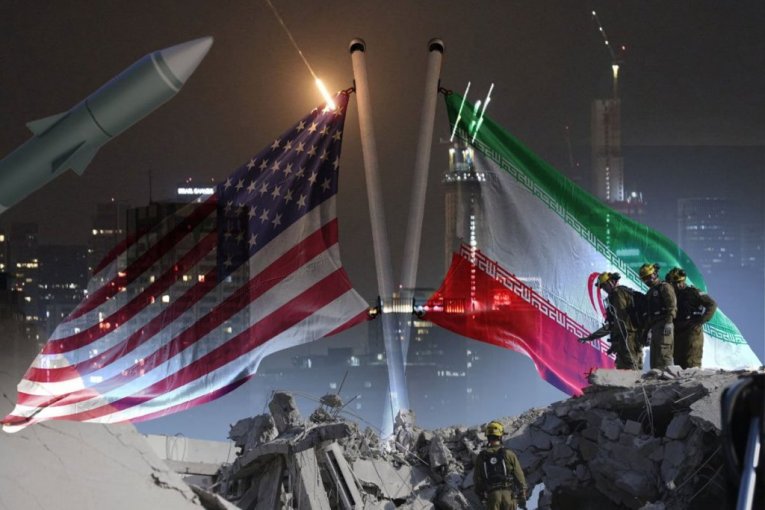
US Evacuates Hundreds of Troops from Qatar and Bahrain pro-government Pro-government coverage portrays the evacuation of hundreds of US troops from bases in Qatar and Bahrain as a precautionary, strategically necessary move in response to Iranian missile threats and failed talks. It emphasizes that President Trump still prefers diplomacy but must maintain credible military options and protect US forces as he considers limited, targeted strikes against Iran. @Telegraf @Republika Reports from both opposition and pro-government-leaning coverage agree that hundreds of US troops have been withdrawn from American military facilities in Qatar and Bahrain, with particular emphasis on movements out of Al Udeid Air Base in Qatar. The evacuations occur against a backdrop of heightened tensions between Washington and Tehran following failed diplomatic talks in Geneva and, in some accounts, Oman, and after Al Udeid was reportedly targeted by Iranian missiles. Both sides describe the troop movements as part of a broader US recalibration in the Gulf, coordinated by the Pentagon and the White House, and linked to contingency planning for potential conflict scenarios involving Iran.
Across the spectrum, outlets concur that President Trump is weighing a limited military strike on Iran while still publicly preferring a diplomatic resolution, positioning the withdrawals as related to force protection and operational flexibility rather than a full-scale pullout from the region. They also agree that these developments sit within the long-running dispute over Iran’s nuclear program and US attempts to extract stronger commitments from Tehran following the breakdown or weakening of previous nuclear arrangements. The role of regional US bases, especially in Qatar and Bahrain, is presented as central to any prospective campaign or show of force, and coverage generally frames the events as a significant escalation point in US-Iran tensions without signaling an inevitable war.
Points of Contention
Motives for the evacuation. Opposition-aligned sources typically frame the troop withdrawals as evidence of reckless brinkmanship and a prelude to a potentially unnecessary or politically motivated confrontation with Iran, accusing the administration of using military movements to manufacture a sense of crisis. Pro-government outlets, by contrast, emphasize prudence and strategic foresight, portraying the evacuations as routine or precautionary steps to safeguard personnel and prepare for measured, limited options if diplomacy fails. While opposition voices highlight the risk of miscalculation and domestic political incentives, pro-government coverage stresses deterrence and the need to respond credibly to Iranian missile activity and diplomatic intransigence.
Characterization of Iran and the threat level. Opposition reporting tends to acknowledge Iranian missile actions and regional behavior but often downplays the immediacy of an existential threat, suggesting that hard-line portrayals of Tehran serve to justify escalation. Pro-government sources underscore Iran’s role as an aggressive actor, focusing on the prior targeting of Al Udeid and failed talks in Geneva and Oman to argue that Tehran only responds to firmness backed by military readiness. The former are more likely to call for renewed or broadened negotiations and multilateral engagement, whereas the latter emphasize that credible military options, including redeployment of forces, are necessary to constrain Iran’s nuclear and regional ambitions.
Assessment of US strategy and leadership. Opposition-aligned outlets often criticize the administration’s strategy as incoherent, arguing that simultaneous talk of diplomacy and limited strikes undermines trust and increases volatility for allies hosting US bases such as Qatar and Bahrain. Pro-government narratives cast the same dual-track approach as calibrated statecraft, asserting that maintaining both diplomatic channels and visible military preparations strengthens Washington’s leverage in any future nuclear or regional security talks. For critics, the evacuations highlight poor long-term planning and overreliance on military tools; for supporters, they demonstrate resolve, responsiveness to evolving threats, and a willingness to protect US forces while preserving freedom of action.
Implications for regional stability. Opposition coverage warns that the visible withdrawal and repositioning of troops could alarm Gulf partners and provoke counter-moves by Iran or its allies, thereby increasing the likelihood of escalation across the region. Pro-government coverage, however, presents the same actions as a stabilizing measure intended to pre-empt Iranian targeting of concentrated US forces and to reassure regional allies that Washington is prepared for all contingencies. Critics emphasize humanitarian and economic risks of any strike on Iran and the potential blowback in Qatar and Bahrain, while supporters stress that a firm stance now may prevent a broader and more destructive conflict later.
In summary, opposition coverage tends to interpret the evacuations as symptomatic of dangerous escalation, strategic incoherence, and inflated threat narratives around Iran, while pro-government coverage tends to present them as prudent force protection, credible deterrence, and a necessary complement to a still-preferred diplomatic path. Story coverage nevent1qqsvzmq63jvrz3qh9zv9zxvglw8872agatvsvn04npgums86jkspgqca80ds7 nevent1qqszvhv7e7q7zyk8pxul7y2txxrr0a0n3ypngdpkjqkmzf2jzu5q25q9s05kp