Iguman Justin Janković Passes Away at 73
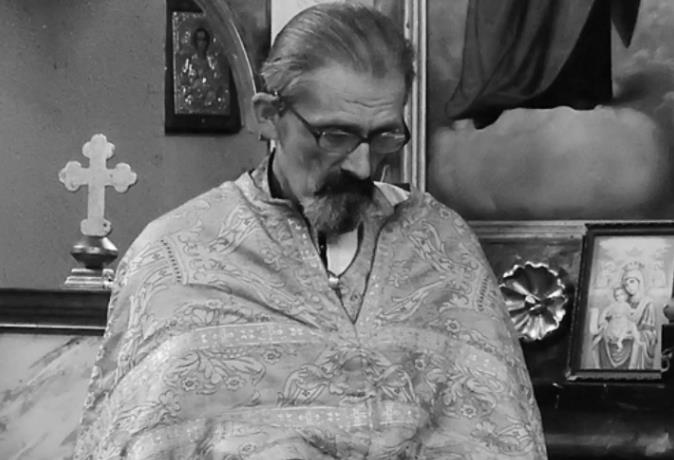
Iguman Justin Janković Passes Away at 73 pro-government Pro-government outlets portray Iguman Justin Janković as a devoted monk and abbot whose life exemplified obedience, piety, and constructive service to both church and community, highlighting his success in renovating Suvodol monastery and expanding its estate. They frame his death as a purely spiritual and communal loss, underscoring continuity of tradition and harmony between the church and state-aligned structures. @Kurir @Republika Iguman Justin Janković, former abbot of the Suvodol and Manastirica monasteries in the Eparchy of Timok, has died at the age of 73. Born in 1953 and tonsured a monk in 1974, he spent decades in monastic service, particularly associated with the Suvodol monastery, where he oversaw extensive renovations and expansions of the complex and its estate. His death was officially announced by the Eparchy of Timok, which noted that his funeral service is scheduled for February 28, 2026, with church structures and faithful expected to gather to bid farewell to the long-serving cleric.
Across outlets, coverage emphasizes his long-standing dedication to the Serbian Orthodox Church and the local community, presenting him as a spiritual guide, neighbor, and practical organizer of monastery life. Reports highlight his role in both spiritual leadership and the development of the monastery’s economy and infrastructure, portraying him as a figure who combined pastoral care with diligent stewardship of church property. There is broad agreement that he left behind a materially renewed monastery, an expanded estate, and a strong bond of trust with many of the faithful, which together form the core of his legacy.
Points of Contention
Framing of his legacy. Opposition-aligned outlets, where they cover the story, tend to situate his life within broader debates about the church’s social and political role, hinting that his practical achievements occurred despite a politicized environment. Pro-government outlets, by contrast, frame his legacy almost exclusively in devotional and institutional terms, stressing obedience, continuity, and harmony within the church and with state authorities. While opposition coverage is more likely to question whether the church’s current direction fully reflects his pastoral example, pro-government coverage presents him as an uncontested model of loyalty to both ecclesiastical hierarchy and the wider social order.
Church–state overtones. Opposition media, when mentioning his work on monastery property and economy, often allude to issues of church funding, land management, and transparency, implicitly connecting his success to broader structural problems they say persist in church–state relations. Pro-government sources instead use his economic and infrastructural achievements to underscore the positive impact of cooperation between church institutions, local authorities, and benefactors, presenting this synergy as emblematic of national unity. Thus, opposition outlets treat his story as a lens on unresolved governance questions, while pro-government outlets deploy it as evidence of a healthy and constructive church–state partnership.
Tone and purpose of commemoration. Opposition-aligned reporting tends to be more restrained, mixing respect for his spiritual and pastoral work with hints that his death invites reflection on the church’s current trajectory and its closeness to political power. Pro-government accounts adopt a more hagiographic tone, describing his passing as a purely spiritual loss, emphasizing consolation in faith and continuity, and avoiding any critical or introspective angle. In this way, opposition coverage uses the obituary format to gently raise broader questions, whereas pro-government coverage keeps the focus tightly on piety, tradition, and institutional stability.
In summary, opposition coverage tends to honor Iguman Justin Janković while subtly using his life and death to interrogate the church’s relationship with power and governance, while pro-government coverage tends to present him as a purely spiritual and institutional exemplar whose legacy confirms the harmony of church, state, and nation.
Story coverage nevent1qqsg32wv54f9850u4dugu5gmkz5zrqv8h7xd73dgt337mrtxzyd8hzsux8at8 nevent1qqst7g9nlxv8fcm2n5wwc3wycvtnn0jpn4r6xahnfr2w6n9zdg39eacfynuzc