Man Threatens Self-Immolation During Bailiff Visit
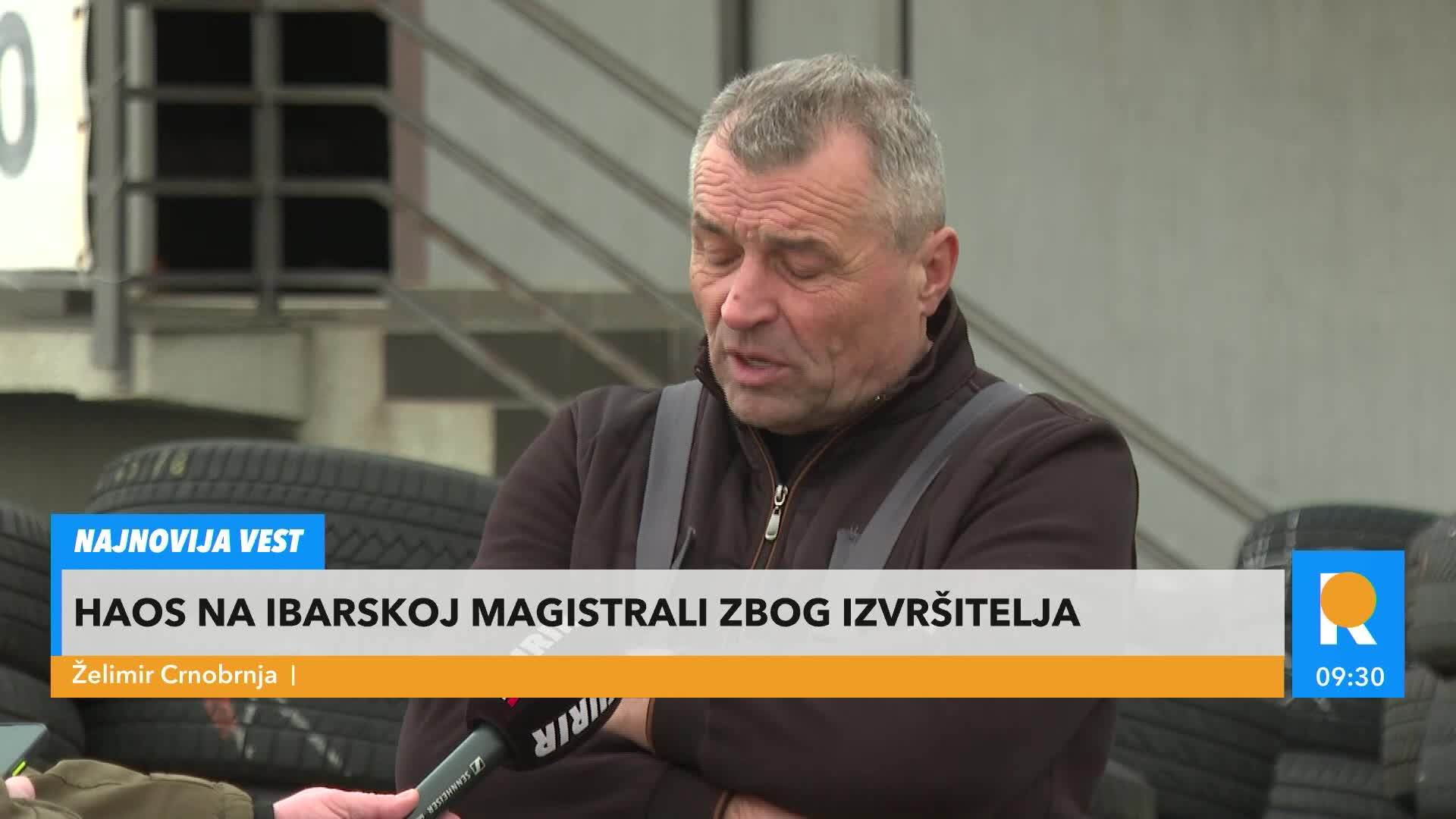
Man Threatens Self-Immolation During Bailiff Visit pro-government Pro-government coverage presents the incident as a dramatic but isolated escalation in a long-running civil property dispute, emphasizing that bailiffs were acting on a valid court decision. It humanizes the man’s distress yet underscores that institutions followed legal procedure, suggesting that any needed changes lie in improving communication and social support rather than in overhauling the enforcement system. @Republika @Kurir A man identified as Želimir Crnobrnja, the owner of a car repair shop, threatened to set himself on fire by dousing himself with gasoline during a visit by bailiffs to his property. The incident occurred after bailiffs arrived for what Crnobrnja says was the tenth attempt to enter and enforce a court decision regarding the disputed premises; he reportedly shouted that he would die if they stepped foot on the property. Both sides of the media landscape agree that the dramatic act was linked to a long‑running property and enforcement dispute, that the man was highly distressed, and that the confrontation ended without him actually immolating himself, but with heightened public attention to the case.
Across coverage, outlets concur that the conflict centers on a contested property transaction and subsequent court‑ordered enforcement involving the original seller, a friend of his, and Crnobrnja as the current occupant of the workshop. There is agreement that formal legal proceedings have been ongoing for years, that a court decision exists in favor of enforcement, and that bailiffs are acting under that mandate rather than on their own initiative. Media on both sides acknowledge repeated bailiff visits, suggest that the case illustrates broader tensions around debt collection, property rights, and the social impact of enforcement in economically strained contexts, and note that the episode has renewed public debate about how far distressed citizens may go when they feel cornered by the system.
Points of Contention
Narrative focus. Opposition outlets are likely to frame the episode primarily as a desperate act by an ordinary citizen crushed by an unjust or opaque legal‑enforcement system, emphasizing his claim that he is not a debtor and that the sale was manipulated. Pro-government outlets instead tend to anchor the narrative in the formal existence of a court ruling and the notion that bailiffs are simply carrying out legally mandated duties, even while humanizing Crnobrnja’s distress. While opposition coverage would highlight systemic failure and socio-economic despair as the lead, pro-government coverage more often treats the man’s threat as an extreme reaction within a lawful, if contentious, enforcement process.
Responsibility and blame. Opposition-aligned media are inclined to cast blame broadly on state institutions, courts, and politically connected interests behind the disputed sale, presenting Crnobrnja as a victim of corruption or institutional negligence. Pro-government outlets generally shift responsibility toward the private parties in the property dispute, portraying the conflict as a civil-law matter where the state merely enforces final judgments. In this framing, any failures are individualized or procedural rather than symptomatic of systemic rot, contrasting with opposition narratives that would treat the case as emblematic of deep institutional injustice.
Portrayal of bailiffs and institutions. Opposition sources typically depict bailiffs as aggressive instruments of a harsh state, stressing the fact that this was the tenth visit and describing their presence as harassment or persecution. Pro-government coverage, while acknowledging the repeated visits, more often presents bailiffs as neutral executors constrained by court orders and legal deadlines, sometimes even emphasizing their restraint in de-escalating the self-immolation threat. As a result, opposition media suggest institutional brutality or indifference, whereas pro-government outlets underline procedural legality and institutional professionalism.
Policy implications and reform. Opposition media are prone to use such incidents to argue for sweeping reforms of enforcement law, stronger protections for small business owners, and more transparent oversight of privatization and property transfers. Pro-government outlets, by contrast, might talk about the need for better social support, mediation, or communication in enforcement cases but stop short of questioning the core architecture of the legal-enforcement system itself. Where opposition narratives call for systemic overhaul and political accountability, pro-government narratives lean toward incremental, technocratic adjustments without undermining trust in existing institutions.
In summary, opposition coverage tends to treat the man’s self-immolation threat as a symbol of systemic injustice, abusive enforcement, and captured institutions, while pro-government coverage tends to frame it as a tragic but isolated escalation within a lawful property dispute in which the state and its bailiffs are largely following established procedures.
Story coverage nevent1qqs9mdnduh5qe2ghkls4cjxa36jgcphnwvhtt9mugg836j7q37f2yuscmhu2x nevent1qqs2z73y84m526a0m30d4yxwhk8whaz57vt7ests6havf49e286zs5q4lwl5l nevent1qqsvjzelcazaanr3jenwhrevfr48w9lm2sgmu3nnzhkakw7w8lqpcds9nryhr