Asmin Durdžić and Uroš Stanić in Physical Altercation on 'Elita 9'
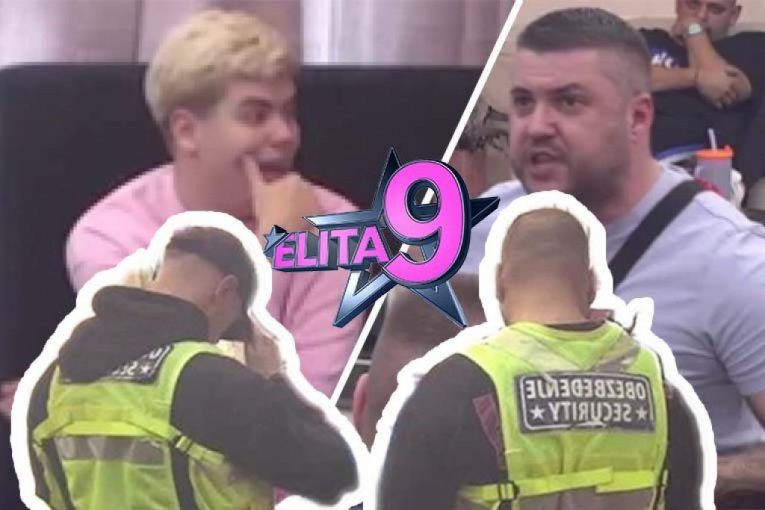
Asmin Durdžić and Uroš Stanić in Physical Altercation on ‘Elita 9’ pro-government Pro-government coverage portrays the altercation as a dramatic but isolated breach of clearly posted rules, emphasizing how Asmin Durdžić lost control after personal provocations involving his child Nora. It underscores the swift intervention of security and the “big boss’s” punishment as proof that the show’s institutions are strict, responsible, and capable of maintaining order while delivering compelling television. @Republika A physical altercation occurred between contestants Asmin Durdžić and Uroš Stanić during a segment of the reality show “Elita 9,” specifically in the live format known as “Radio-amnezija.” Both sides agree that the conflict started as a verbal argument which intensified after remarks were made about Durdžić’s private life and his daughter Nora, leading him to cross the table and attack Stanić. Security staff intervened repeatedly to separate the two, the broadcast was disrupted, and production applied sanctions against Durdžić in line with the show’s pre-announced rules that prohibit physical violence among participants on the property.
Coverage from both opposition-aligned and pro-government outlets situates the incident within the broader framework of Serbia’s reality TV industry, where confrontational formats like “Elita 9” are used to drive ratings and social media engagement. They converge on the idea that the show operates under a strict rulebook, visibly posted to participants, and that breaching rules—especially those against physical violence—triggers penalties from the “big boss” or production. Both sides present the conflict as emblematic of a reality environment that blurs entertainment and real personal animosities, highlighting concern over the use of family members and children as triggers for dramatic outbursts, and acknowledging the show’s institutional mechanisms of discipline, such as fines, isolation, or other punishments.
Points of Contention
Framing of the incident. Opposition-aligned outlets tend to frame the fight as a symptom of a degraded media culture fostered by politically protected reality formats, describing the brawl in a critical, systemic tone. Pro-government outlets emphasize the dramatic, sensational aspects of the clash with language like “unprecedented brawl” and focus on the shock value and immediacy of the attack. While opposition sources highlight the broader social costs and ethical issues, pro-government reporting foregrounds the spectacle and continuity of the show.
Responsibility and blame. Opposition reporting typically broadens responsibility beyond the two contestants, arguing that broadcasters and regulators share blame for enabling an environment where such violence is incentivized. Pro-government outlets concentrate blame narrowly on Durdžić for breaching clear rules after provocation, stressing that he knew the sanctions in advance and still attacked. Where opposition media underline systemic accountability, pro-government pieces highlight individual misconduct and the swift reaction of security and production.
Portrayal of institutions and rules. Opposition-aligned coverage often portrays the production, the channel, and oversight bodies as complicit or ineffective, suggesting that rules are more a performative shield than a real safeguard against repeated incidents. Pro-government coverage underscores the clarity and strictness of the rules, repeatedly noting that they were “clearly communicated” and that the “big boss” promptly imposed punishment, presenting institutions as responsible and in control. Thus, opposition outlets cast doubt on institutional will and credibility, while pro-government media use the incident to illustrate that the system works when violations occur.
Impact and significance. Opposition sources are inclined to interpret the altercation as indicative of a broader moral and cultural decline linked to the dominance of such reality shows in the media landscape, often implicitly tying this to the current power structure’s media policies. Pro-government outlets, by contrast, tend to limit the significance of the event to the internal dynamics of “Elita 9,” treating it as a contained scandal that is resolved through in-show sanctions and serves mainly as entertainment content. This leads opposition coverage to stress long-term societal impact, while pro-government coverage focuses on short-term viewer interest and narrative continuity within the program.
In summary, opposition coverage tends to use the Durdžić–Stanić altercation as evidence of a systemic, politically enabled media degradation and shared institutional responsibility, while pro-government coverage tends to spotlight individual rule-breaking, emphasize swift production sanctions, and frame the incident primarily as high-stakes reality TV drama rather than a symptom of wider structural problems. Story coverage nevent1qqsrm5c3e2nyvrxpmcwrzf35cdgj2parp0kqpv5qmu8hdjmqgk2sgkcpt6767 nevent1qqstj05j7v02gk8en595dkj7nl553zccyhxhg9swzcxhw5fkmeur48gwutyhh