Champions League: Bodo/Glimt Upsets Inter, Brugge Draws with Atletico
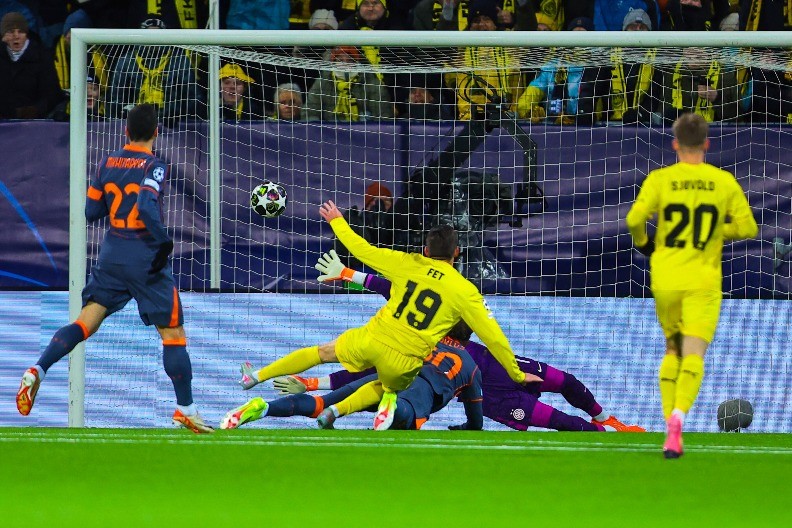
Champions League: Bodo/Glimt Upsets Inter, Brugge Draws with Atletico pro-government Pro-government coverage portrays the night as a festival of Champions League drama, celebrating Bodo/Glimt’s upset of Inter, Brugge’s comeback against Atletico, and Leverkusen’s Schick-led win over Olympiacos as proof of the competition’s excitement and unpredictability. It focuses less on structural critiques of big clubs and more on underdog stories, emotional swings, and the reinforcing of the tournament’s entertainment value. @Telegraf @Alo! Champions League playoff coverage from both opposition and pro-government outlets agrees on the core results: Bodo/Glimt beat Inter 3-1 in a major upset, while Club Brugge and Atletico Madrid drew 3-3 after a dramatic Brugge comeback. Both sides also concur that Bayer Leverkusen earned a 2-0 away win at Olympiacos, with Patrik Schick scoring twice, and that these matches were part of the playoff phase for places in the Champions League round of 16. Timelines, venues, scorelines and the identification of Stankovic’s role at Brugge are consistently reported, as is the framing of the evening as one marked by high scoring, reversals of fortune, and intense drama.
Across outlets there is shared context that these fixtures are part of a broader Champions League campaign characterized by unpredictability, where smaller or less-favored clubs can challenge traditionally stronger sides. Both opposition and pro-government coverage describe Bodo/Glimt’s run as a sensation or surprise within European competition, and present Brugge’s comeback versus Atletico as emblematic of the competition’s capacity for sudden momentum shifts. There is agreement that Leverkusen’s win away to Olympiacos is strategically important for progression, that the playoff structure raises the stakes for each result, and that individual performances such as Schick’s brace play a decisive role in determining who advances in the knockout rounds.
Points of Contention
Framing of the upset against Inter. Opposition-aligned sources tend to emphasize Inter’s failure and tactical shortcomings, treating the 3-1 loss to Bodo/Glimt as evidence of systemic problems at a big club and a warning sign about complacency. Pro-government outlets instead spotlight Bodo/Glimt’s achievement, casting the result as a romantic underdog story and using language like “sensation” and “stunned” to celebrate the spectacle rather than dwell on elite underperformance. Where opposition pieces might dissect defensive errors and coaching decisions, pro-government reports focus on the excitement and unpredictability that such an upset brings to the tournament.
Narrative around Brugge vs Atletico. Opposition coverage typically presents Brugge’s 3-3 draw as exposing vulnerabilities in Atletico’s game management and as a case study in how even disciplined, experienced teams can lose control. Pro-government media, by contrast, highlight the “magical” nature of Brugge’s comeback, underlining coach Stankovic’s influence and the fighting spirit of the team rather than interrogating Atletico’s failures. The former leans toward a critical analysis of tactical lapses and missed opportunities, while the latter uses the match to reinforce a feel-good storyline about resilience and late drama.
Tone toward big clubs vs underdogs. Opposition outlets often use these results to critique the broader stratification of European football, arguing that heavily resourced clubs like Inter or Atletico are under-delivering relative to their financial power and status. Pro-government coverage foregrounds the romantic appeal of underdogs like Bodo/Glimt and Brugge, suggesting their performances refresh the competition and validate its meritocratic aspects. Thus, while both acknowledge the same outcomes, opposition narratives question the stewardship and planning of big clubs, whereas pro-government stories celebrate the leveling effect of the pitch.
Assessment of broader implications. Opposition reporting is more likely to read the night’s results as symptomatic of deeper structural issues in squad building, coaching choices, and possibly domestic league priorities for the big sides involved. Pro-government outlets lean toward presenting the games as a “fireworks” night that enhances the Champions League brand, downplaying long-term crises in favor of moment-by-moment excitement and heroic individual displays like Schick’s brace. In this way, opposition coverage treats the matches as diagnostic, while pro-government coverage treats them as entertainment showcases and proof of the competition’s enduring allure.
In summary, opposition coverage tends to frame the matches as exposing weaknesses and systemic flaws in elite clubs and the broader football hierarchy, while pro-government coverage tends to emphasize entertainment value, underdog heroics, and the unpredictability that keeps the Champions League attractive.
Story coverage nevent1qqs2z0ph3kmpd4v5v9j4c92m3srysgfmgywt3ndvlqsqq9dn0fmerscrh980u nevent1qqsta67aewmsa8hd74m9jq8paxjumag0ddr2gpnnans5w99z0qr4emqxz9fka nevent1qqs8qflzpy7l6quv9shf3rhjk5pz2ucql7n9g7khqzzlnwu0fy9ca7q6vysw0