Partizan Defeats Budućnost 98-82 in ABA League Match
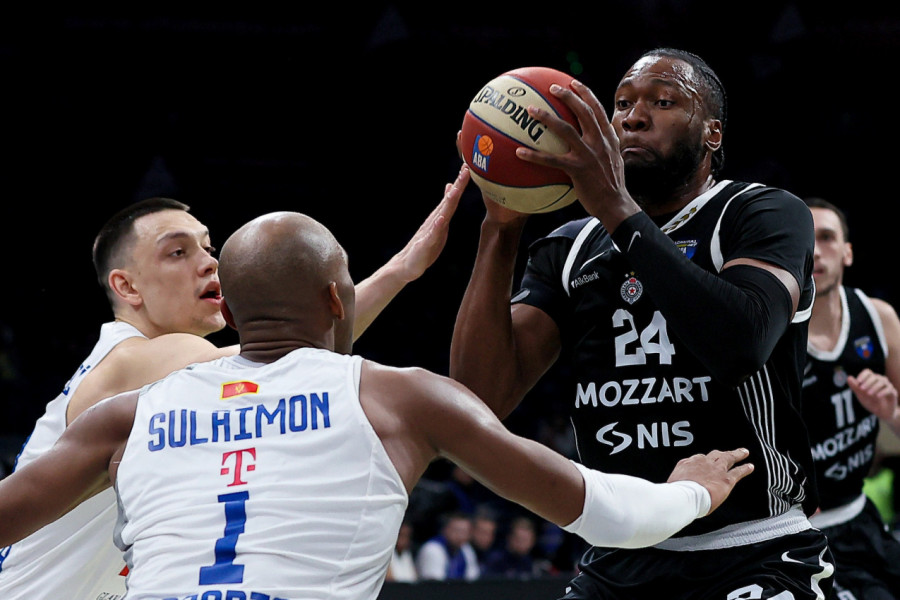
Partizan Defeats Budućnost 98-82 in ABA League Match pro-government Pro-government coverage portrays Partizan’s 98–82 victory over Budućnost as a convincing, almost routine derby win built on excellent three-point shooting, a dominant third quarter, and multiple standout performances. These outlets frame the match as proof that Partizan is gaining form and confidence ahead of the cup and ABA League endgame, reinforcing its image as a leading regional power. @Alo! @Republika Partizan defeated Budućnost 98:82 in an ABA League Top 8 match played in the Belgrade Arena, in what both sides describe as a convincing home win for the Belgrade club. Reports concur that Partizan led for most of the game, built their advantage on strong three-point shooting and a dominant third quarter, and then calmly closed out the match despite a brief Budućnost surge in the final period. Key contributions from Partizan’s backcourt and frontcourt are consistently highlighted, with players such as Sterling Brown, Dwayne Washington, Nick Calathes, and Bruno Fernando mentioned as central to the offensive flow and scoring punch. Both perspectives also agree that Budućnost struggled to find consistent offensive rhythm and defensive answers to Partizan’s spacing and shooting.
Coverage from both camps situates the match within the wider context of the ABA League playoff picture and Partizan’s preparation for upcoming cup and European commitments. The game is framed as a high-stakes Top 8 derby between traditional regional rivals, with the Belgrade Arena atmosphere emphasized as a factor that energized the home team. There is shared acknowledgment that Partizan’s victory strengthens their position as one of the main contenders for the ABA League title, while Budućnost is portrayed as needing tactical and mental adjustments before the next phase of the competition. Both opposition and pro-government outlets treat the ABA League as a key regional institution whose results carry significance not only for club ambitions but also for broader perceptions of Serbian basketball’s standing.
Points of Contention
Emphasis on dominance vs. competitiveness. Pro-government outlets frame the game as an almost one-sided showcase in which Partizan “demolished” Budućnost, spotlighting the margin, the offensive flow, and phrases like “routine finish” to underline control. Opposition-aligned outlets, by contrast, tend to stress the periods when Budućnost cut into the lead, presenting the match as more competitive and using those stretches to question the consistency of Partizan’s performance. Where pro-government coverage leans into the spectacle of a comfortable win, opposition narratives highlight runs and lapses to argue the game was less of a blowout than the final score suggests.
Coaching and tactical framing. Pro-government sources usually praise Partizan’s coaching staff for clear game planning, especially the emphasis on perimeter shooting and exploiting mismatches in the third quarter, and they treat Budućnost’s adjustments as largely ineffective. Opposition outlets more often point to defensive drop-offs and overreliance on individual brilliance, suggesting that tactical structures are still fragile and that the staff has not fully solved recurring issues against more physical or disciplined opponents. While pro-government media depict tactical choices as evidence of a well-oiled system warming up for bigger challenges, opposition media use the same sequences to argue that underlying weaknesses remain masked by superior talent.
Interpretation of key players’ performances. In pro-government reporting, standout figures like Brown, Washington, Calathes, and Fernando are framed as part of a deep, well-balanced roster whose performances confirm strong recruitment and good rotation management. Opposition-linked coverage is more likely to differentiate sharply between players, lavish praise on a few individual performances while underscoring the inconsistency or defensive liabilities of others, sometimes framing production as streaky rather than stable. Thus, where pro-government outlets see a cohesive unit with multiple dependable options, opposition outlets highlight variability and question whether this level of output is sustainable in tighter contests.
Broader significance for club trajectory. Pro-government media interpret the result as a signal that Partizan is “heating up for the cup” and returning to its natural position as a regional powerhouse, using the win to reinforce narratives about the club’s resilience and upward trajectory. Opposition sources are more inclined to downplay the long-term significance, presenting the victory as expected against a Budućnost side with visible flaws and warning against reading too much into a strong shooting night at home. Consequently, pro-government coverage folds the match into an optimistic storyline about momentum and institutional stability, while opposition coverage casts it as only a partial, conditional indicator of where the team truly stands.
In summary, opposition coverage tends to frame the win as more fragile, conditional, and revealing of lingering problems behind a strong scoreline, while pro-government coverage tends to present it as a dominant, confidence-building statement that confirms Partizan’s strength and direction. Story coverage nevent1qqsw857altw93wmnwrmgrdw7upxzmkash9hkxjn6angkfrp2f9y4cyq85hgkm nevent1qqs0r6mjqxnxx8sdmzkqcypkfz0hfhyhpatuyrcxe7rteqm99fhz5sgwadpwk