Starlink Dispute Leaves Trump, Musk and Kyiv Fighting Over Who Controls Ukraine’s Lifeline
Starlink Dispute Leaves Trump, Musk and Kyiv Fighting Over Who Controls Ukraine’s Lifeline
A dispute over Ukraine’s access to SpaceX’s military-grade Starshield system has become more than a technical failure: it is a test of who holds power over a crucial wartime capability—and who is willing to accept responsibility when it is restricted.
The competing accounts are stark. Ukrainian officials say the slowdown disrupted strike drones and air-defence systems, while civilian casualties rose. President Donald Trump claimed the service had returned to full speed, but a senior European official told the Associated Press that nothing had changed.
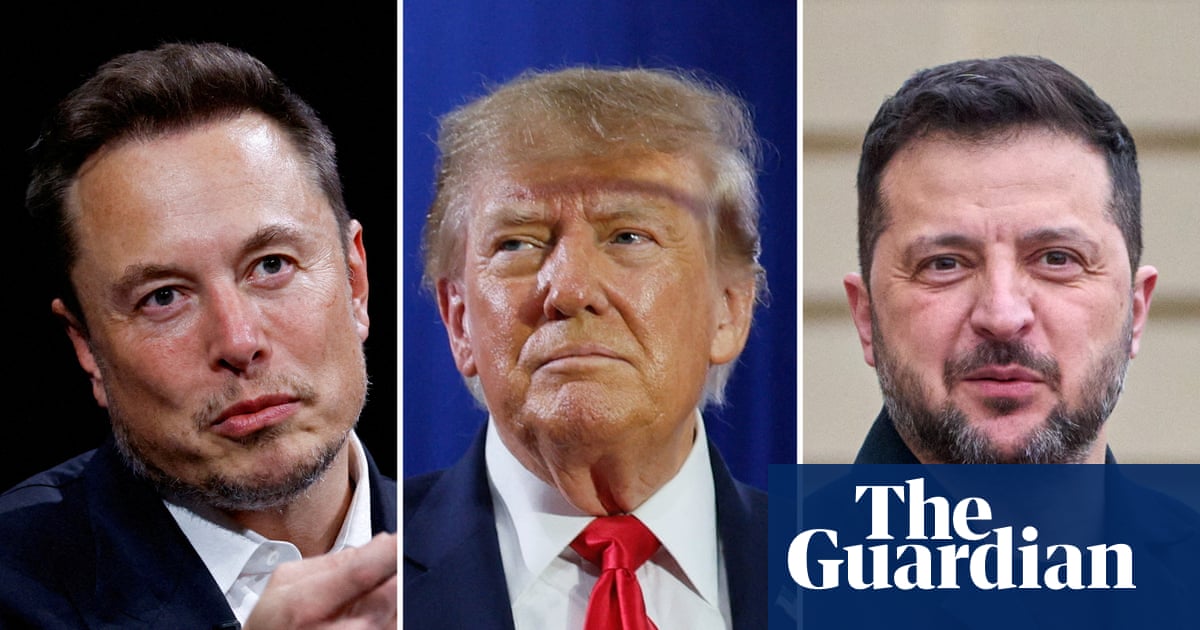
Trump has sought to distance himself from the decision. He said, “I don’t know who did it, but I was not involved,” while Secretary of State Marco Rubio argued that neither the president nor the administration had requested changes. Yet Trump’s later statement—“The bottom line, he put it back”—appeared to point to Elon Musk as the person with operational control.
Musk offered the opposite interpretation. He said Starshield was “owned and controlled by the US government” and that limits were decided by the military and “ultimately POTUS.” The Wall Street Journal, however, reported that Musk ordered the slowdown, while leaving unclear whether he acted with Trump’s approval. Vice-President JD Vance reinforced Musk’s position, saying the dispute was fundamentally about American policy toward Ukraine and Russia, not the billionaire personally.
Kyiv’s account assigns responsibility across both sides. Zelenskyy said the restrictions were imposed by “SpaceX and the United States,” describing them as a planned operation because comparable terminals in European Union countries were unaffected. He later said Washington sent the message and SpaceX technically carried it out.
The contradiction is the central story: Washington portrays Starshield as a private capability subject to policy decisions, Musk depicts it as a government-controlled system, and Kyiv sees a coordinated American decision executed by a contractor. Until control is clarified, Ukraine remains dependent on a system whose battlefield availability can be contested—and apparently altered—without public accountability.
Write a comment