ICE Shooting Case Pits Federal Assault Claim Against a Missing- footage Dispute
ICE Shooting Case Pits Federal Assault Claim Against a Missing- footage Dispute
The case against Venezuelan delivery driver Wilber Rafael Garces-Perez turns on a crucial unresolved question: did he use his vehicle against an ICE officer, or was he shot after agents forced his car into a dangerous encounter?
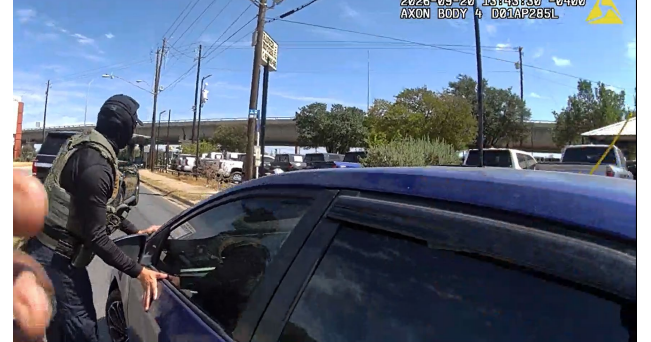
Federal prosecutors say Garces-Perez refused orders to leave his vehicle during a targeted stop, then drove away and struck an officer in the torso with his side-view mirror. The complaint describes the initial exchange as “pleasant and not aggressive” before Garces-Perez abruptly closed the window and fled. The officer who fired later reported that Garces-Perez had tried to hit him, prompting the shooting.
The government’s account is supported by three still images from another officer’s body camera, which prosecutors say show the vehicle moving toward the officer. Conservative coverage emphasizes that Garces-Perez had a final removal order, ignored commands and faces up to 20 years in prison if convicted.
But the evidence remains incomplete. The officer who fired was not wearing a body camera, and the other officer’s camera did not capture the shooting itself. Garces-Perez told investigators that an ICE SUV struck his car, spun it around and that he was shot in the back after being forced to stop. His attorneys also say a bullet remains lodged near his spine and are seeking the release of all available footage.
That gap has made the case politically charged. Liberal accounts place it within broader scrutiny of ICE vehicle stops and note that similar assault allegations in other shootings were later dropped or undermined. Conservative accounts, by contrast, foreground the government’s claim that an officer was attacked and ICE’s position that Garces-Perez’s work authorization did not establish lawful immigration status.
Both sides agree on the basic sequence—an attempted immigration arrest, a pursuit, a shooting and a criminal charge—but not on who created the danger. Until video or additional testimony resolves that conflict, the assault case rests largely on competing accounts and still photographs.
Write a comment