South Africa’s Mass Shootings Expose a Crisis Beyond Police Control
South Africa’s Mass Shootings Expose a Crisis Beyond Police Control
Two mass shootings in South African townships killed 27 people within hours, turning a familiar national crisis of violent crime into a stark test of the state’s ability to protect its poorest communities.
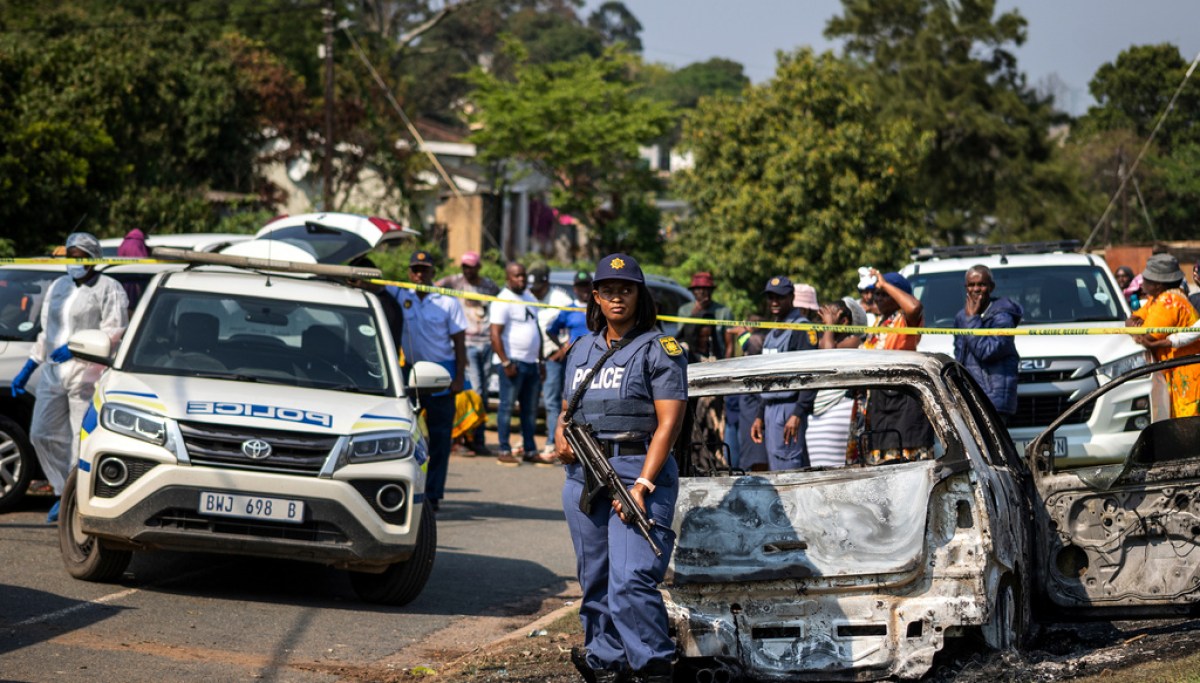
The first attack occurred near Johannesburg, where eight gunmen reportedly opened fire inside and outside a bar, killing 17 people and wounding at least 15. About four hours later, 10 people were killed and 11 wounded at a store in Lwandle township near Cape Town. No arrests had been announced, and police were still searching for multiple suspects.
The shootings followed an attack days earlier in KwaMakhutha township near Durban that killed 11 people, including a pregnant woman. Taken together, the incidents suggest more than isolated outbreaks of violence: they point to a widening pattern of heavily armed attacks concentrated in poorer neighborhoods, where police have linked some killings to criminal gangs.
Authorities have not established a common motive. Initial investigations indicated that one shooting may have involved a turf war between illegal miners, while the other could have stemmed from a business rivalry. That uncertainty contrasts with the government’s broader diagnosis. President Cyril Ramaphosa has described organized gangs as the biggest threat to South Africa’s democracy and economic development, while promising that security forces would “continue pulling out all stops.”
The scale of the violence is also challenging the government’s response. Ramaphosa deployed soldiers to high-crime areas in March, a move supporters presented as an emergency intervention but critics viewed as an admission that police were failing. With 5,427 homicides recorded in the latest three-month reporting period—nearly 60 a day—and illegal firearms widespread, the shootings have exposed a gap between forceful rhetoric and the state’s ability to prevent mass killings.
Write a comment