Ukraine’s Moscow Drone Blitz Turns Russia’s Election Into a Test of Escalation
Ukraine’s Moscow Drone Blitz Turns Russia’s Election Into a Test of Escalation
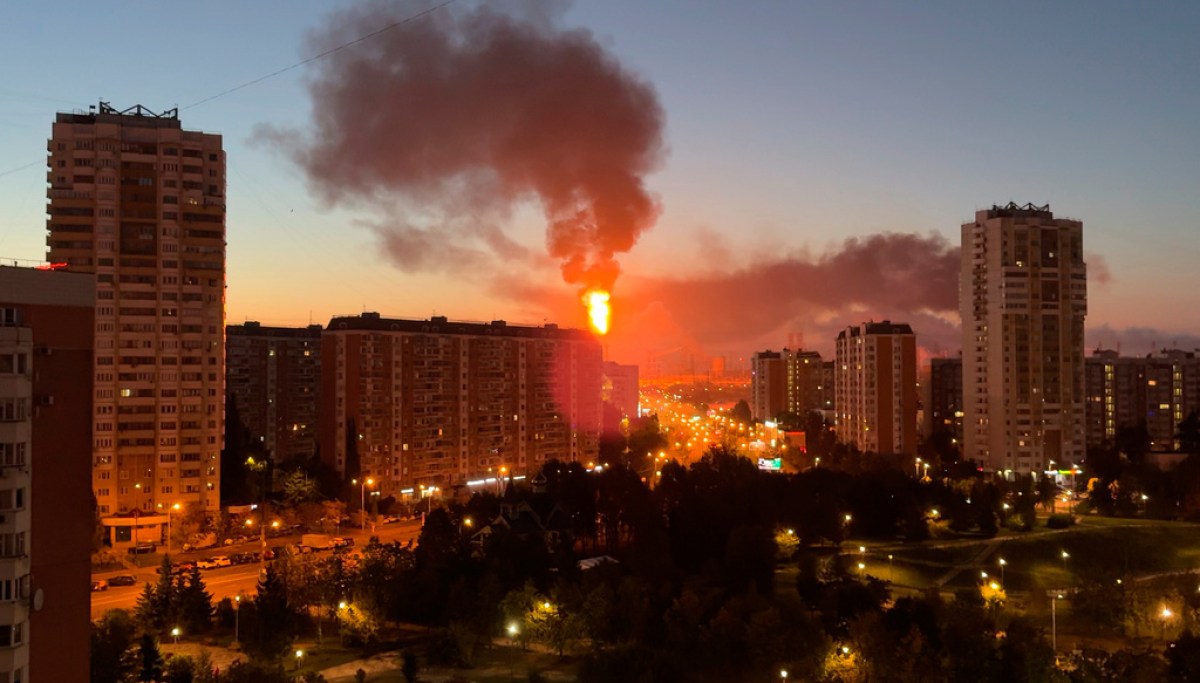
Ukraine’s parliamentary election was overshadowed by the largest reported Ukrainian drone assault on Moscow since Russia’s full-scale invasion began. The attack exposed the widening reach of Kyiv’s campaign while giving Moscow a fresh argument for escalation.
Russian officials presented the strikes as an attempt to undermine the vote. Moscow Mayor Sergei Sobyanin said the “unprecedented attack was clearly planned with the aim of disrupting the elections,” but insisted that “the enemy did not succeed.” At least two people were killed, hundreds were evacuated from a damaged apartment building, and an oil-refining facility was hit, according to the account published by The Guardian.
The Ukrainian side has emphasized reach and battlefield effect rather than electoral disruption. President Volodymyr Zelenskyy said Kyiv’s “long-range responses had a very significant impact in the Moscow region,” while describing the use of domestically produced weapons, including the Pelican drone and Flamingo cruise missiles. The strikes fit a broader Ukrainian effort to damage Russia’s energy infrastructure, a campaign that has contributed to refinery outages, fuel shortages and higher prices, according to the same report.
Conservative coverage places the attack alongside Russia’s political consolidation. Preliminary results showed United Russia leading with roughly 57.5 percent of the party-list vote, keeping President Vladimir Putin’s governing bloc firmly ahead during the wartime election. That framing treats the strike as significant but not decisive: Russia’s defenses were challenged, yet the election result remained intact.
A second conservative account casts the operation as part of a larger strategic contest, noting that Ukraine launched more than 1,000 drones while speculation persists over a possible Russian mobilization after the vote. Moscow’s promised response—“intensify” strikes on Kyiv—underscores the central contradiction: Ukraine can impose costs deep inside Russia, but each such attack also risks accelerating the escalation it seeks to manage.
Write a comment