Six Dead in Shooting Spree Across Two Florida Residences
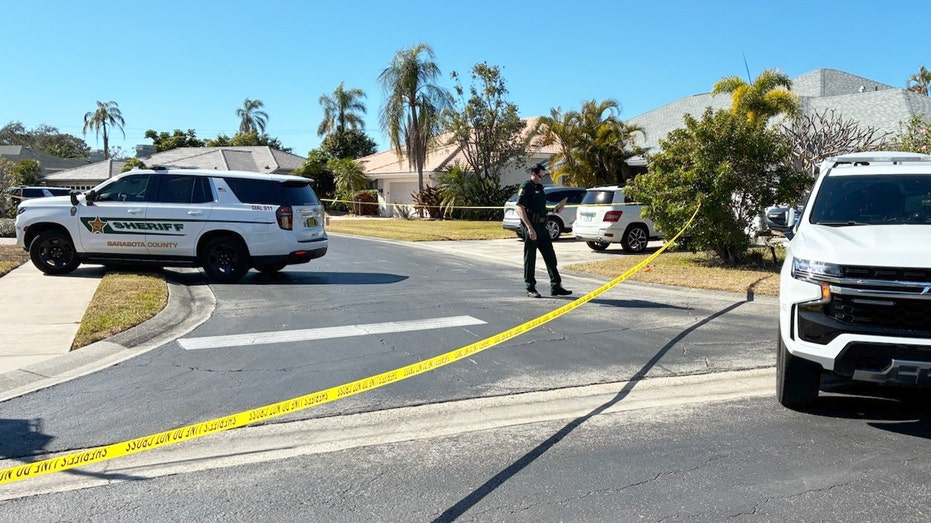
Six Dead in Shooting Spree Across Two Florida Residences conservative Conservative coverage portrays the Florida shootings as a horrific but largely isolated act by a single suspect whose personal relationships and choices led to multiple deaths across two homes. It emphasizes clear factual reporting, the rapid work and coordination of law enforcement, and community grief, while generally avoiding broader claims about national gun policy or systemic blame. @The Washington Times @Fox News Authorities in Florida are investigating a linked series of shootings at two separate residences on opposite sides of the state that left six victims dead, plus the suspected gunman. Both liberal and conservative outlets agree that the suspect, identified as 51-year-old Russell Kot, is believed to have killed multiple people at a home in the Sarasota area and then traveled to a gated community in the Fort Lauderdale area, where additional victims were found and where he ultimately died of what police describe as an apparent self-inflicted wound. Coverage converges on basic details: the total death toll across the two homes, the time sequence of a welfare check at the first location followed hours later by the second crime scene, and law enforcement’s assertion that the two scenes are connected through the suspect and an apparent prior relationship with at least one victim. Both sides also highlight that investigators are still piecing together the precise timeline, confirming victim identities, and working to notify families.
Across the spectrum, reporting references the involvement of local sheriff’s offices and police departments, describing a multi-jurisdictional investigation stretching from Florida’s Gulf Coast to the Atlantic side and relying on coordination among detectives, forensic teams, and crime-scene technicians. Liberal and conservative coverage generally agree that a prior romantic relationship between Kot and a Fort Lauderdale victim appears to be a key link between the scenes, even as authorities say the broader motive, especially for the Sarasota killings, remains unclear. Both sets of outlets note that law enforcement is reviewing the suspect’s background, looking for prior domestic or mental health issues, and examining how he obtained and used firearms, with common acknowledgement that this case touches on familiar institutional arenas: domestic-violence systems, mental health support, and policing protocols for welfare checks and armed suspects. Shared context also includes recognition that the incident fits into a broader pattern of multi-victim shootings and raises questions about prevention without yet assigning definitive policy causes or solutions.
Points of Contention
Framing of causes and policy implications. Liberal-aligned outlets tend to situate the shootings within the broader pattern of American gun violence, more quickly invoking themes of firearm access, red-flag laws, and systemic failures in handling domestic threats or mental health crises. Conservative outlets, by contrast, focus more narrowly on the individual suspect’s actions and personal history, presenting the case as an aberrant rampage rather than evidence of a nationwide policy failure. Liberal sources are likelier to connect this event to ongoing debates over gun reform and preventive interventions, whereas conservative coverage more often leaves policy questions implicit or emphasizes enforcement of existing laws.
Emphasis on domestic and relational dynamics. Liberal reporting more prominently underscores the alleged prior romantic relationship between Kot and a Fort Lauderdale victim as a lens into domestic violence risk, sometimes tying it to discussions of how authorities respond to relationship-based threats. Conservative outlets acknowledge the relationship link but tend to treat it mainly as a factual explanation for why the two crime scenes are connected, without extensive exploration of domestic-violence policy or advocacy perspectives. Where liberal coverage may cite experts or prior cases to argue that intimate-partner conflicts often escalate into multi-victim shootings, conservative coverage is more likely to let police statements stand without foregrounding broader gender or power dynamics.
Law enforcement performance and oversight. Liberal sources are more inclined to probe whether any prior warnings, calls, or welfare concerns about the suspect were missed by authorities, weaving the episode into larger discussions of gaps in coordination among agencies and the limits of reactive policing. Conservative outlets typically frame law enforcement in a more favorable light, emphasizing the rapid linking of the two scenes, the technical investigation, and the dangers officers faced, rather than scrutinizing potential systemic failures. Liberal reporting may raise questions about whether stronger intervention tools or better information-sharing could have disrupted the chain of events, while conservative pieces highlight the professionalism of detectives and stress that some violent acts may not be preventable.
Narrative tone and societal meaning. Liberal-aligned coverage often casts the spree as one more example of a recurring, preventable type of tragedy that reflects broader societal problems, including gun prevalence and insufficient social supports. Conservative coverage tends to adopt a more restrained narrative tone, emphasizing the shocking but exceptional nature of the crime and focusing on victim identities, community grief, and procedural updates over broader claims about society. While liberal stories may connect the incident to debates over national reform or patterns of mass shootings, conservative stories more often localize it to Florida communities and avoid suggesting it indicts wider cultural or policy frameworks.
In summary, liberal coverage tends to embed the Florida shootings within larger narratives about gun violence, domestic risk, and institutional shortcomings, while conservative coverage tends to emphasize the suspect’s individual actions, law enforcement response, and the localized, anomalous character of the crime. Story coverage nevent1qqs2c5q0fdwt7tj6zqrqwlarcl3qmetgjrpmc3jz3eqvg8sz9ta3xhq29av0t nevent1qqs0er63prlyxwhpnlfdpv7tmez9ccsyrqyqck8p8d66e4hr3svwtvc8f0ph5