Bad Bunny's Super Bowl Halftime Show Draws Praise and Political Debate
Bad Bunny’s Super Bowl Halftime Show Draws Praise and Political Debate liberal Liberal coverage portrays Bad Bunny’s halftime show as a joyful yet pointedly political celebration of Puerto Rican and Latino identity that reclaims the Super Bowl stage to critique colonialism, resist MAGA-style assimilationism, and expand what counts as American. It highlights symbolic choices—from Zara fashion to historical references and a real wedding—as deliberate acts of democratizing cultural power and centering marginalized communities. @www.theguardian.com @www.wonkette.com @The Atlantic
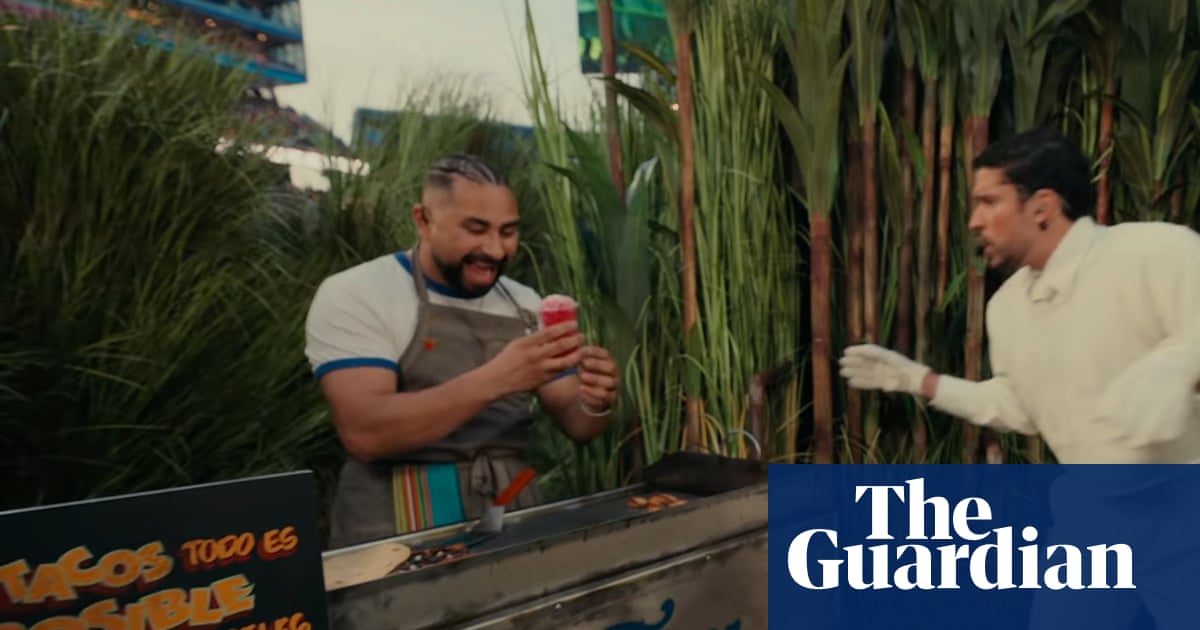
conservative Conservative coverage emphasizes the halftime show as a historic, emotionally resonant 13-minute event that momentarily unified Puerto Ricans and showcased their pride to a global audience. It tends to frame the performance primarily as cultural spectacle and shared experience, touching lightly, if at all, on its more explicit political and anti-assimilationist dimensions. @The Washington Times Bad Bunny headlined the Super Bowl halftime show, delivering a 13‑minute performance that foregrounded Puerto Rican and broader Latino culture through music, imagery, and staging. Coverage across the spectrum notes guest appearances by stars such as Lady Gaga and Ricky Martin, a real on-stage wedding in which Bad Bunny signed the marriage certificate, and the inclusion of community elements like the Highland Park taqueria Villa’s Tacos at his invitation. Outlets broadly agree that the show mixed joyful spectacle with references to Puerto Rico’s history and contemporary struggles, ended on an explicit message that love is more powerful than hate, and drew intense attention from Puerto Ricans on the island and in the diaspora, many of whom paused their day simply to watch those 13 minutes. There is also shared recognition that the performance sparked significant public reaction from celebrities, politicians, and everyday viewers, and that it became a national cultural moment beyond just a football intermission.
Liberal and conservative coverage both situate the performance in a longer trajectory of Super Bowl halftime shows as key stages for American pop culture and identity, acknowledging the NFL’s global reach and the show’s role in reflecting shifting demographics and tastes. They note that the performance highlighted Puerto Rico’s unique status and its relationship to the United States, pointing to the island’s history, colonial legacy, and contemporary political debates as part of the show’s subtext. Both sides recognize that using a mainstream sports stage for such cultural expression reflects an evolving, more international, multilingual version of American entertainment, and that this show symbolized the visibility and influence of Latino artists within that ecosystem. There is agreement that Bad Bunny’s choices—musical, visual, and fashion-related—involved calculated compromises between artistic expression, mass appeal, and the constraints of a tightly timed, corporate-sponsored spectacle.
Points of Contention
Cultural meaning and American identity. Liberal-aligned outlets frame the show as a proud assertion that Puerto Rican and Latino culture are fundamentally American, praising it as possibly “more American” than traditional, more Anglo-centric halftime acts. They emphasize the way Puerto Rican history, language, and joy were centered on one of the country’s biggest stages, arguing that this broadens and enriches the definition of national identity. Conservative-leaning coverage, while acknowledging the unifying effect of the 13-minute spectacle for viewers in Puerto Rico, tends to dwell more on the shared emotional moment than on redefining American identity or emphasizing colonial critique. Where liberal outlets read the show as an intentional challenge to narrow patriotism, conservative ones more cautiously treat it as a celebratory cultural event that need not carry an explicit reimagining of what “American” means.
Political messaging and polarization. Liberal sources explicitly highlight the performance as a political and anti-assimilationist statement, directly contrasting Bad Bunny’s message of love and Puerto Rican humanity with the rhetoric and agenda associated with Donald Trump and MAGA politics. They underscore historian-guided symbolism as a rebuttal to right-wing narratives about Latinos and immigrants, often framing the show as a cultural counteroffensive in America’s political divide. Conservative coverage, by contrast, is more likely to present the event as historic and emotionally resonant without heavily foregrounding partisan stakes or casting it as a rebuke to specific political figures. This yields a split in emphasis: liberals see the show as overt cultural resistance, whereas conservatives tend to neutralize or underplay its partisan implications.
Fashion, commerce, and power. Liberal outlets focus extensively on Bad Bunny’s decision to wear Zara rather than traditional luxury couture, interpreting this as a statement about shifting cultural and economic power away from elite fashion houses toward accessible, mass-market brands. They argue that this move aligns with a democratizing pop culture in which global, multilingual audiences—and their everyday wardrobes—drive taste and status, subtly critiquing entrenched hierarchies of class and style. Conservative-leaning coverage, where it addresses wardrobe at all, is less inclined to treat the Zara choice as an ideological stance, instead seeing it as part of the show’s aesthetics or as a secondary detail. As a result, liberals place the fashion decisions inside a broader narrative of power and accessibility, while conservatives generally keep them outside explicit debates about class and cultural authority.
Assessment of divisiveness versus unity. Liberal sources acknowledge that critics accused Bad Bunny of being divisive but counter that the show ultimately communicated unity through its closing message and its celebration of overlapping identities across the Americas. They emphasize testimonials from celebrities and ordinary viewers who said the performance made them feel proudly American, reading the event as a unifying affirmation that marginalized communities belong at the center of national life. Conservative coverage, while noting how Puerto Ricans collectively paused to watch and “basked in Bad Bunny’s glow,” is more circumspect about the show’s political overtones and focuses on the shared experience rather than on identity politics language. This leads liberals to highlight unity-through-critical-truth-telling, whereas conservatives emphasize unity-through-spectacle and emotional connection without endorsing its more pointed critiques.
In summary, liberal coverage tends to treat Bad Bunny’s halftime show as an overtly political, anti-assimilationist cultural milestone that redefines American identity from the perspective of Puerto Rico and the Latino diaspora, while conservative coverage tends to highlight the shared, historic nature of the 13-minute spectacle and its emotional resonance while downplaying or neutralizing its more confrontational political symbolism. Story coverage nevent1qqs2s9rk8ukkra43w0r890tzpecx78y6dhr6k6gxrx5yec3fyl229zslswhfy nevent1qqst9ww3aksllua409j0dvcted6v2km2srj0rs6tg9upd6ewzekte6qnrzptd nevent1qqs90l996a04a5tl6efgy97e7w27v2sungw3gkp8p2egpflp8ue5ducr4sre6 nevent1qqst5r4x22jg73yhqla286yr6pus5fpsuy3es0vnr2rj759cj62fwks2jxyxl nevent1qqsygwle63g0heyy05cv0kkrqqwlv7ykwfdndypezttkhqdpaxssm8q9k8v5e nevent1qqs8qwlkc3e0faqxhlf03k38m585x8yfmsax4w3ndrny4zvhd87vfnq0cjlqu nevent1qqs0a6tn5ttmj9thwtfsetf52me09f9lquzg3594stn0zkz664w2tpq5kledn nevent1qqspqh7nvv8v8a4xazxkjaym7k9rczpq0ayhhs7qrg4nqsk0p67fznq359w5e