Senator Thom Tillis Vows to Block Trump's Fed Nominee Amid Powell Probe
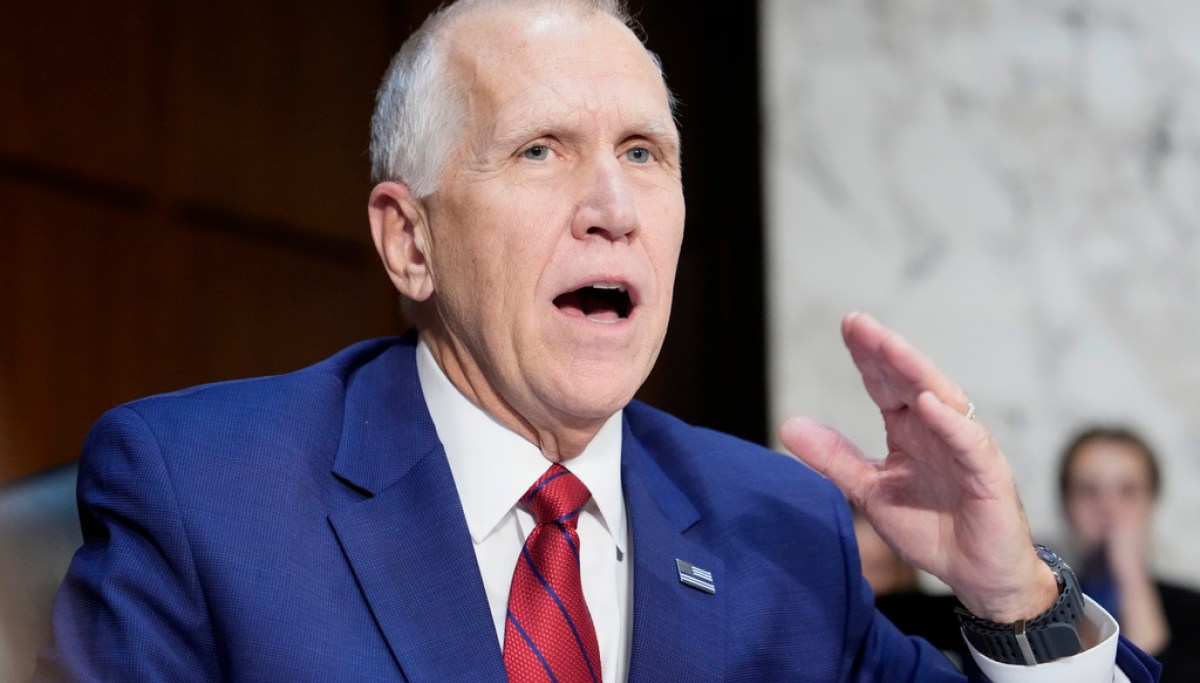
Senator Thom Tillis Vows to Block Trump’s Fed Nominee Amid Powell Probe conservative Conservative coverage portrays Thom Tillis as taking a principled stand to defend the Federal Reserve’s independence by refusing to advance Trump’s Fed nominee until the DOJ resolves what they characterize as a troubling, potentially politicized probe of Jerome Powell. These outlets emphasize that safeguarding the central bank from legal and political pressure justifies temporarily blocking the president’s preferred chair pick. @Washington Examiner @Fox News Senator Thom Tillis, a Republican from North Carolina and member of the Senate Banking Committee, has publicly vowed to block President Donald Trump’s prospective nominee for Federal Reserve chair—widely reported in conservative outlets as former Fed governor Kevin Warsh—until a Department of Justice investigation into current Fed Chair Jerome Powell is resolved. Coverage across the spectrum agrees that the DOJ probe centers on Powell’s handling of a multibillion‑dollar renovation project, cited around $2.5 billion, and on his past testimony to Congress. Reports also converge on the procedural stakes: without Tillis’s support, any Trump Fed nominee is unlikely to advance out of the Banking Committee, effectively stalling the confirmation process, and Tillis has framed his stance as a categorical refusal to move forward on any Fed nominee while the investigation remains open.
Liberal and conservative coverage both emphasize the institutional backdrop of the Federal Reserve’s traditional independence from partisan politics and the sensitivity of monetary policy to perceptions of political pressure. Outlets on both sides acknowledge the broader context of ongoing debates about central bank autonomy, presidential influence over interest‑rate policy, and accountability mechanisms for Fed leadership. They also concur that the DOJ’s involvement in scrutinizing a sitting Fed chair raises unusual separation‑of‑powers and governance questions, and that Tillis’s move, whether seen as principled or tactical, has implications for how future administrations and Congress may attempt to shape or shield the Fed through nomination and oversight processes.
Points of Contention
Motives and principles. Liberal‑aligned sources tend to portray Tillis’s vow as at least partly a political maneuver that paradoxically risks entangling the Fed further in partisan conflict, questioning whether his stance genuinely protects institutional independence or instead pressures the DOJ and the White House. Conservative outlets, by contrast, generally frame Tillis as taking a principled stand to insulate the central bank from what they describe as legal intimidation or politicized prosecution of Powell. While liberal coverage raises doubts about selective outrage and timing, conservative reporting stresses his rhetoric about non‑negotiable safeguards for the Fed.
Characterization of the Powell probe. Liberal sources are more likely to suggest or highlight claims that the investigation into Powell may itself be politically motivated, potentially originating from Trump allies seeking leverage over interest‑rate decisions, and they cast Tillis’s response as complicating an already fraught situation. Conservative outlets, while also noting concerns about political motivation, focus more on the risk that an unresolved criminal inquiry could be used as a tool against the Fed chair, emphasizing the chilling effect on central bank independence. Liberals frame the probe as part of a broader pattern of pressure on independent institutions, whereas conservatives emphasize prosecutorial overreach and legal weaponization against economic policymakers.
Impact on Trump and the Fed. Liberal coverage tends to highlight the irony that a Republican senator is obstructing a Republican president’s preferred Fed pick, portraying this as intra‑party friction that could weaken Trump’s influence over monetary policy and appointments. Conservative outlets, meanwhile, often downplay the intra‑party drama and instead underscore that the real issue is preserving the Fed’s credibility, even if that means temporarily thwarting Trump’s nomination plans. Liberals focus on how the standoff underscores fractures within the GOP over deference to Trump, while conservatives stress long‑term institutional health over short‑term presidential priorities.
In summary, liberal coverage tends to question Tillis’s consistency and emphasize the political and intra‑party implications of his blockade, while conservative coverage tends to cast his stance as a necessary defense of Federal Reserve independence against an improperly politicized investigation.
Story coverage nevent1qqswgmxsw84y4zrh9yjce4z65ntrwl7nhjamcdpxr6me4z3ljwrsqjs50xknz nevent1qqsd9qqrtxf8x0mkgyjtaygn0xydrjwsz0dj6r9gegkz6suayaqwg3qptap63 nevent1qqsvzj672st7n8fg4sk49vcqrfrnagyahsw5llm826q9hdg3gpw8wqqnnlr0w nevent1qqsz6t8a0gjyh0z6qzrcvdd399l5x0wyakmt53c9dsu4np2xuj7g85g939xl3