UK Prime Minister Keir Starmer Meets with Chinese President Xi Jinping in Beijing
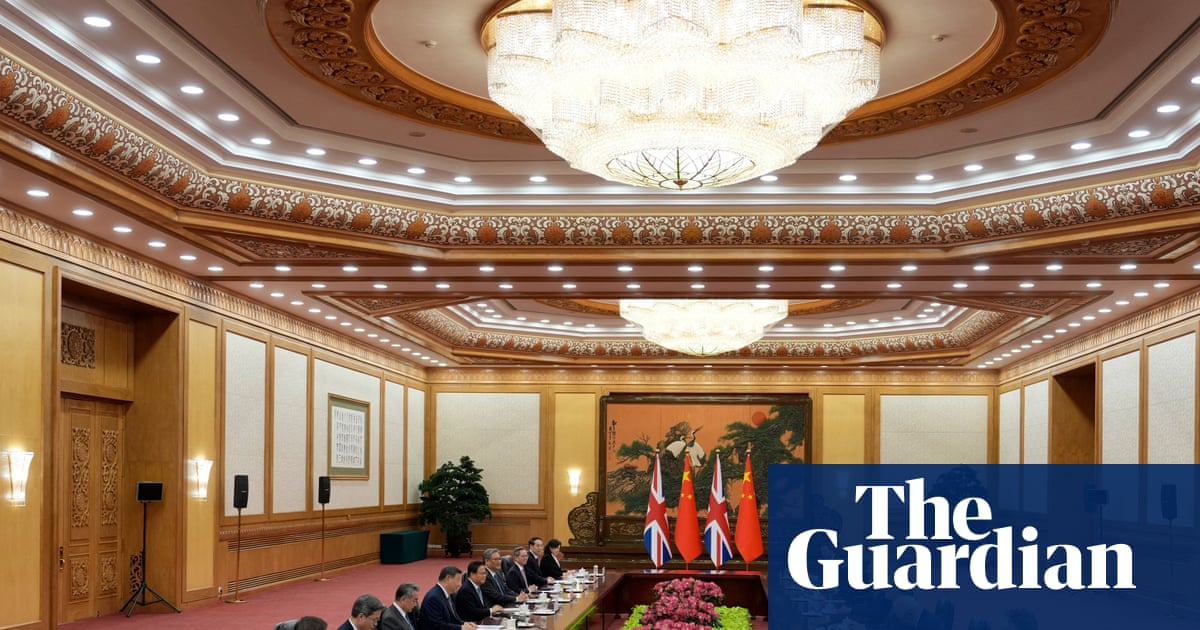
UK Prime Minister Keir Starmer Meets with Chinese President Xi Jinping in Beijing liberal Liberal coverage depicts Starmer’s Beijing visit as a necessary, economically driven reset aimed at building a more sophisticated UK-China relationship that can advance trade, innovation, and people-to-people links while still raising human rights and security issues. It stresses pragmatic engagement, some strategic distance from hardline US policy, and careful navigation of domestic political resistance to deepen cooperation where possible. @www.theguardian.com @CNBC
conservative Conservative coverage portrays the push for a “strategic partnership” with China as a potentially risky softening that may underplay threats related to security, human rights, and Beijing’s geopolitical ambitions. It questions whether Starmer’s assurances are sufficiently robust and warns that edging closer to China could unsettle key allies and invite strategic vulnerabilities despite the promised economic benefits. @The Epoch Times @The Washington Times UK Prime Minister Keir Starmer met Chinese President Xi Jinping in Beijing as part of a high-profile visit aimed at resetting strained UK-China relations and establishing what both sides called a more “sophisticated” or “strategic” partnership. Coverage across liberal and conservative outlets agrees that the talks focused on expanding cooperation in areas such as trade, investment, education, healthcare, artificial intelligence, climate change, and wider global stability. Reports concur that Starmer was accompanied by business leaders, that both sides discussed facilitating travel and potential visa waivers or visa-free entry for British nationals, and that the meeting was framed by both governments as a step away from years of distrust and “ice age” relations toward deeper, pragmatic engagement. There is also broad agreement that the encounter took place against a backdrop of global instability, including shifting US policy and wider geopolitical tensions.
Across the spectrum, outlets describe the visit as part of a broader attempt by London and Beijing to recalibrate relations after a period marked by national security concerns, sanctions, and a deteriorating business environment for UK firms in China. Reports agree that the talks included references to creating fairer conditions for foreign companies, addressing longstanding anxieties over security and espionage, and managing human rights concerns within a framework that still prioritizes economic recovery and stability. Media on both sides note that Starmer raised issues such as human rights and global security, while Xi emphasized long-term strategic cooperation, with both leaders presenting the engagement as a pragmatic response to economic pressures and a changing international order.
Points of Contention
Motives and framing of the reset. Liberal-leaning coverage presents Starmer’s outreach as economically driven pragmatism designed to lift a struggling UK economy and demonstrate some independence from US hawkishness on China, casting the reset as a nuanced rebalancing rather than ideological convergence. Conservative outlets, by contrast, tend to frame the same language about a “sophisticated relationship” and “strategic partnership” as a potentially risky softening toward a systemic rival, stressing the need to remain aligned with broader Western skepticism of Beijing. Both sides acknowledge the economic rationale, but liberals highlight opportunity and diversification, while conservatives emphasize strategic caution and the optics of drawing closer to China at a volatile geopolitical moment.
Security, human rights, and values. Liberal sources generally note that Starmer says he raised human rights and national security concerns, but they focus more on how to compartmentalize these issues within a cooperative economic framework, treating them as constraints to be managed rather than deal-breakers. Conservative reporting more sharply questions whether such issues can be meaningfully addressed within a “strategic partnership,” raising doubts about the credibility and specificity of Starmer’s private messages on human rights, espionage, and China’s ties to Russia. Where liberal coverage stresses that engagement can coexist with principled criticism, conservative coverage worries that the rhetoric of sophistication may mask an erosion of red lines and an underestimation of the security risks.
Domestic politics and parliamentary backlash. Liberal-aligned outlets foreground the internal UK debate, especially resistance from MPs sanctioned by China and those wary of a Xi state visit, framing Starmer as having to balance economic imperatives with parliamentary and public concern. Conservative sources, while acknowledging domestic criticism, tend to suggest this backlash underscores a deeper unease inside the political class about trusting Beijing and may signal that Starmer is moving faster than the consensus allows. Liberals thus cast opposition as a predictable but manageable constraint on a necessary reset, whereas conservatives highlight it as evidence that the government may be out of step with security-focused voices.
Relationship to US policy and wider alliances. Liberal coverage often portrays the Beijing visit as a sign that the UK is asserting a more autonomous foreign policy, willing to diverge selectively from Washington’s more confrontational China stance in pursuit of economic gains and constructive engagement. Conservative outlets are more likely to read the same move through the lens of alliance politics, warning that pursuing a deep “strategic partnership” with China while the US grows more skeptical—especially under shifting American leadership—could complicate the UK’s position in the Western camp. For liberals, managed differentiation from US policy is a mark of maturity and pragmatism; for conservatives, it risks sending mixed signals to key allies and emboldening Beijing.
In summary, liberal coverage tends to frame Starmer’s Beijing visit as a pragmatic, economically focused reset that carefully manages security and human rights concerns within a broader strategy of nuanced engagement, while conservative coverage tends to treat the same overtures as a potentially over-accommodating “strategic partnership” that may downplay risks to national security, alliance cohesion, and democratic values.
Story coverage nevent1qqspej0d2rfulmt4vrsxdzdz6m55x7hfkz5v87gxvh2pzznsvc66wfqmtj0lp nevent1qqsr7c6mnd7l478r3v47xdve4f3j2gc0dw7q3vmlzyzkg9zkrfz2wrs4q3nm3 nevent1qqsg56euv22xkfx5mwscxx8cedgxg0gh0439sxhgm2sg4he0xw73lzg3jqjly nevent1qqstexlmgrueqm5k35ftcs9dtxagtxdq29946mz4th7qs097kv2u6jg4w9xv5 nevent1qqsf8we3afw5vvngr5fydlvknu9hpavzx9tye3tqxgfqnmzy0mdgx5qv4asyp