Former Illinois Deputy Sean Grayson Sentenced to 20 Years for Killing Sonya Massey
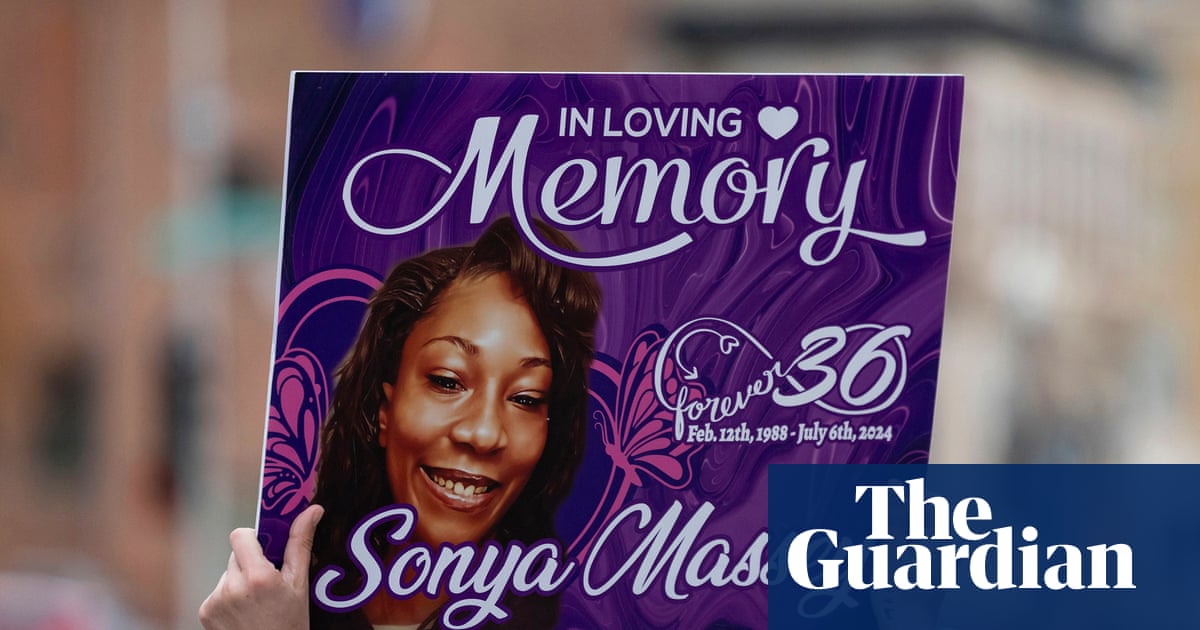
Former Illinois Deputy Sean Grayson Sentenced to 20 Years for Killing Sonya Massey liberal Liberal sources portray Grayson’s 20-year sentence as insufficient and emphasize that Massey was killed after calling 911, casting the case as part of a broader pattern of police violence and racial injustice. They highlight the $10 million settlement, mandated de-escalation training, and new Illinois transparency laws as necessary but partial steps toward systemic reform. @www.theguardian.com
conservative Conservative sources focus on the core facts that a former deputy was convicted of second-degree murder and sentenced to 20 years for killing Massey after responding to her 911 call. They generally treat the case as an individual criminal incident addressed through the courts, with limited emphasis on broader systemic critiques or reform agendas. @The Washington Times Former Sangamon County sheriff’s deputy Sean Grayson has been sentenced to 20 years in prison for the killing of 36-year-old Sonya Massey in Springfield, Illinois. Both liberal and conservative outlets report that Massey had called 911 to report a potential prowler near her home, and Grayson responded to that call before fatally shooting her outside her residence. Coverage agrees he was convicted of second-degree murder, that he addressed the court and expressed remorse at sentencing, and that members of Massey’s family publicly described the punishment as inadequate in light of their loss. Both sides also note that the case ended in a substantial civil settlement and that it has become a focal point of public attention on police use of force.
Liberal and conservative reporting concur that the incident has spurred institutional responses beyond the criminal conviction, including a $10 million settlement with Massey’s family and the implementation of mandated de-escalation training for officers. They also agree that Illinois lawmakers moved to strengthen transparency requirements for law enforcement candidates, so agencies can identify prior issues when hiring. Across the spectrum, the case is framed as part of a broader pattern of scrutiny over police interactions with citizens who seek help through 911, and as an example of how state and local institutions respond through policy changes, training reforms, and legislative action.
Points of Contention
Framing of the case. Liberal-aligned outlets frame the killing as an emblematic police accountability and racial justice case, emphasizing that a Black woman was killed after calling for help and placing it within a broader pattern of problematic police responses. Conservative outlets tend to present it more narrowly as a tragic but resolved criminal case, focusing on the fact that a former deputy has been tried, convicted, and sentenced under existing law. Liberal pieces often highlight the fear and vulnerability of callers like Massey and question systemic practices, while conservative coverage more often centers on the specific facts of this incident and the legal outcome without extensive systemic critique.
Emphasis on systemic reform. Liberal coverage devotes substantial space to the $10 million settlement, mandated de-escalation training, and new Illinois transparency laws, portraying them as overdue structural fixes to failures in hiring, oversight, and training. Conservative outlets mention the sentencing as the main remedy and, when they reference reforms at all, treat them as contextual details rather than the central storyline. From the liberal perspective, the case is a catalyst for rethinking how police are trained and screened, while conservatives more often emphasize that existing legal mechanisms successfully punished misconduct.
Portrayal of the sentence and justice. Liberal sources foreground the family’s view that 20 years is insufficient, implicitly questioning whether the criminal justice system values Black victims equitably and suggesting the punishment may not deter future misconduct. Conservative sources generally present the 20-year term as a fact, with less exploration of whether it is too lenient or too harsh, and little explicit critique of judicial discretion. In liberal narratives, the sentence is a starting point for discussing disparities and accountability gaps, while in conservative reporting it is largely portrayed as the conclusion of the case.
Characterization of law enforcement culture. Liberal-leaning coverage often depicts the shooting as a symptom of deeper cultural problems in policing, including inadequate de-escalation training and insufficient transparency about officers’ histories, and argues that institutions had previously failed to prevent such outcomes. Conservative coverage more often avoids broad generalizations about police culture, tending instead to describe Grayson as an individual who committed a serious crime and was punished. Liberal stories link the case to ongoing debates about policing reforms nationwide, whereas conservative stories tend to keep the analysis local and case-specific, minimizing broader indictments of law enforcement.
In summary, liberal coverage tends to frame Grayson’s conviction as part of a systemic failure that demanded policy, training, and transparency reforms beyond a single 20-year sentence, while conservative coverage tends to present it as a specific criminal act appropriately addressed through the courts, with less emphasis on broader critiques of policing.
Story coverage nevent1qqswk3695rcktw0pafq6xqmxtce8rpksrhfkv29hejnulwqs6g09w8cwc7jgr nevent1qqs0xnxha4l8ruty2ryvme9wy9yeh4jppsg5k4g2w9t5xyzn6kaww5smwvk62