Ferry Sinks in Southern Philippines, Killing at Least 15
Ferry Sinks in Southern Philippines, Killing at Least 15 liberal Liberal coverage presents the ferry sinking as part of a recurring pattern of preventable maritime disasters in the Philippines, emphasizing the higher reported death toll, technical failures, and long-standing regulatory and oversight problems. It uses the incident to spotlight systemic safety gaps and press for stronger enforcement and reforms. @@vavl…kk84
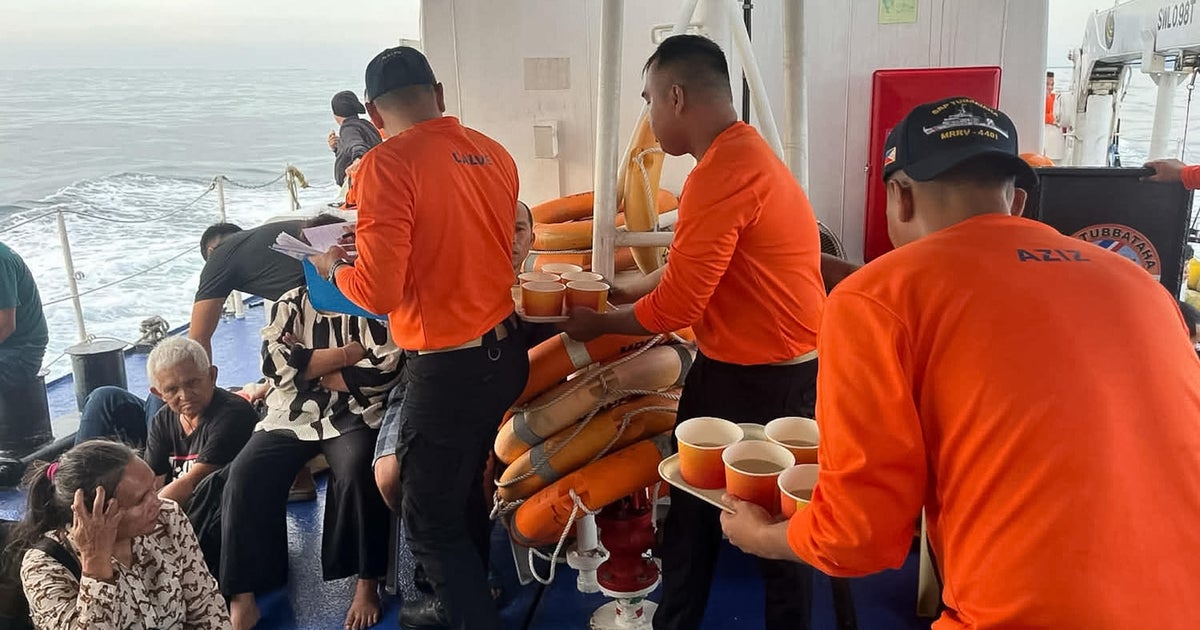
conservative Conservative coverage focuses on the confirmed casualty figures, the large number of people rescued, and the details of the incident itself, stressing that the precise cause remains under investigation. It tends to treat the sinking as a discrete tragedy rather than strong evidence of systemic failure, with more positive emphasis on the authorities’ rescue response. @The Washington Times @The Epoch Times A ferry identified as the M/V Trisha Kerstin 3 sank early Monday near the island village of Baluk-baluk in Basilan province in the southern Philippines, with both liberal and conservative outlets agreeing that more than 350 people were on board and that at least 15 people were confirmed dead, with hundreds rescued. Coverage across the spectrum reports the vessel encountered technical problems and began to tilt before sinking roughly a nautical mile off the coast in otherwise good weather conditions, prompting large-scale rescue operations that saved over 300 passengers and crew, while authorities continue efforts to account for remaining missing individuals.
Both liberal and conservative sources describe this as an inter-island passenger ferry operating in a country where maritime travel is common and frequently risky due to aging vessels, lax enforcement, and overloading concerns. They agree that an official investigation has been opened into the cause of the sinking, that maritime and coast guard authorities are involved in search, rescue, and recovery operations, and that the incident fits into a broader pattern of deadly Philippine ferry accidents that periodically trigger renewed debates about safety regulation, vessel maintenance, operator accountability, and possible reforms.
Points of Contention
Death toll emphasis. Liberal-aligned coverage highlights a higher reported death toll, citing at least 18 fatalities and framing the number as likely to change as recovery continues, whereas conservative outlets consistently use the lower figure of at least 15 dead and stress the large number of survivors. Liberal sources tend to foreground the uncertainty and fluidity in casualty reporting, while conservative reports present the lower confirmed toll as a stabilizing baseline. This difference subtly shifts tone, with liberal coverage sounding more alarmed and conservative coverage somewhat more restrained.
Narrative framing of causation. Liberal sources more quickly connect the technical problems and tilting of the vessel to longstanding structural issues in the Philippines’ maritime sector, such as inadequate safety enforcement and aging fleets, even when details of the specific failure remain under investigation. Conservative outlets mention the technical problems as the immediate cause but focus more on the incident as an isolated tragedy still under review, avoiding early linkage to systemic negligence. As a result, liberal coverage tends to hint at broader institutional culpability, while conservative coverage holds closer to the limited facts currently confirmed by officials.
Regulation and reform focus. Liberal reporting leans toward framing the sinking as yet another example underscoring the need for tougher regulation, stricter inspections, and potential policy reforms, often placing the event in a chain of past disasters to argue for government and industry changes. Conservative coverage, while acknowledging the country’s history of ferry accidents, puts more narrative space on the successful rescue of over 300 people and offers fewer explicit calls for regulatory overhaul. This creates a contrast between a reform-oriented lens on the left and a more event-specific, outcomes-focused lens on the right.
Tone toward authorities. Liberal-aligned outlets are more inclined to scrutinize the performance and accountability of ferry operators and maritime authorities, stressing the investigation and implicitly questioning whether oversight was adequate before the disaster. Conservative sources give greater prominence to the rapid response by rescuers and local officials, portraying authorities largely as problem-solvers rather than potential contributors to the problem. Consequently, liberal coverage reads as more critical and system-questioning, whereas conservative coverage tends to be more deferential and operational in its portrayal of state and local actors.
In summary, liberal coverage tends to stress the higher possible death toll, systemic regulatory failures, and questions about institutional accountability, while conservative coverage tends to emphasize the confirmed numbers, the scale and success of rescue operations, and a more cautious, event-focused framing of causation and responsibility. Story coverage nevent1qqszx3ljhdc5lfvhwpyys67qhlyely8u93ura6nkdmw7ulgztygzn7gxumy25 nevent1qqsrd4dn88zq4yhdj7mqzz29lq9ywtgh2vxw5xcp278lk9cg9jjcxqq2c92vp nevent1qqsqr247g55ghe8h4t65je6v97qu2qa93y27a7q4vg088g7jx6jnlqqxvj9fz