Israel Recovers Remains of Last Hostage From Gaza
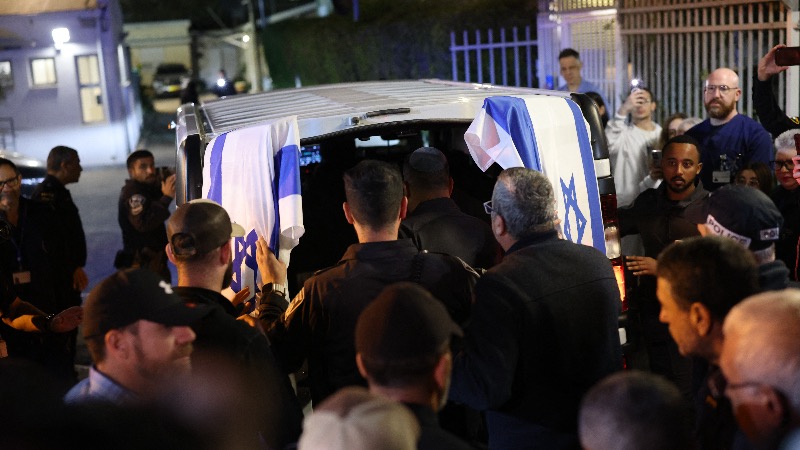
Israel Recovers Remains of Last Hostage From Gaza liberal Liberal coverage emphasizes that recovering Ran Gvili’s remains formally ends the list of October 7 hostages but spotlights the event as one step in a broader, internationally mediated ceasefire process that must prioritize Palestinian self-governance and humanitarian relief. It highlights Hamas’s claim of compliance, ongoing Israeli violations, and resistance from parts of the Israeli right to a unified Palestinian-run Gaza. @@cuxr…hw6s @@vavl…kk84
conservative Conservative coverage frames the recovery of the last hostage’s remains as a critical milestone that completes the initial phase of Trump’s Gaza peace plan and proves there are no more hostages in captivity. It stresses moving quickly into subsequent phases focused on Hamas disarmament, Israeli military withdrawal under favorable terms, and tight international—often Trump-led—oversight of Gaza’s future governance. @The Epoch Times @@fukl…s2j9 @Fox News Israeli and international reports across the spectrum agree that Israel has recovered and identified the remains of Staff Sgt. Ran Gvili, a 24-year-old Israel Police special forces officer who was killed on October 7, 2023, near Kibbutz Alumim and whose body was taken into Gaza. Israeli authorities and the military have now formally declared that there are no longer any living Israeli hostages held in Gaza, stating that all those abducted on October 7 are either dead with remains recovered or otherwise accounted for, and that Gvili’s return closes the list of those captured that day. Both liberal and conservative outlets report that this recovery was announced in late January, that forensic processes in Israel confirmed his identity, and that his remains have been returned to Israel for burial.
Coverage from both liberal and conservative sources links the recovery of Gvili’s remains to ongoing diplomatic efforts and ceasefire arrangements between Israel and Hamas, especially a multi-phase plan backed by the United States. They concur that returning all hostages and remains was a key prerequisite for moving to a second phase of the ceasefire framework, which contemplates further steps such as disarmament measures, Israeli military adjustments or withdrawals in Gaza, and some form of international or restructured governance for the territory. Both sides note that Hamas publicly framed the transfer of remains as evidence of its adherence to the ceasefire terms, while Israeli officials framed the announcement as a milestone within a structured, externally mediated process aimed at stabilizing Gaza and setting conditions for broader political arrangements.
Points of Contention
Framing of the ceasefire plan and ownership. Liberal-aligned outlets tend to present the multi-phase ceasefire and political roadmap in institutional terms, emphasizing it as a U.S.-brokered or internationally backed framework that both Israel and Hamas are navigating under pressure, with attention to how it might reshape Gaza’s governance. Conservative sources more often personalize and brand it as “Trump’s Gaza peace plan,” stressing his authorship, leadership role, and intent to drive the sequence of phases, including disarmament and international monitoring, and highlighting how Washington is pushing ahead despite Israeli skepticism.
Portrayal of Israeli and Hamas compliance. Liberal coverage generally underscores Hamas’s statement that returning Gvili’s remains demonstrates its compliance with agreed ceasefire terms, while also noting accusations that Israel continues to violate aspects of the deal through ongoing actions in Gaza. Conservative coverage focuses far more on Israel’s fulfillment of conditions and on the closure of the hostage file as an Israeli achievement, giving less space or credence to Hamas’s narrative of adherence and casting Hamas primarily as an actor that must be disarmed and constrained in later phases.
Humanitarian and political implications for Gaza. Liberal sources tie the body’s return to broader humanitarian and political issues, mentioning steps like reopening the Rafah crossing for pedestrians and emphasizing that these moves will not meaningfully ease Gaza’s wider humanitarian crisis without deeper reforms and sustained aid. Conservative outlets, by contrast, concentrate on how completing the remains-return phase unlocks subsequent stages centered on Hamas disarmament, Israeli troop withdrawal, and the establishment of an international or Trump-led monitoring force, treating humanitarian aspects as secondary to security and statehood sequencing.
Characterization of future Gaza governance. Liberal reporting tends to highlight proposals for a more unified, Palestinian-run Gaza emerging from the ceasefire framework and notes that such ideas face opposition from elements of the Israeli right, framing this as a clash over long-term political control and Palestinian self-determination. Conservative coverage gives more attention to guarantees of Palestinian statehood as part of Trump’s plan but frames this chiefly through the lens of ensuring Israeli security and international oversight, depicting the governance question as something to be tightly managed by external actors and conditioned on prior demilitarization.
In summary, liberal coverage tends to situate the recovery of Gvili’s remains within a broader institutional, humanitarian, and political process that stresses Palestinian governance and questions Israeli and U.S. choices, while conservative coverage tends to present it as a security and diplomatic milestone validating Trump’s phased plan, foregrounding Israeli closure of the hostage chapter, Hamas disarmament, and strong external control over Gaza’s future. Story coverage nevent1qqsxt22nrr2qxl9gpm8ncw4q5xhqdm4rzd3ewhe50ge8d0dehvej72q0w9dt6 nevent1qqsy4af0wfyph3gc65p366djrs4pw8mjksyg3qtmsp5jx5mnxxpzepcj2r3zj nevent1qqsx79t4whmpc7n39pjg0xj4nr9uvl7mmzanrr78rj33mav9v85r2fqdcu67x nevent1qqsrjc62g8h9zmy4s5nmty4aaht9xtc5hyyv89s4gtkv9683fypsr8sfk338q nevent1qqs0f5hmf7qe0wa5nx7pqlx3f8p3u2swspsdfh0a497af96x4cn44tsm94au3