Iranian Prosecutor Denies Trump's Claim He Halted 800 Executions
Iranian Prosecutor Denies Trump’s Claim He Halted 800 Executions conservative Conservative coverage generally treats Trump’s claim that he helped prevent mass executions in Iran as plausible and consistent with his broader strategy of projecting strength toward hostile regimes. These outlets emphasize the brutality and dishonesty of Iran’s government, suggesting that even if precise numbers are uncertain, Trump’s threats and military posture may have contributed to restraining Tehran’s worst actions. @@yulg…hgkw @The Washington Times News coverage across liberal and conservative outlets agrees that Iran’s Prosecutor-General has publicly rejected Donald Trump’s recent claim that he halted the executions of roughly 800 Iranian prisoners or protesters. Both sides report that Trump described having warned Iran that proceeding with executions would trigger strong U.S. action, and that he portrayed this as having successfully saved hundreds of lives, while Iranian authorities responded by calling the claim entirely untrue and insisting no such large-scale executions were planned or canceled as a result of U.S. pressure. There is shared acknowledgment that this exchange is set against the backdrop of recent or ongoing unrest in Iran and follows years of tensions between Washington and Tehran.
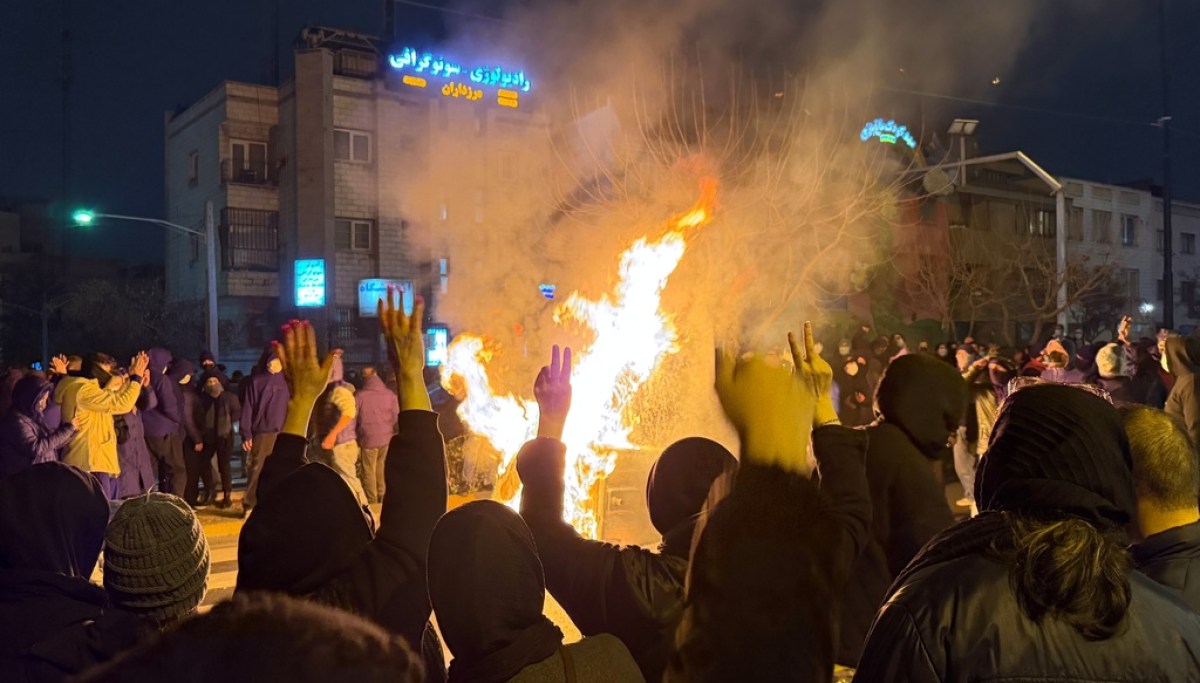
Liberal and conservative sources likewise highlight that Iran’s judiciary is formally presented by Tehran as independent from foreign influence, a point Iranian officials stressed while denying Trump’s account. Both sides reference the broader context of harsh crackdowns on Iranian protests, including thousands of arrests and a reported death toll in the thousands according to activist groups, to explain why allegations of mass executions carry such weight. Coverage also notes the long history of adversarial U.S.-Iran relations, prior sanctions and military posturing, and previous disputes over human rights abuses, all of which frame the current war of words over whether U.S. threats can or did alter Iran’s internal punitive practices.
Points of Contention
Verification and credibility. Liberal-leaning outlets tend to foreground the lack of independent evidence for Trump’s claim, stressing that neither international rights groups nor U.S. agencies have corroborated a specific plan for 800 executions being halted by his intervention, and they treat the Iranian denial as consistent with Trump’s broader record of exaggeration. Conservative outlets more often emphasize that Iran’s regime is itself an untrustworthy source, suggesting that the Prosecutor-General’s denial may be propaganda, and they leave more room for the possibility that Trump’s pressure could have quietly influenced Tehran even if exact numbers are uncertain.
Framing of Trump’s actions. Liberal sources usually frame Trump’s statement as self-aggrandizing and potentially misleading rhetoric, casting it as part of a pattern where he inflates his role in foreign crises or human-rights outcomes without clear documentation. Conservative coverage more frequently presents his claim in a sympathetic or at least neutral light, stressing his willingness to use threats and show of force to protect protesters abroad and implying that his tough posture toward Iran may have deterred worse abuses even if numerical specifics are in dispute.
Emphasis on Iranian repression. Liberal reporting tends to spotlight systemic human-rights abuses in Iran with a focus on current and past crackdowns, often citing activists’ estimates of thousands killed and tortured while downplaying the idea that a single U.S. president decisively shaped those outcomes. Conservative sources, while also acknowledging the brutality of Iran’s response to dissent, often integrate that context into arguments for a strong, hawkish U.S. stance, using the scale of repression to justify Trump’s threats and to argue that only robust pressure can constrain Tehran’s behavior.
U.S. foreign policy narrative. Liberal-aligned outlets commonly situate the episode within a critical narrative about Trump-era foreign policy, noting that unilateral threats and maximum-pressure tactics did not fundamentally improve Iran’s human-rights record and may have undercut multilateral diplomacy. Conservative outlets instead tend to fold the story into a broader case that Trump’s approach projected strength, deterred adversaries, and contrasted favorably with what they depict as weaker or less decisive strategies pursued by Democratic administrations.
In summary, liberal coverage tends to cast Trump’s 800-executions claim as unsubstantiated boasting against a backdrop of very real but independently documented Iranian abuses, while conservative coverage tends to portray his statements as at least plausible within a narrative that credits his hardline pressure with constraining Tehran’s worst impulses.
Story coverage nevent1qqsqm0jnh7t8t4eqzq4c2s3a3qy3gg3xelwkuytqk83jqjnl69uslksygx64h nevent1qqs2fa587sd5fhx8q6u90987khexn0mhyhjrwg5e7p7jkvagdw5k23g5kfeqy