Barron Trump Becomes Remote Witness in UK Rape Case
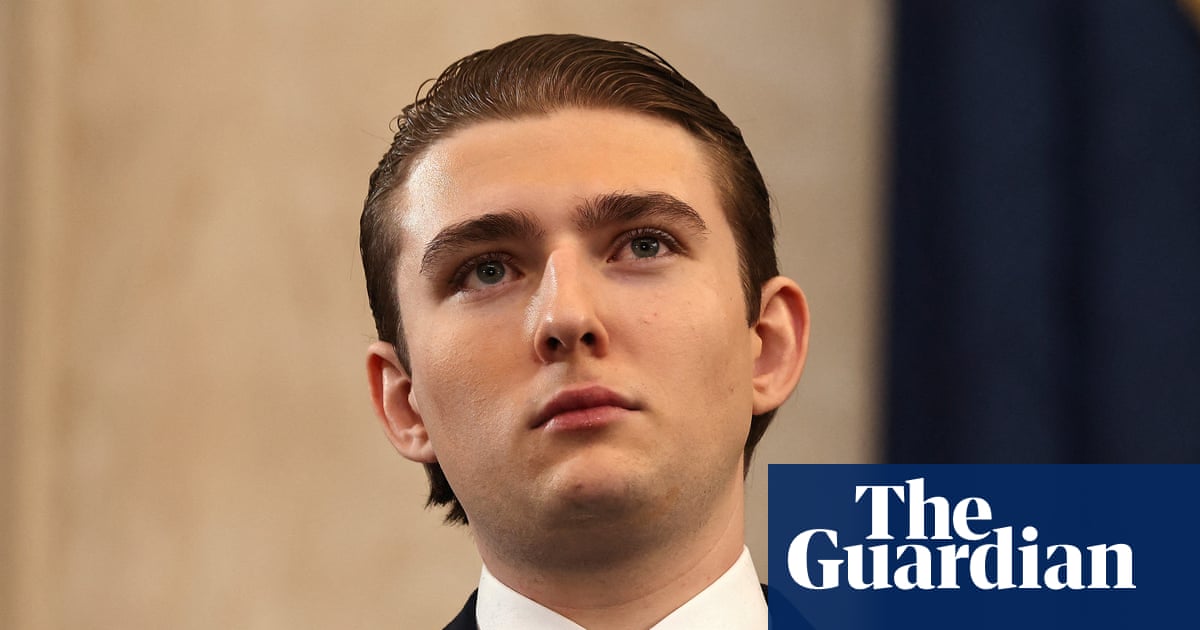
Barron Trump Becomes Remote Witness in UK Rape Case liberal Liberal coverage presents Barron Trump as a conscientious remote witness who promptly contacted UK police after seeing what he believed was an assault, providing important support for the alleged victim’s account. It emphasizes the seriousness of the charges, the alleged strangling, and patterns of controlling behavior, while treating Trump’s involvement as a factual but not political element of an ongoing rape trial. @@cuxr…hw6s @@vavl…kk84
conservative Conservative coverage portrays Barron Trump as a tangential participant with an incomplete view of events whose presence is magnified largely because of his family name. It foregrounds the defendant’s claims of consensual encounters, the complainant’s intoxication and emotional state, and the ambiguities in the evidence, suggesting the case is less clear-cut than some reporting implies. @The Epoch Times Barron Trump has emerged as a remote witness in a UK rape and assault trial involving 22-year-old defendant Matvei Rumiantsev, after Trump reportedly saw part of an alleged attack during a FaceTime call on January 18, 2025. Across both liberal and conservative coverage, outlets agree that Barron Trump used the alleged victim’s phone to contact UK police, told them he was witnessing what looked like an assault, and emphasized its seriousness even though he could not provide full identifying details about the woman or precise location; they also agree that Rumiantsev is charged with rape and assault, that he later answered a call from Trump on the woman’s phone during the same evening, and that he claims the sexual activity was consensual and that the woman had been drinking and was emotionally distressed.
Reporting from both sides also converges on the broader context of the case: this is a UK criminal proceeding focused on a young woman’s alleged assault, with Barron Trump’s involvement limited to what he saw and reported via video call rather than any in-person contact. Both liberal and conservative sources note that Rumiantsev has testified in court about his version of events, acknowledging the call with Barron Trump and describing the woman’s mental state, while prosecutors are using Trump’s emergency call and description of the incident as part of the evidentiary narrative; beyond that, coverage on both sides recognizes that the trial is ongoing, that full evidence and verdict are still pending, and that Barron Trump is not accused of any wrongdoing but functions solely as a remote, incidental witness.
Points of Contention
Framing of Barron Trump’s role. Liberal-aligned outlets frame Barron Trump primarily as a bystander who acted responsibly by contacting police when he believed he was witnessing an assault, underscoring his emphasis on the gravity of what he saw despite limited details. Conservative coverage, while acknowledging he called authorities, more often presents him as a high-profile name pulled into a chaotic situation, stressing that he was on the periphery and had incomplete information. Liberal pieces tend to highlight his quick action as bolstering the prosecution’s narrative. Conservative pieces more frequently stress the limitations of his vantage point and the possibility that what he saw may not fully capture the encounter.
Characterization of the accused and alleged victim. Liberal sources foreground the prosecution’s description of Rumiantsev’s conduct, citing claims that he strangled the woman and that his explanation—saying he was trying to make her understand she was “wrong”—fits a pattern of controlling behavior. Conservative outlets give relatively more space to Rumiantsev’s testimony that sex was consensual, occurred twice, and that the woman was in a “complete breakdown” partly due to drinking, positioning his narrative as a significant counterweight. Liberal reporting emphasizes the woman’s vulnerability and the seriousness of the alleged violence, while conservative reporting more prominently stresses her intoxication and emotional state as context for assessing consent and credibility.
Emphasis on evidentiary strength. Liberal coverage tends to treat Barron Trump’s police call and description of an apparent assault as corroborative of the complainant’s account, situating it alongside other elements of the prosecution’s case to suggest a coherent picture of abuse. Conservative outlets, by contrast, highlight gaps and ambiguities in what Trump and others could actually see or know in real time, suggesting that the case hinges on contested interpretations of a fraught encounter rather than clear-cut proof. Where liberal pieces lean toward presenting the remote witness account as a significant pillar in the case narrative, conservative pieces more often frame it as one limited, potentially equivocal data point among many.
Political and media subtext. Liberal-leaning coverage largely keeps partisan politics in the background, treating Barron Trump’s identity as notable but focusing on the legal and factual details of the alleged assault and the institutional response. Conservative coverage is more attuned to the Trump name, occasionally implying that media interest may be heightened because he is Donald Trump’s son and hinting at a pattern of public over-scrutiny of the Trump family. Liberal outlets mostly frame the story as a standard high-profile criminal trial with an unusual remote witness, while conservative outlets are likelier to portray it as another example of how any event touching the Trump orbit attracts disproportionate attention.
In summary, liberal coverage tends to stress Barron Trump’s emergency call as responsible, potentially corroborative of the alleged victim, and embedded in a broader narrative of serious violence and institutional response, while conservative coverage tends to underscore the limits of what he could see, foreground the accused’s account and contextual factors like intoxication, and highlight how the Trump name amplifies scrutiny of an already contested case. Story coverage nevent1qqsdd4rmqy6csl8ayyc3974v56570e44z7dar2rskxwapw9lrgrmdzgnfua0e nevent1qqspu0k2l3znjd8z7d4hgq2qk9rr6vmvfca57nygvx3ynjcz0w5hmygts5sjl nevent1qqsfktn8gkr7c65kagnudt5vq3j4r5sguj0asps03v3j5zrzax9yh2gzdjg90