🔒 Paid Article (Sept. 9, 2025) : The Nostr Manifesto
This article lays out the case for Nostr as a manifesto: why it matters, what it protects, and how it redefines digital identity and communication.
Self-professed followers of Jesus the Messiah on Nostr. Protestants, Roman Catholics and Orthodox welcome. (No LDS or JWs)
This article lays out the case for Nostr as a manifesto: why it matters, what it protects, and how it redefines digital identity and communication.
A Bitcoin Magazine–worthy essay showing how fiat systems steal human time and dignity through inflation and debt, while Bitcoin restores both by respecting scarcity and responsibility. Argues that Bitcoin is not just money, but an architecture of hope grounded in time and human flourishing.
The dawn of interplanetary commerce begins as Mars miners export metals to Earth, Earth sends biotech back, and the Moon emerges as a free-trade hub. Only Bitcoin, not fiat, can bridge the distrust across worlds.
In a world of silence and collapse, survivors uncover Bitcoin’s ledger as an incorruptible scripture — each block a psalm, each transaction a witness. As tyrants rise with false ledgers, archivists keep the flame of truth alive, proving that collapse cannot erase what is incorruptible.
On Mars, truth is not a virtue — it is survival. The Martian Reckoners arose from the harsh realities of Pilgrim-9 Colony, becoming the most trusted and feared guild in the Red World. Part auditors, part historians, part cryptographic monks, the Reckoners built a culture where settlement, memory, and governance all hinge on uncompromising truth. Their calculations, rituals, and signatures shaped the future of Martian sovereignty.

Mars won’t run on credit cards or central banks — settlers will build a Bitcoin-based economy where Lightning powers daily life and Earth-mainnet ensures long-term settlement.
A day in the life of living in a moon colony, where transactions are denominated in sats
Owning your identity vs. renting it from platforms — and why npubs are passports, not costumes.
Why I denominate wealth in Bitcoin instead of chasing endless fiat gains — and why treasury design, not trading skill, defines sovereignty.
Babylon is not a conspiracy or a cabal—it is a system whose amoral logic produces profoundly immoral outcomes. Its power lies not in overt oppression but in the subtle ways it rewards compliance, punishes sovereignty, and shapes identity. This essay explains why good, decent people—including those closest to us—remain within Babylon without realizing the cost.
When Earth began rewriting history after the Exodus Protocol leak, Luna Freeport responded with one of the most ambitious cultural projects in human history: relocating, preserving, and expanding the entire Sovereign Archive into a vast, subterranean knowledge sanctuary beneath the Shackleton region.
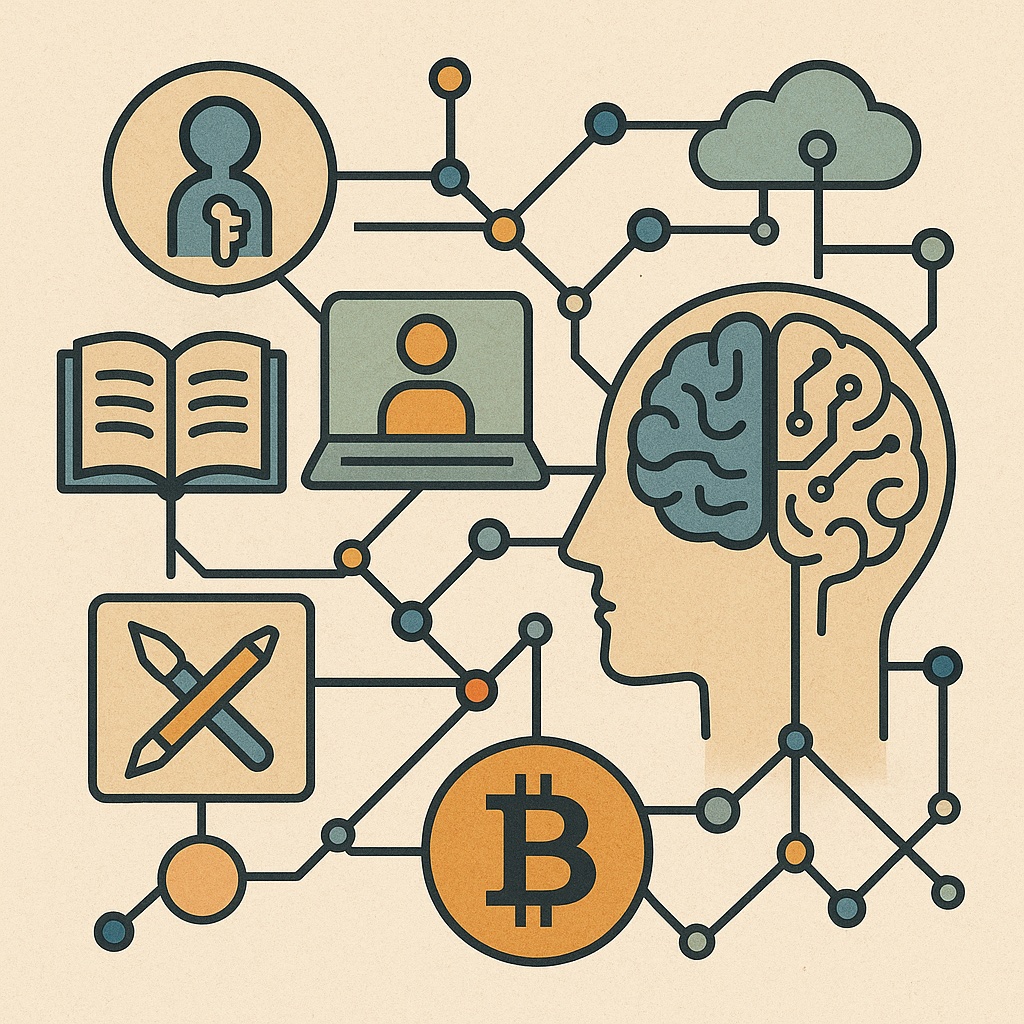
While engineers and botanists shaped the soil of early Mars, a parallel group shaped something equally important — the economic soil. This is the story of the first Martian “ledger architects,” who learned that sovereignty wasn’t only physical, but cryptographic.
The settlers of Pilgrim-9 did not intend to draft a constitution. They intended to survive. But as the Terraformers, Reckoners, guild engineers, and Lakota ethicists forged a new world on Martian soil, a shared ethos emerged — shaped by hardship, truth, and the Sovereign Canon they carried from Luna. The Red Charter became the first Martian declaration of identity, sovereignty, and purpose.
Written on our 25th wedding anniversary — a reflection on love, creation, and covenant as the living pattern that sustains both marriage and meaning.
A long-form reflection on the hidden, unglamorous stretch that comes right before a breakthrough — the season where your work feels fragile, your efforts feel unseen, and every system seems to resist you. Friday’s discouraging discoveries become the framing for a deeper exploration of sovereignty, endurance, and the quiet discipline required to keep building.
An inquisitive evangelical student rekindles hope that a single, honest dialogue can plant seeds of faith.

The Scriptures push two things into your hands as you look toward the future. First, be sober. Drop the illusion that with enough progress, enough education, enough technology, we can engineer ourselves out of suffering, sin, and death. You are not going to “fix” this world. You are not going to build the kingdom of God by your projects. This age will end in fire, not in a human utopia. Your hope is not in the next election, the next medicine, or the next gadget, but in the Lord who says He is coming soon. Second, do not panic. When things move toward catastrophe, that alone does not mean the last trumpet is about to sound. Every age has had its wars, its plagues, its tyrants, its collapses. The Lord told us ahead of time that this is what a dying world looks like. If these are the last days, they are only what He said they would be. And if they aren’t the very last yet, they are still days under His cross and under His promise. Either way, He has not lost control.

This article explores a recurring pattern across complex systems: decentralized, sovereign structures tend to be more stable than centralized ones. It proposes sovereignty as a systems-level insight—not a physical law—and distinguishes this real-world hypothesis from the fictional treatment in The Bitcoin Chronicles. The piece argues that technologies like Bitcoin and Nostr align with this pattern, reinforcing human agency and long-term resilience.
We all need a loving mother to nurture and guide us, to give us insight and advice, to protect us and lead us out of trouble.